


Current News
by tim
Vermont Business Magazine The Vermont Department of Labor (VDOL) announced today that federal Disaster Unemployment Assistance (DUA) benefits will be available to Vermonters left without work due to the significant flooding that occurred in Vermont on July 9-10, 2024. The Biden Administration and the Federal Emergency Management Administration (FEMA) have approved Addison, Caledonia, Chittenden, Essex, Lamoille, Orleans, and Washington Counties for Individual Assistance, which includes Disaster Unemployment Assistance. Under this declaration, individuals living, working, or scheduled to work in these counties may be eligible for DUA. This includes independent contractors, self-employed individuals, and agricultural workers.
by tim
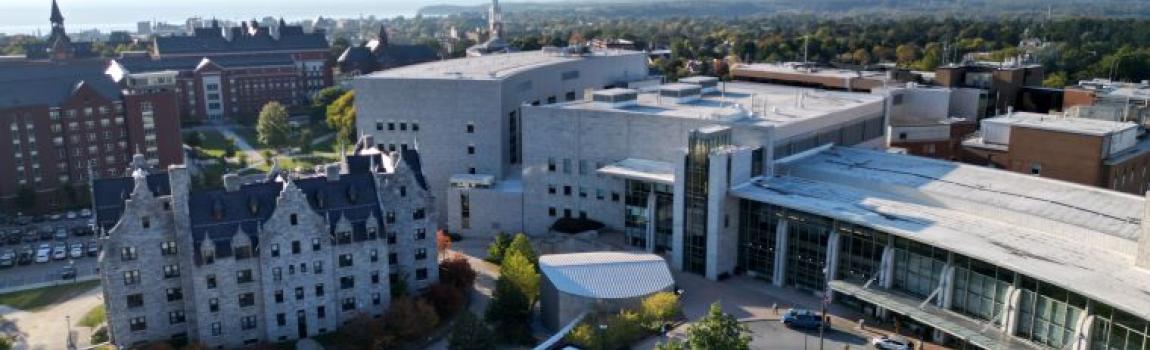
Vermont Business Magazine Ask an incoming Catamount where they’re from, and you’d better have your atlas handy. The University of Vermont’s Class of 2028 is most notably distinguished by a continued increase in students from Vermont, befitting UVM’s position as the state’s flagship public university – but its growing appeal is not confined by the state’s borders. Roughly 50 percent of the class is from outside New England—including approximately 47 states and 28 countries—reflecting the university’s growing national and international recognition.
by tim
Vermont State Police On the morning of Monday, Aug. 26, 2024, troopers from the Shaftsbury Barracks were notified of a vehicle over an embankment on Tunnel Street in the town of Whitingham. The vehicle matched the description of Harold Lavanway’s 2011 Honda Civic. Troopers responded to the location and confirmed that Mr. Lavanway was deceased inside the vehicle. Initial investigation by VSP shows that Mr. Lavanway was traveling northbound on Tunnel Street and navigated a left-hand curve in the roadway. As the roadway straightened, Mr. Lavanway veered off the northbound shoulder, coming to a position of rest about 10 feet down a steep embankment.
by tim
Vermont Business Magazine This September, the Department of Environmental Conservation (DEC) is challenging Vermonters to save money and greenhouse gas emissions by preventing food waste. The DEC Solid Waste Program is hosting the second annual self-guided Scrap Food Waste Challenge from September 9 – 30, 2024. According to ReFED, a leading food waste solutions organization, consumers are the biggest single source of food waste in the United States. ReFED found that 37% of wasted food happens at home. Of that, only 24% of the wasted food was thrown out because it was inedible (for example, peach pits or eggshells).
by tim
Vermont Business Magazine ZymoChem, based in California with an office in Burlington, Vermont, today announced it has been selected as a recipient of the United States Department of Defense's (DoD’s) Distributed Bioindustrial Manufacturing Program (DBIMP) award in the amount of $1.57 million. This selection underscores ZymoChem's innovative approach to manufacturing bio-based ingredients and its potential to strengthen the domestic supply chain for critical materials. The DBIMP, part of a broader initiative outlined in President Biden's Executive Order 14081, aims to advance biotechnology and biomanufacturing innovation for a sustainable, safe, and secure American bioeconomy. ZymoChem's selection for this program highlights the company's alignment with national priorities to expand domestic production capabilities and bolster the bioindustrial manufacturing base here in the U.S.
by tim
Vermont Business Magazine Average gasoline prices in Vermont are $3.36/g, down 2.1 cents per gallon from last week's $3.38/g. The lowest price in the state yesterday was $2.89/g while the highest was $3.79/g, a difference of 90.0 cents per gallon. The national average price of gasoline has fallen 6.2 cents per gallon in the last week, averaging $3.30/g today. The national average is down 20.7 cents per gallon from a month ago and stands 49.2 cents per gallon lower than a year ago.
by tim
by Vermont State Treasurer Michael Pieciak As Vermont’s State Treasurer, I work every day to empower hard-working Vermonters in their financial lives. This Labor Day, in honor of workers’ contributions and the labor movement’s impact, I want to speak directly to Vermonters about Proposition 3, a proposed constitutional amendment to permanently protect the rights of Vermont workers and ensure that all Vermont workers have the right to unionize. Proposition 3 would shield Vermont labor rights from any future political action at the federal or state level, ensuring that every Vermont worker can negotiate for good pay and a decent work experience.
by tim
Agency of Agriculture, Food & Markets New funding is available through the Northeastern Dairy Business Innovation Center (NE-DBIC) for research and development projects that support dairy processing and packaging innovation across the Northeast. With a focus on scalable and replicable alternatives to current industry standards, projects funded through the Innovation in Dairy Processing and Packaging Grant will help processors make informed, long-term business decisions with positive environmental and economic impacts. Awards will range from $75,000 to $350,000, with a 25% match requirement. The application is expected to be open from September 12th to October 31st. The Request for Applications will be available August 27th.
by tim
Vermont Business Magazine The Lake Champlain Committee of Vermont, New York, and Quebec has announced that Lori Fisher, its esteemed Executive Director, will retire on December 31 after more than 30 years of dedicated service to the organization and the Lake Champlain Basin. Under Fisher’s leadership, the Lake Champlain Committee has made significant strides in protecting and restoring the health of Lake Champlain. Her passion for the lake and her unwavering commitment to environmental stewardship have been key to advancing LCC’s mission. Fisher was instrumental in developing a nationally innovative approach for community involvement in the clean-up of Lake Champlain’s Pine Street Barge Canal Superfund site in Burlington VT and successfully advocating for PCB removal in Cumberland Bay, NY.
by tim
by Joyce Marcel, Vermont Business Magazine Community College of Vermont and its long-time president, Joyce Judy, are inextricably linked, their histories intertwined in a seamless partnership. Founded in 1970, CCV has been led by Judy for the past 15 years. Judy, now 68, began her 41-year tenure at the college in 1983, becoming interim president in 2009 and assuming the presidency fully in 2010. “I’ve grown up and changed, and CCV has grown up and changed,“ Judy said. “In some ways, I feel like we have grown up together.“ Raised on a dairy farm, Judy learned the value of hard work early in life, crediting her upbringing for instilling the skills necessary to lead CCV. Her connection to the family farm remains strong, as she returns to help with chores as often as possible, embodying the practical, hands-on approach that defines both her personal and professional life. Judy tells the story of a regional director, who has since passed away, to illustrate the essence of CCV.
by tim
Vermont Business Magazine This weekly report is a list of planned construction activities that will affect traffic on state highways and interstates throughout Vermont for the week of August 26, 2024. Please remember to drive safely in all work zones. Lives depend on it.
by tim
by Kathleen A. Ehlers, vice president of Enrollment Strategy and Marketing and Chris Montagnino, vice president of Champlain College Online Earlier this spring, Champlain College and three of its fellow Vermont higher education institutions made a promise — to simplify the transfer process for students who have earned an associate's degree from the Community College of Vermont (CCV). It's not an entirely new concept, but it is one the schools are dedicated to seeing succeed now more than ever. A study published in March by the New England Board of Higher Education found that students who transfer from community colleges to four-year, private, nonprofit schools excel in academics, uncover new streams of financial support and bring diverse life experiences to campuses. This includes students of color and those older than the traditional post-high school student entering college.