


Current News
by tim
Vermont Business Magazine This week, the biennial, bipartisan Water Resources Development Act of 2024 was advanced by the Senate. The bill contains several of U.S. Senator Peter Welch’s (D-Vermont) priorities for flood-impacted communities. It now heads to President Biden’s desk for his signature. This includes lowering the Non-Federal Cost-Share of the Lake Champlain Watershed Environmental Assistance Program for Vermont; and lowering the State of Vermont Cost-Share for Work on the Waterbury, Wrightsville, and East Barre Dams.
by tim
Vermont Business Magazine Emerge Vermont, the state’s premier organization for recruiting and training Democratic women to run for office, announced a new, one-day training program for Democratic women interested in running for local office. Emerge Vermont’s Municipal Bootcamp is a full-day, online training that will provide skills and tools to enable Democratic women to run successful campaigns for school boards, selectboards, city councils, and village trustee boards on Town Meeting Day.
by tim
Vermont Business Magazine In solidarity with the 28,000 flight attendants who have been working for nearly four years without a much-needed pay raise or quality-of-life improvements, Sen. Bernie Sanders (I-Vt.) and 24 Democratic senators today called on United Airlines CEO Scott Kirby to return to the bargaining table and deliver a fair contract. While thousands of flight attendants risked their lives and safety to work through the pandemic, facing heightened aggression and dangerous behavior on planes, United Airlines raked in $1.4 billion in profits over the past four years and recently boasted about its “best revenue day ever” in the history of the airline. In that same period, CEO Kirby received over $38 million in compensation, including a 90 percent raise just last year.
by tim
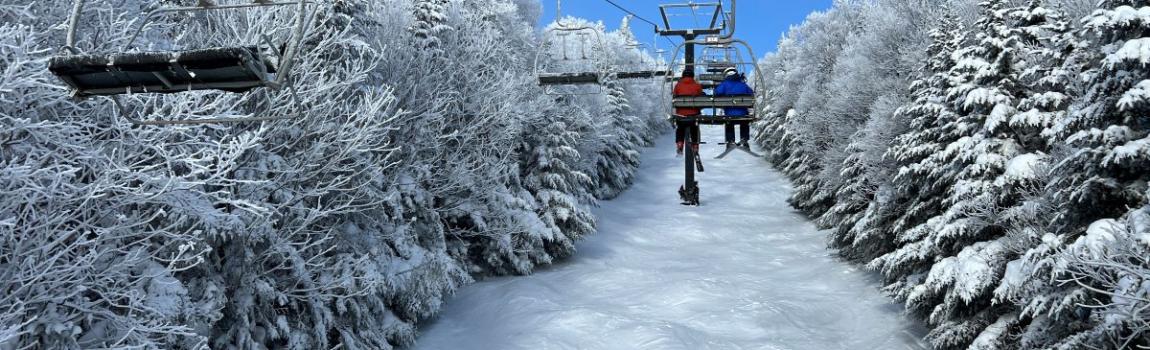
Vermont Business Magazine New data released by the U.S. Department of Commerce’s Bureau of Economic Analysis (BEA) reinforces outdoor recreation’s significant and growing impact on Vermont’s economy. In 2023, BEA found outdoor recreation created $2.1 billion in value added for Vermont, accounting for 4.8% of Vermont’s gross domestic product (GDP). This makes Vermont second in the country, behind only Hawaii, for the highest contribution to state GDP for the second consecutive year. Vermont’s strong outdoor recreation economy is rooted in small businesses all over the state, from gear manufacturers to bike rental and repair shops, to four-season resorts, guide services, retail stores, and lodging providers. According to BEA findings, in 2023 the highest economic contributor to Vermont’s outdoor sector was snow activities which include skiing, snowboarding, snowmobiling, dog mushing, tubing, and snow shoeing. Those activities contributed $220 million to Vermont’s GDP, up from $170 million in 2022. Other top contributors included RVing, game areas that include tennis and golf, and boating and fishing.
by tim
Vermont Business Magazine Senator Bernie Sanders (I-Vermont), Sen. Peter Welch (D-Vermont), and Rep. Becca Balint (D-Vermont) today announced several important provisions in the Water Resources Development Act of 2024 (WRDA) to help Vermont repair and maintain its flood control infrastructure and build resiliency against the global crisis of climate change. The bipartisan legislation passed the Senate last night and now goes to the President’s desk to be signed into law. First passed in 1938, the Water Resources and Development Act authorizes the Army Corps of Engineers to help manage and strengthen the nation’s water resources. This includes working with communities across the country on projects to reduce flood and storm damage and restore aquatic ecosystems. In Vermont, the Army Corps designed the Waterbury, East Barre, and Wrightsville dams in the 1930s after the devastating 1927 flood caused massive destruction and loss of life.
by tim
Vermont Business Magazine The Vermont Department of Labor has announced an increase to the State’s minimum wage. Beginning January 1, 2025, the State’s minimum wage will increase from $13.67 to $14.01 per hour - an increase of $0.34. This annual adjustment also impacts the minimum wage for tipped employees. The “Basic Tipped Wage Rate” for service, or “tipped employees,” equals 50% of the full minimum wage. On January 1, 2025, the tipped minimum wage will increase from $6.84 to $7.01 per hour. The state’s tipped minimum wage law allows employers to pay a lower hourly rate, as long as the employee receives tips equal to, or greater than, the standard minimum wage during a given shift.
by tim
Vermont Business Magazine The Community College of Vermont (CCV) and the Vermont Department of Corrections (DOC) are expanding the Corrections Post-Secondary Education Initiative (CPSEI) partnership, which delivers free college courses to DOC staff and Vermonters who are incarcerated. Beginning on January 1st, 2025, re-entry vouchers will be available to any Vermonter ending a carceral sentence or continuing their education upon release. Benefits will extend for a full year after release, and students will be eligible for two class vouchers per semester.
by tim
Vermont Business Magazine Average gasoline prices in Vermont are $3.11 per gallon, unchanged from last week, up 1 cent/g from last month and down 23 cents/g from last year. The lowest price in the state this was $2.69/g while the highest was $3.35/g, a difference of 66.0 cents per gallon. The lowest prices in the state continue to be in Bennington ($2.99) and Windham ($2.98) counties, with prices rising as you go north, according to AAA. Essex County has the highest average at $3.34/g. The national average price of gasoline has risen 2 cents per gallon in the last week, averaging $3.04/g today.
by tim
Vermont Business Magazine KeyBank announces the list of charitable sponsorships and KeyBank Foundation grants made in 2024 to numerous nonprofit organizations in Vermont. The gifts and grants focus support to address homelessness, food insecurity, financial literacy, preventative healthcare and more. KeyBank Foundation grants total $275,000 in commitments and are part of the bank’s philanthropic and strategic investments targeted toward education, workforce development, and safe, vital neighborhoods. An additional $34,000 in charitable donations were made to local nonprofit partners in alignment with the bank’s community support efforts.
by tim
Vermont Business Magazine The Northern Forest Center, the nonprofit organization redeveloping the historic building at 560 Railroad Street, is just $143,000 away from raising the $5.9 million needed to transform the building into a cornerstone of the St. Johnsbury community. The project will create nine much-needed apartments for middle-income workers and two revitalized commercial spaces, including a storefront for a new business, Three Rivers Bikes and Boards and an artist-in-residence studio for Catamount Arts. The project takes an innovative approach to addressing the pressing need for quality housing for workers and families in the region.
by tim
by Vermont Natural Resources Council Executive Director Lauren Hierl As 2024 draws to a close, I resolve to start the new year with both optimism and determination to protect the things we care about. At the heart of Vermont's identity lies our shared connection to the natural world. We love the beauty and bounty of our state. We also know that a healthy environment is essential to a healthy economy. Our state relies on its brand of a clean and protected environment to attract residents, visitors, and businesses. But I am wary of a false choice: that we must choose between an affordable Vermont and a clean and healthy Vermont. Protecting our environment and health saves our state money and helps our local economies by protecting Vermont’s greatest assets - our clean air, water, land, and vibrant communities.
by tim
by James Rea, UVM The Leahy Institute for Rural Partnerships at the University of Vermont has announced nearly $2.4M in grants to fuel partnerships between UVM and organizations throughout Vermont with the goal of addressing pressing challenges in our state. More than 20 UVM research programs will participate in these projects, which will influence the work of over 40 public, private, and nonprofit organizations in Vermont. The initial activities of the funded projects will span the state, taking place in communities in the Hero Islands, the Northeast Kingdom, Brattleboro, the White River Valley, and many points in between.