


Current News
by og
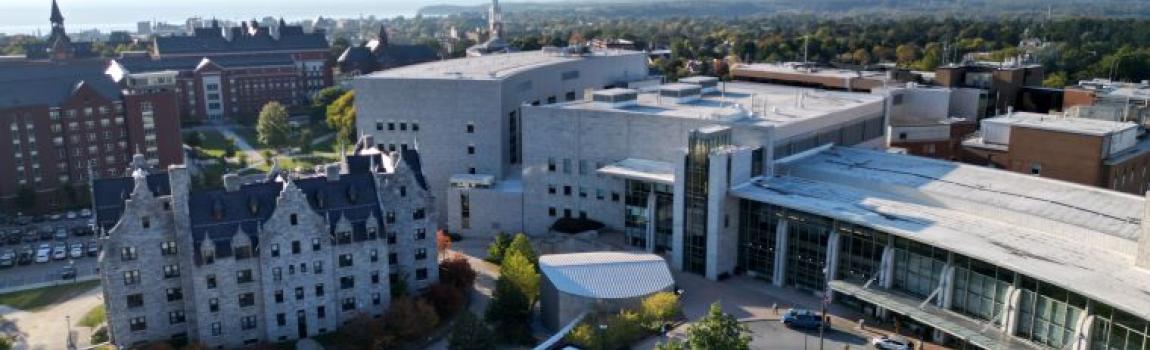
Today the University of Vermont announced details of its plan to cut $10.8 million from next year's general fund budget. The University is eliminating vacant positions, increasing student/faculty ratios modestly to achieve a long-planned target, curtailing some administrative programs, and making a limited number of layoffs. In addition to cuts in the University's general operating budget, reductions are also being implemented in income/expense activities supported by non-tuition fees and other income. The majority of the cuts will take effect on June 30, 2009. The budget plan also includes investments to support students and families and to sustain UVM's plan for high-quality, diverse enrollment during a period of economic stress in Vermont and around the world.
Actions being taken at UVM include:
by tim
Governor Jim Douglas announced today that most Vermont employers will enjoy lower workers compensation costs when new rates approved by the Department of Banking, Insurance, Securities and Health Care Administration (BISHCA) go into effect on April 1, 2009. This will be the largest average decrease in rates since 1997.
Rates for loss costs in the voluntary market the competitive market offering the most favorable rates, and the market that covers the vast majority of Vermont employers will decrease by an average of 13%. Rates in the assigned risk market the market of last resort for employers unable to obtain coverage in the voluntary market will decrease by an average of 9.6%.
by tim
The Burlington Harbor Hotel Group has obtained preliminary permits for a new hotel, to be built at 41 Cherry Street in the last remaining lot in Burlington's 40-year urban renewal. Construction of the 121-room hotel could begin in September, pending final zoning approval from Burlington regulators. The development plan also includes a 31-room expansion to the adjacent Courtyard by Marriott. Mayor Bob Kiss and developer Jay Canning of the Hotel Group have said the project will bring jobs and eventually income to the city.
In a 2004 development proposal, affordable housing was to be built in the empty lot, but developers said that component of the plan would be too costly. Instead, the city agreed to lease the land to the developers for a total of 400,000 over the next 10 years.
by tim
With several representatives for various building, construction and realty organizations present, Governor Jim Douglas (during his weekly press conference yesterday) called for enhanced efforts to help build the economy and grow Vermont jobs by embracing his proposed Economic Growth Plan. One of the critical components of the plan is permit reform.
"It is critical for us to get to work building the economy and growing jobs, said Governor Douglas. But we can t do that in our current environment we are going to have to change how we allow business to work in our state. We need to be more welcoming to those who want to grow in our state, he said.
Also speaking were Chris Snyder, from Snyder Home Construction, and Santo Longo, an Attorney from Paul, Frank and Collins. The group discussed the many challenges that Vermonters face when applying for building and construction permits, including high costs, uncertainty and very long delays.
###
by tim
John Casella, chairman and chief executive of Casella Waste Systems, started his Rutland-based business in 1975, working with his brother and one garbage truck. In 1977, Casella Waste opened Vermont's first recycling center.
Fast forward to 2009: The company has grown into a national leader in recycling, reduction of landfill greenhouse gas emissions, and the generation of renewable energy. At its five gas-to-energy landfills, Casella Waste captures the methane that is produced by waste and converts it into electricity that can be distributed over the grid. The 25 megawatts of power produced by methane capture is enough to power 25,000 homes and results in substantial emissions reductions.
by tim
The request by Central Vermont Public Service (NYSE: CV) to defer the extraordinary service restoration costs associated with a December 2008 ice storm has been approved by the Vermont Public Service Board. The amount approved for deferral under the company's alternative regulation plan is $4.1 million of the approximately $5.3 million total cost of the service restoration effort. As noted in its press release of Jan. 21, 2009, this deferral will allow the company's 2008 earnings to return to the level of $1.45 to $1.55 per diluted share. The amount deferred will be collected over a 12-month period beginning July 1, 2009.
by tim
William Maclay Architects & Planners (WMAP) won an Honor Award in the 2009 Vermont Chapter of the American Society of Landscape Architects (ASLA) Open Space Competition for their design work on the Pyralisk Arts Park project in Montpelier, Vermont. Governor Jim Douglas presented the award to designer Ward Joyce and firm president William Maclay at the annual VT ASLA awards meeting held at the State Capitol on February 17.
We are honored to receive this design award, said Ward Joyce of WMAP. It highlights the value of creative design for downtown green spaces, especially along our riverfront.
by tim
Same designers led Burlington’s waterfront renewal
by tim
Vermont housing affordability improved significantly in 2008, the second year of improving affordability. This is the main conclusion of the annual affordability study performed by The Vermont Economy Newsletter. The study was based on an analysis of all the residential housing sales in Vermont from 1987 to 2008.
The share of median family income needed to finance the payments on a median priced home in Vermont fell to 17.2% in 2008, the lowest percent of income needed to service a mortgage since 2004, said Art Woolf, co-author of the study.
Housing prices fell by 1% in 2008, according to Vermont property transfer tax data from the Vermont Department of Taxes, said Dick Heaps, the study s co-author. At the same time, the median family in Vermont earned $68,000, an increase from 2007, and mortgage rates fell from 6.3% in 2007 to 6.0% in 2008. All three of these factors contributed to the improvement in affordability.
by tim
The third annual celebration of National Entrepreneurship Week (NEW) is February 21 - 28, 2009. Launched in response to a congressional resolution in 2006 advocating recognition of entrepreneurship at the local, state and national level, NEW celebrates the heritage of entrepreneurial leadership in America, and promotes entrepreneurship education as a lifelong learning process. This year, NEW is hosted by the Consortium for Entrepreneurship Education.
by intern
In response the projected $28 million UVM budget shortfall, President Fogel has announced that the university's general fund will be reduced by nearly $11 million in the first phase of a budget reconciliation. In phase two, additional cuts of $4 million might be made depending upon revenue projections. Employees that could be affected will be informed by Friday, February 20. Fogel asserts that he has been working with all members of the UVM community to mitigate negative effects of the budgetary actions.
The following was sent to all University of Vermont students from UVM President Daniel Fogel on February 17, 2009:
by tim
Today, the Senate passed a bill that encourages large commercial trucks to travel on Vermont’s interstate highways by reducing the penalty for overweight violations of the federal weight limit to one dollar. In some cases, trucks that exceed the federal weight limit of 80,000 pounds on the interstate will avoid paying significant penalties by traveling on secondary roads. With S93, An Act relating to Commercial Vehicle Operation on the Interstate System, those trucks are expected instead to stay on the interstates. The bill received broad bipartisan support and was passed unanimously through all stages of passage.
“The current system causes large commercial trucks to travel on our local state highways and through our downtowns,” said Senator Dick Mazza, Chair of the Senate Transportation Committee. “This traffic disrupts downtown business and damages our roads.”