


Current News
by tim
by Robert Smith, Vermont Business Magazine Stuart Savel, of Brattleboro, ran a design/build and furniture making business in Westminster and then Chester, Vermont, for many years. He grew up in New Jersey and moved to Vermont in the winter of 1969-70. A back injury resulting from a car accident a few years ago made it impossible, even after surgeries, to continue that kind of work.
“I was basically in chronic pain,” Savel said. “I was prescribed pain killers like Oxycodin and a number of opiates, and really didn’t like them. They didn‘t work for me, and I found that cannabis strains did.”
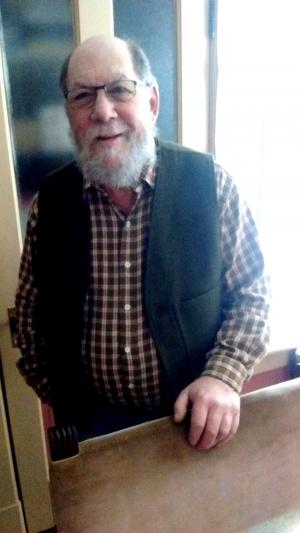 Savel said that he’s used medical marijuana for some time.
by tim
Vermont Business Magazine The Northern Border Regional Commission, a federal-state partnership for economic and community development, has announced the availability of $1.7 million in grant funds for projects in Essex, Orleans, Caledonia, Lamoille, and Franklin counties and the towns of Alburgh, Isle La Motte, and South Hero in Grand Isle County. The commission seeks applications from public bodies, non-profit organizations, or Native American tribes for projects that will directly or indirectly result in job creation and positive economic impact.
Information sessions for interested applicants will be held on:
by tim
Vermont Business Magazine Between 2007 and 2013, American motorists significantly reduced the amount they drive, lowering their per capita vehicles miles traveled (VMT) from 10,050 annually to 9,452, a 6 percent decline. This downward trend was even more pronounced in Vermont, where it has fallen by 8.4 percent. Nevertheless, Vermont residents drive significantly more miles than their national counterparts and have fewer public transportation options, likely due to the state’s rural nature. Ranked 10th highest in the nation, Vermonters drove an average of 11,356 miles per capita in 2013 compared to the national average of just 9,452. But despite this need to drive 20 percent more than the national average, Vermonters since 2007 have curtailed their driving habits more than the average American. This decline in local driving is significantly more pronounced in Vermont than the drop seen in other rural states.
by tim
Vermont Business Magazine (WARNING: THIS ARTICLE INCLUDES HARSH LANGUAGE) The Vermont Attorney General’s Office has completed a review of a Vermont State Police investigation of a police officer involved shooting incident that occurred on December 22, 2015, in Burlington, Vermont. The Office has concluded, in a statement released today, as a matter of law, that Vermont State Police (VSP) Detective Trooper Matthew Cannon and Drug Enforcement Administration (DEA) Agent Timothy Hoffmann were legally justified in the use of deadly force when they discharged their firearms at Kenneth Stephens (DOB: 12/5/59) while executing a search warrant at Mr Stephens’ apartment in Burlington. The legal standard for the use of deadly force is whether the officer reasonably believed that he or a third party was in imminent danger of death or serious bodily injury, and that deadly force was necessary to respond to that threat.
by tim
Vermont Business Magazine Middlebury College has been named winner of the inaugural Charles H.W. Foster Award for Exemplary Academic Leadership in Land Conservation, presented by Academics for Land Protection in New England (ALPINE), a program of Harvard University’s Harvard Forest. Middlebury earned the award for the conservation of its Bread Loaf campus in Ripton, Vermont. President Laurie Patton will accept the award on behalf of Middlebury in a ceremony on February 22 at the Harvard Kennedy School in Cambridge, Massachusetts.
“We are deeply honored for this recognition from an organization that shares our concern about protecting important lands for future generations,” said Patton. “Colleges and universities are some of the largest private landholders in the U.S., and it is important for us to lead by example in the area of land conservation."
by tim
Vermont Business Magazine Paid sick leave in Vermont took another step toward being achieved, as the Senate Economic Development Committee voted the bill out Thursday with a 5-0 unanimous vote. The Healthy Workplaces bill (H187) passed the House last year with a vote of 72-63. Governor Peter Shumlin (D-Vermont) has called for the bill to pass and be sent to him for signature. Businesses have been concerned about the cost of the program and about how the plan rectifies differences between existing plans, which most employers have, and the new law. Many Vermonters work for companies that are based out-of-state.
by tim
Vermont Business Magazine Increases in local food consumption, jobs, and overall economic activity in the farm and food sector over the past five years are highlighted in the 2015 Farm to Plate Annual Report, released by the Vermont Sustainable Jobs Fund. 2016 marks the halfway point of the release of the Farm to Plate Strategic Plan and the Farm to Plate Network is entering its 5th year implementing Vermont’s food system plan.
by tim
Vermont Business Magazine Customers of Green Mountain Power are incredibly pleased with their energy company, a new study concluded, with 92 percent saying they are satisfied with the service they received from GMP. The customer study shows an improvement of four percentage points over the last year. In addition, 90 percent rated their trust in GMP as high, up four percentage points from the previous year. Reliability, especially in the wake of recent intense storms over the past several years, is critically important to customers and 97 percent say GMP provides reliable electric service. This annual survey from 400 telephone interviews is required by the Vermont Public Service Department to measure quality levels and customer satisfaction.
by tim
Vermont Business Magazine Vermont Gas announced Wednesday that it now provides service to over 50,000 families, businesses and institutions in Chittenden and Franklin counties. The company is celebrating its 50th anniversary of service in Vermont this year. “It is an honor to provide the choice and opportunity of cleaner, more affordable natural gas to more than 50,000 Vermonters,” said Don Rendall, President and CEO of Vermont Gas. “Our customers are saving money and reducing carbon emissions as compared to oil and propane heat and we are excited about extending service to more Vermonters in the coming year.”
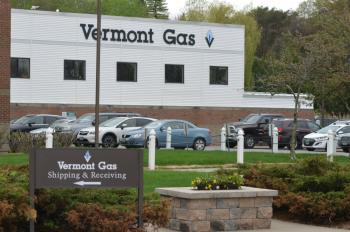 Will Metro, of Williston, recently converted his four-unit apartment building in Colchester to natural gas.
by tim
by Tom Pelham Governor Shumlin’s recent budget speech is a vain attempt to craft a legacy of fiscal responsibility. But, it’s too late for that; the damage is done to both Vermont’s fiscal standing and the governor’s legacy. Some housekeeping is in order. Governor Shumlin points a finger at former Governor Douglas for the state’s fiscal woes; but state fiscal records reveal otherwise. Governor Douglas vetoed the fiscal 2010 budget not because it spent too little, but because it spent too much. It was Senate President Pro Tempore Shumlin and House Speaker Smith who in June 2009 lead the veto override and henceforth set Vermont on its current unsustainable spending trajectory.
by tim
Vermont Business Magazine Comcast Business has introduced WiFi Pro for SMBs and enterprise branch locations in Vermont and nationwide. Offering features previously only available to headquarters and other large office locations, WiFi Pro was built to enable a wide range of businesses to serve both guests/patrons and employees as the demand for WiFi grows. WiFi Pro is a comprehensive Wi-Fi solution that includes cloud-based controls, marketing tools and other advanced capabilities.
by tim
by Ron Miller Last year, the Vermont Council on Rural Development (VCRD) launched the Vermont Climate Change Economy Initiative. Organizers believe that making a deliberate, planned effort to guide economic activity in the state toward climate change mitigation and adaptation can “build national reputation, create jobs, and attract youth and entrepreneurism.” At a daylong summit attended by more than 400 business and community leaders, science and policy experts, and other citizens from around the state, VCRD gathered dozens of ideas and a clear sense of direction about how to proceed, and appointed a Vermont Climate Change Economy Council to draft a comprehensive plan. This group held three public forums around the state in the past year to further explore possible approaches.