




Current News
by tim
 Vermont Business Magazine Vermont remains in the lower half of states ranked by bad mortgages, as it has for several years. When the mortgage crisis first hit in 2008 Vermont was at the bottom. The mortgage crisis is still embedded in the states worst hit, but the number and type of foreclosures and non-current loans has diminished significantly, accept for the lowest-priced homes, especially those in a "negative equity" position. Vermont (21.1 percent) is among several states, including most of New England, that has seen non-current mortgages fall by more than 20 percent over the last year, as the national average is down 18.1 percent. Vermont's foreclosure rate is above the US average, while its delinquent rate is below average. The state's overall non-current rate is 5.5 percent, just under the US average of 5.7 percent.
by tim
Vermont Business Magazine After a nearly five-hour police standoff, Ralph “Phil” Grenon was shot and killed by a Burlington police officer. He reportedly lunged at police with two knives. The shooting of a 76-year old man, who many have said had mental health issues, has generated a public outcry. Perhaps it was Mr. Grenon’s age, or perhaps it was his mental state, but opinions about the incident have been diverse and passionate. Some believe police officers acted precipitously, unnecessarily killing a person experiencing a mental health crisis when other means of resolving the standoff could have been deployed. Others feel police acted prudently by using force to protect themselves from a man lunging toward them with knives.
by tim
by Joyce Marcel. Vermont Business Magazine Environmental attorney Peter D Van Oot has been close to the center of the struggle around Act 250 for 29 years. Van Oot, 61, is a director of Downs Rachlin Martin PLLC, the state’s largest law firm. He works out of the company’s offices in Lebanon, NH. He has argued for many large Act 250 permits and at the same time been on — and chaired — Act 250 commissions. He’s been a member of two municipal planning commissions/zoning boards, served as counsel for developers of large-scale projects and is a board member of state-wide environmental and economic development organizations. In person, Van Oot is tall, good-looking and imposing. Charming should be his middle name. He has long white hair that he combs straight back and a deep, sonorous voice that might lull any Environmental Board into acquiescing to his requests.
by tim
by Maureen Cregan Connolly Nearly 97% of Vermont's businesses are classified as "small" according to the Small Business Association (SBA). Statistics provided by the SBA report that between 2010 and 2013 Vermont had 77,726 small businesses and that, of that number, 60,067 businesses were without employees. These businesses primarily survive through contract work with other business entities. H.867 was written to protect Vermont's cottage business industries and to protect an individual's right to self-contract. The days of a single contractor building a home from foundation to roof are no longer. Homes are built by teams and individuals with specific skills and knowledge; team development is based upon the elements of design selected by the homeowners.
by tim
 LCC Lake Champlain Committee The Vermont Agency of Agriculture has requested a delay in up-dating their pollution control rules for agriculture. The up-date is required under Act 64, the water quality bill passed by the Vermont legislature in 2015. Act 64 called for the Agency to finalize the rules by July 1, 2016. The Agency wants that date pushed back until September.
by tim
 Vermont Business Magazine Researchers from 13 land-grant universities, including the University of Vermont, have examined equine operations and developed educational programs about horse and environmental stewardship. In the Northeast and Mid-Atlantic states alone, more than 428,000 horses, ponies, and mules are living on 65,000 farms, and each horse produces about 50 pounds of manure every day. Water runoff from manure, horse feed, and bedding can pollute nearby bodies of water. To devise sustainable, safe strategies for equine operations, these researchers formed the multi-state research project NE-1041 "Environmental Impacts of Equine Operations."
by tim
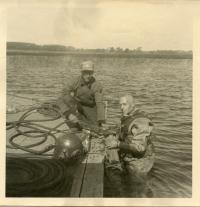 Vermont Business Magazine A 2016 Conservation and Community Grant from the Champlain Valley National Heritage Partnership (CVNHP) heralds an important new initiative for Lake Champlain Maritime Museum, a project titled Collections & Recollections: Preserving Peter Barranco’s Legacy. Grant funds are helping LCMM initiate long-term preservation and research access to a nationally significant collection recently donated to LCMM. “The Maritime Museum is deeply grateful to Peter Barranco for his gift, and to the Champlain Valley National Heritage Partnership for helping LCMM initiate the long-term preservation and access of this important collection,” said Executive Director Mike Smiles.
by tim
Vermont Business Magazine Vermont Business Magazine and the Vermont Chamber of Commerce announced the ranking of the top thirty eight Best Places to Work in Vermont 2016 Thursday evening at a sold out awards ceremony at the Echo Lake Aquarium and Science Center. More than 300 attendees participated in the festivities. Vermont Housing Finance Agency and Edward Jones were the top recipients. All the companies represented last night have the honor of saying they are a Best Place to Work in Vermont. See the full list below.
by tim
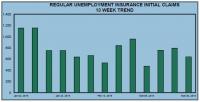 Vermont Business Magazine The post-winter recreation layoffs appear to be subsiding, if a little earlier than usual, and weekly unemployment claims are back to about where they were in January. Claims fell last week, but are still slightly ahead of numbers from the same time last year, as the disappointing winter tourism season ended sooner due to a historically warm winter. For the week of March 26, 2016, there were 639 claims, down 155 from the previous week's total and 71 more than they were a year ago. By industry, claims fell evenly across most sectors.
by tim
by Representative Paul Dame Last week the State House was consumed with the most important work of the year: passing a budget. All of the current tax polices gave us $33 Million more in revenue than we had last year, due to normal inflation and economic growth. But that wasn’t enough, and so the budget that passed required an additional $48,000,000 in new taxes & fees to be raised in order to pay the bills. This happens because our general fund spending grows at nearly 4% while the revenues are growing at roughly 2.2%. It has happened every year for the last six years, and mark my words, it will happen again next year. Our spending continues to grow faster than the Vermont economy, and nothing was done this week to change that pattern. If the composition of the legislature does not change substantially, neither will these budget or tax increase trends.
by tim
Vermont Business Magazine VSECU, a member-owned cooperative and not for profit credit union for everybody in Vermont, has donated $23,000 to Vermont charities. More than 4,300 credit union members directed the earmarked funds through VSECU’s annual We Care 2 program, by casting votes for charitable organizations that impact issues of food, shelter, heat, or financial education for Vermonters.
“At VSECU we work to foster financial, environmental and social prosperity for Vermont by employing our scale, resources, and cooperative spirit to make an impact on our members and their communities,” said Rob Miller, CEO of VSECU. “The We Care 2 program empowers all of our nearly 60,000 members with the opportunity to direct that impact toward the organizations they value most.”
by tim
Vermont Business Magazine Governor Peter Shumlin today provided an update on surface water testing from Bennington and North Bennington. Ten water samples were taken for testing from local creeks and ponds at locations around the former Chemfab facilities to help determine the source and extent of PFOA contamination. Surface water concentrations of PFOA ranged from no detection (less than 7 parts per trillion) to 79 parts per trillion. The highest PFOA concentration was the surface water sample from the pond on the Bennington College Campus. PFOA concentrations in the four water samples from Paran Creek ranged from 16 to 38 parts per trillion. PFOA concentrations between 8 and 9 parts per trillion were detected in the water samples collected from the Walloomsac River just upstream and downstream of Paran Creek.