


Current News
by tim
Senators Patrick Leahy (D-Vermont) and Amy Klobuchar (D-MN) have introduced legislation to improve the North Country Scenic Trail. The bill would extend the trail into Vermont, connecting it to the Appalachian Trail, allowing hikers to journey the entire 4,600 miles from North Dakota to Vermont. The trail currently extends from New York to North Dakota. The trial was never built along certain sections in Minnesota because the current route includes wetland areas that are difficult to build through and raises conservation concerns. Klobuchar and Leahy’s legislation revises the authorized trail route to avoid these wetland areas by including existing hiking trails in the Minnesota Arrowhead region in the Boundary Waters and North Shore of Lake Superior.
by tim
NG Advantage LLC, based in Milton, Vermont, in partnership with Clean Energy Fuels Corp, (NASDAQ: CLNE) opened its newest natural gas fueling station in Pembroke, NH, which will serve manufacturing facilities and other large, energy-intensive customers who do not have access to the region’s natural gas pipeline. NG Advantage stated customers will be able to replace their facility fuel oil with cleaner, less-expensive North American natural gas. Cheshire Medical Center/Dartmouth-Hitchcock Keene will be one of the first customers of the new facility.
by tim
Vermont leaders have a new online tool to help their communities become more flood resilient: Flood Ready Vermont at www.floodready.vermont.gov. Flood Ready Vermont compiles maps, information, and learning from around the state. This website will help community leaders in their work to avoid damage from flooding and to become more flood resilient. Readers will find information on post-disaster funding and indicators to assess how well communities are prepared. Is your community planning to avoid flood damage? Visit the new Flood Ready Vermont website www.floodready.vermont.gov to find out.
by tim
Meredith Angwin, Ethan Allen Institute The Environmental Protection Agency recently issued a proposed plan for greenhouse gas mitigation: the electricity sector must cut greenhouse gas emissions by 30 percent by 2030. The rules are set on a state-by-state basis. I am in favor of cutting carbon emissions, but the EPA plan is arbitrary, ineffective and political. The abatement standards are plain backwards: states that already have a clean energy mix have to do a higher percent of abatement than states that burn large amounts of coal.
EPA’s criteria for reduction goals are frankly opaque, including complex “building blocks” for reduction. To decide on the level of reduction required, the EPA looked at various issues, such as coal plants that might be already slated for retirement, and whether a state has natural gas available.
by tim
Governor Peter Shumlin and key members of his administration attended on Wednesday the fourth and final meeting in Washington, DC, of the White House’s State, Local, and Tribal Leaders Task Force on Climate Preparedness and Resilience, bringing lessons learned during 2011’s Tropical Storm Irene to the national panel charged with recommending federal actions to help states and communities recover and rebuild smarter from natural disasters.
by tim
The Department of Veterans Affairs needs $17.6 billion to hire 10,000 doctors, nurses and other health care providers and make other reforms in order to meet the needs of a growing number of veterans and reduce long waiting times for health care, Acting Secretary Sloan Gibson told the Senate Committee on Veterans’ Affairs today. Gibson was responding to a question by Senator Bernie Sanders (I-Vermont), the committee chairman, about what the VA needs to address a large influx of veterans needing treatment for post-traumatic stress disorder, traumatic brain injury and other health care needs.
Without the resources to deal with veterans returning from wars in Iraq and Afghanistan, Gibson said, “the wait times just get longer.”
by tim
by Tom Brown vtdigger.org A study released Tuesday suggests the state of Vermont should change the way it manages reserve funds. Vermont is among the top five US states in revenue volatility for the period of 1994-2012, according to a report by The Pew Charitable Trusts titled “Building State Rainy Day Funds.” The study suggests that states that tie reserve funds to economic volatility fare better in the event of fiscal emergencies such as a recession or budget shortfall. Vermont’s Rainy Day Fund is fueled by surplus revenue and is not tied to fluctuations in tax receipts. The state frequently taps the fund to pay for unanticipated expenses that are part of the mid-year annual budget adjustment legislation each January.
by tim
by Hilary Niles vtdigger.org The rumored deal between IBM and chip-making rival Globalfoundries could be off, industry observers say. Alliance@IBM, the unofficial union for the tech giant, issued an unconfirmed report Tuesday afternoon that a company executive made the announcement to managers at IBM’s East Fishkill, New York, facility. Lee Conrad said the group received the update by email, and he had no further information. Mike Cadigan, the executive named, and other IBM representatives could not be reached for comment. It had been anticipated that an announcement could come along with IBM's second quarter financial report scheduled to be released at 4:30 pm Thursday.
by tim
Employer-sponsored health insurance is a misnomer, according to the Public Assets Institute based in Montpelier. Money that an employer putatively “contributes” to a company health insurance plan is simply employee compensation in another form. The point is driven home in a recent column in the American Prospect by Paul Waldman about the US Supreme Court decision in the Hobby Lobby case. Understanding that health insurance is part of an employee’s compensation package will be critical as Vermont moves forward with Green Mountain Care — now under the umbrella of Obamacare or later as a publicly funded, universal health care system.
by tim
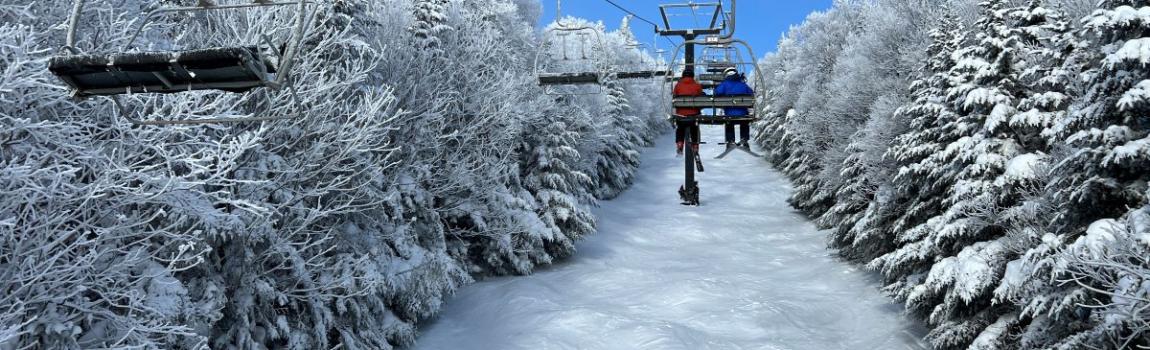
Skiers and snowboarders visiting Okemo Mountain Resort this winter will be viewing the snowy landscape through the bright orange tint of a retractable, transparent dome when they ride in the comfort of a new, high-speed, six-pack bubble chairlift with heated seats – the first of its kind in North America. The new detachable lift, with chairs that seat six people, will be outfitted with heated seating pads and retractable acrylic domes to protect passengers from wind and weather. The new lift, built by Leitner-Poma, will replace Okemo’s Northstar Express lift and is scheduled to begin operation in December.
by tim
Governor Peter Shumlin joined the hundreds of workers of Vermont Castings’ Randolph and Bethel facilities Tuesday to celebrate the new management of this iconic Vermont brand and the return of some of its offshore manufacturing to Vermont. Last summer, Vermont Castings went through an ownership transition that resulted in a management buyout, saving the company and retaining more than 200 jobs in Vermont. CEO Ricardo Leon said that while headquarters remain in Paris, KY (where the company has been based since it went through another acquisition several years ago), this past winter Vermont Castings repatriated much of the production that had gone to China and Mexico.
by tim
by Bill Schubart Sixty years ago, our family drove to Burlington two or three times a year. This was before the interstate, car culture, and paved roads wove Vermont together into a rural community. Towns were socially and economically more self-reliant. They had to be. Few townsfolk ventured far afield. But in the intervening years the impacts of communication technology, transportation, and state and global businesses rather than local employers has eroded town boundaries, economies, and social cultures. Some of our schools and their governance are artifacts of that bygone era, yet we cling to the mirage of “local control.” State and federal revenue sources with their mandates and curricular requirements, regional healthcare and energy costs, and a national teachers’ union have long since laid to rest the idea of local control. But we persist in our belief.