





Current News
by tim
by Lisa Ventriss, President, Vermont Business Roundtable The good news is that Vermonters have had a very robust dialogue on education reform this year, which has moved us farther than previous years in terms of understanding of and agreement on the need for system-wide change. This is due primarily to the tremendous work of Vermont’s Education Secretary Rebecca Holcombe who, in a very brief period of time, has created a database of “current state” information on every school in Vermont. The bad news is that so much of our school data is suppressed because of micro-sized schools, but the available data tell a very troubling tale of the students currently in our PreK-12 education system. The worse news is that we have an even more challenging population coming into the system and we are not prepared for them.
by tim
The results of Vermont Electric Cooperative’s (VEC) annual election were announced at the Annual Meeting of the Membership on Saturday, May 9, 2015, at Jay Peak Resort. A total of 2,972 members cast their ballots for five ballot items and four director seats. Two bylaw changes passed, one encouraging all eligible members to run for the Board of Directors and the other allowing directors to participate in board meetings by videoconference. A bylaw change that would have placed term limits on directors was voted down by the membership.
A ballot item approving VEC’s participation in a 2.5 megawatt solar project also passed, as did a Capacity Purchase and Sale Agreement with nuclear power producer NextEra Energy Seabrook, LLC.
Four positions on the VEC Board of Directors were up for election. In total, eight candidates vied for these director seats.
In District 1, incumbent Don Worth of Island Pond ran unopposed and received 379 votes.
by tim
The Vermont House of Representatives today passed a wide ranging economic development bill (S138) that offers new support for both employers and employees in an effort to strengthen Vermont's economy. Highlights of the bill include: assistance for first time homebuyers; bolstering Vermont's VEGI program; creating more access to capital for small businesses; funding for economic development marketing; strengthening career technical education and workforce training; and better integration of disabled workers in the workforce.
House Speaker Shap Smith offered the following statement: "Thank you to Chairman Botzow, Vice Chair Marcotte and the Commerce and Economic Development Committee for their hard work in taking these significant steps to make Vermont's economy even stronger.”
The bill includes:
by tim
Today, the Vermont House passed S29, which allows all eligible Vermonters the opportunity to register to vote up until as well as on Election Day. The current law has a registration deadline of the Wednesday before the election.
Vermont Secretary of State Jim Condos released the following statement:
"I am very grateful to the House (and specifically to Speaker Shap Smith, Reps. Donna Sweaney, Linda Martin, and Jill Krowinski) for bringing Senate passed S.29 forward and passing Election Day Voter Registration. The House’s endorsement indicates that they appreciate that this is simply a voter rights issue.
by tim
Attorney General Bill Sorrell announced today that his Consumer Protection Division — along with the Attorneys General of the other 49 States and the District of Columbia, the Consumer Financial Protection Bureau, and the Federal Communications Commission — reached settlements with Sprint Corporation and Cellco Partnership d/b/a Verizon Wireless, that include $158 million in payments, and that resolve allegations that Sprint and Verizon placed charges for third-party services on consumers’ mobile telephone bills that were not authorized by the consumers, a practice known as “mobile cramming.” The State of Vermont will receive more than $ 1.6 million for its leadership of the multistate investigation culminating in these settlements.
by tim
Senator Bernie Sanders (I-Vermont) today asked the Department of Veterans Affairs to invoke emergency powers to make expensive hepatitis C drugs available at affordable prices to treat tens of thousands of veterans now being denied the most effective care. The VA recently stopped enrolling veterans in successful new treatments for the often deadly liver disease because the department already had spent the more than $400 million it had budgeted for the costly drugs.
The high-profit hepatitis C drugs are among the most expensive medications on the market. Gilead Sciences makes two of the new blockbuster medications and charges $1,000 per pill. That adds up to $84,000 over the course of caring for a single patient. Even with a discount, the large VA health care system still drained its budget for treating hepatitis C.
by tim
State agencies and local partners are gearing up for summer cyanobacteria monitoring on Lake Champlain. Annual monitoring efforts by the Vermont Department of Health, the Department of Environmental Conservation and the Lake Champlain Committee (LCC) will be guided by new advice from the EPA on blue-green algae toxins in drinking water.
“We welcome the new science-based guidance from EPA, and will use it to determine the appropriate advisory level to protect the health of Vermonters,” said Health Department State Toxicologist Sarah Vose, PhD.
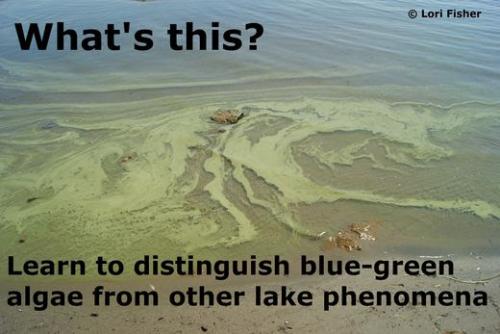 Courtesy Lake Champlain Committee
by tim
Ticks are a lot like weeds: They survive winter’s freezing temperatures, heavy snowfall and lack of sunshine. These resilient critters can carry pathogens – microorganisms such as bacteria, viruses and parasites – that cause illness.
“Ticks are abundant in all parts of the state. Using bug spray and doing daily tick checks should be part of every Vermonter’s routine,” said Erica Berl, an infectious disease epidemiologist for the Vermont Department of Health. “The earlier you remove a tick, the less likely you are to become sick.”
Thirteen different tick species have been identified in Vermont, but only four are known to carry pathogens that cause disease in humans.
by tim
The Vermont Division of Emergency Management & Homeland Security and its state and local partners will take part in a biennial graded exercise of its radiological response plan on Wednesday May 13th. The drill will test the state's ability to respond to a hostile action event at or around the Vermont Yankee Nuclear Power Plant in Vernon beginning at approximately 9 am and continuing until mid-afternoon.
by tim
Lincoln Renewable Natural Gas, LLC (LincolnRNG) of Montpelier today filed a petition with the Vermont Public Service Board for a Certificate of Public Good to construct and operate a renewable natural gas plant. The LincolnRNG plant would produce the renewable natural gas (RNG) from dairy farm manure and other organic fuel sources. RNG is interchangeable with conventional natural gas and may be used as an alternative heating and vehicle fuel. LincolnRNG will sell most of the RNG produced by the plant to Middlebury College, to replace the College’s current use of a substantial volume of #6 heating oil.
by tim
The Department of Environmental Conservation’s Compliance and Enforcement Division today announced that it formally settled an environmental violation involving Wright Brothers Recycling, Inc. The company operates a full service metal recycling and salvage yard in Newport, Vermont. The settlement includes an $8,000.00 penalty.
by tim
by John McClaughry “Galloping Gertie” was the nickname given by construction workers to the infamous Tacoma Narrows Bridge, in the state of Washington. It got its nickname even before it opened to traffic, because of a major design failure. It allowed modest wind pressure to make the roadway visibly oscillate both side to side and end to end. In November 1940, four months after its opening, a crossways 40 mph wind started Gertie galloping, and within minutes it spectacularly collapsed into Puget Sound.
A good case can be made that the worst design failure disaster in Vermont history is the Vermont Health Benefits Exchange, Vermont Health Connect (VHC).
The Affordable Care Act of 2010 authorized the federal government to spend billions to underwrite the creation of health insurance exchanges in the states, and create a backup Federal exchange. Only 17 states, including Vermont, took advantage of this offer.