

Vermont Business Magazine The Vermont Chamber of Commerce has released a new analysis of tax proposals currently under discussion in the House Ways and Means Committee that would increase taxes on income, investment gains, and total earnings above certain thresholds. The report finds that, in Vermont’s economy, the proposal would extend beyond high income households and into the operations of many locally owned businesses. In an environment where business owners are navigating a range of operational and ownership decisions, the analysis highlights how these changes could influence reinvestment, hiring, and long-term business stability.
Grounded in the Chamber’s commitment to data informed strategy and proactive policy leadership, the analysis connects complex tax policy to real world impacts on Vermont businesses, from Main Street employers to growing enterprises across the state.
At its core, the findings reinforce a consistent message. Vermont’s economy is at a pivotal moment, and policy decisions made today will shape affordability, competitiveness, and opportunity for years to come.
Why it matters
Vermont is already navigating structural economic challenges, including workforce shortages, housing constraints, and rising costs. As outlined in the Vermont Economic Action Plan, the state must grow its workforce and expand its tax base to remain sustainable.
Policies that unintentionally discourage investment or business growth risk moving Vermont further from that goal.
What the analysis shows
The Chamber’s white paper highlights several key dynamics:
- Pass through businesses will feel the impact: Many Vermont businesses are structured as pass through entities, meaning business income is taxed through the owner’s personal income. Proposed changes tied to income thresholds may appear targeted at individuals but in practice directly affect local businesses that employ Vermonters and anchor communities.
- Income does not equal cash flow: Business owners may be taxed on income that is reinvested into operations, such as hiring employees, purchasing equipment, or expanding services, rather than taken home as personal income.
- Policy signals matter: In a small state, perception and predictability are critical. Tax policy changes can influence where businesses choose to grow, invest, or locate, impacting Vermont’s competitiveness relative to other states.
- Downstream impacts reach everyday Vermonters: Increased costs on businesses do not stay contained. They can show up as higher prices, reduced hiring, slower wage growth, or delayed expansion.
“This is not just about tax brackets. It is about how Vermont’s economy works,” said Amy Spear, President of the Vermont Chamber of Commerce. “Many of the businesses impacted are locally owned companies that are making decisions every day about whether to reinvest, grow, or stay independent. When the cost of doing business rises and planning becomes less predictable, it becomes harder for those businesses to remain locally owned, and that has real consequences for our communities.”
Connecting policy to Vermont’s long-term strategy
The Chamber emphasizes that Vermont’s path forward depends on aligning policy with a broader economic strategy focused on growth, affordability, and sustainability. The Economic Action Plan makes clear that:
- Vermont needs to add 13,500 workers annually to meet workforce demand
- Expanding the tax base, not increasing the burden on existing businesses, is key to long term affordability
- A predictable and competitive business climate is essential to attracting investment and talent
As the state’s largest business advocacy organization, the Vermont Chamber is focused on:
- Bridging business insight and policy impact
- Advancing member driven, data informed solutions
- Ensuring Vermont remains a place where businesses can grow and communities can thrive
“This is exactly the type of conversation Vermont needs right now,” Spear added. “We can support strong communities, invest in priorities, and maintain fiscal responsibility, but we have to do it in a way that strengthens, not strains, the economic engine.”
Read the full analysis
The full white paper is available here: https://www.vtchamber.com/vermont-tax-proposal-business-impact/
The Data Behind the Analysis - Graphics Available for Downloading:
-
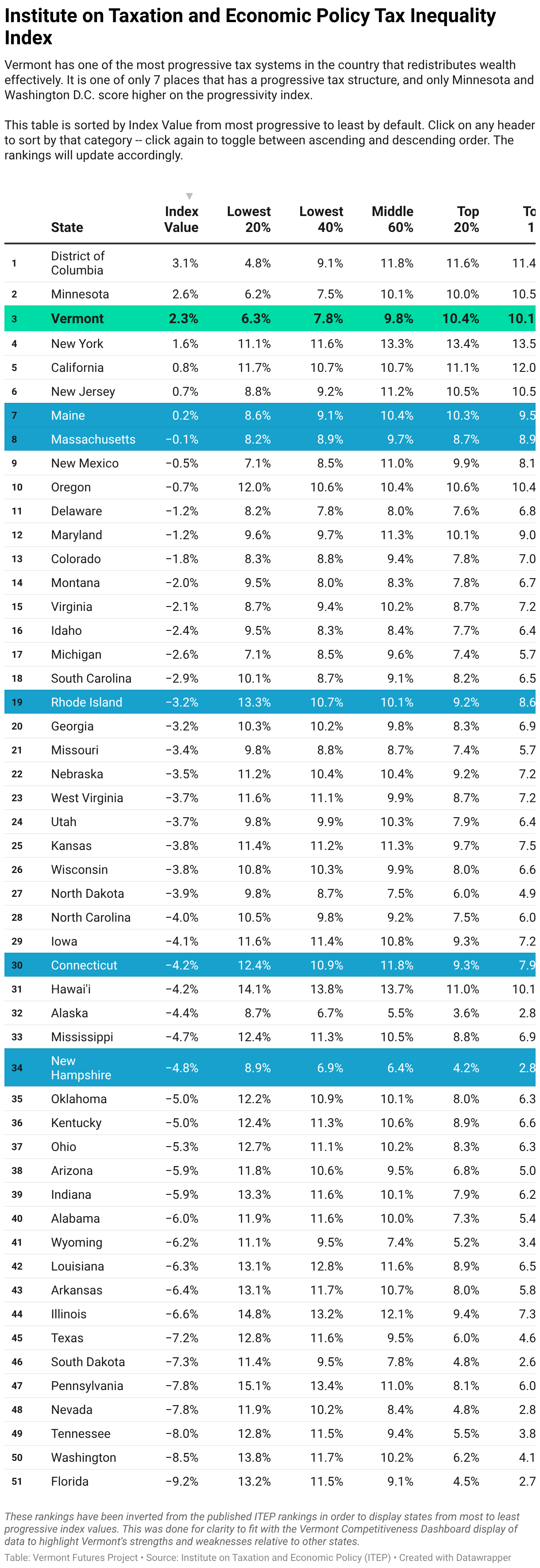
Institute on Taxation and Economic Policy Tax Inequality Index
Vermont has one of the most progressive tax systems in the country that redistributes wealth effectively. It is one of only 7 places that has a progressive tax structure, and only Minnesota and Washington D.C. score higher on the progressivity index.
-
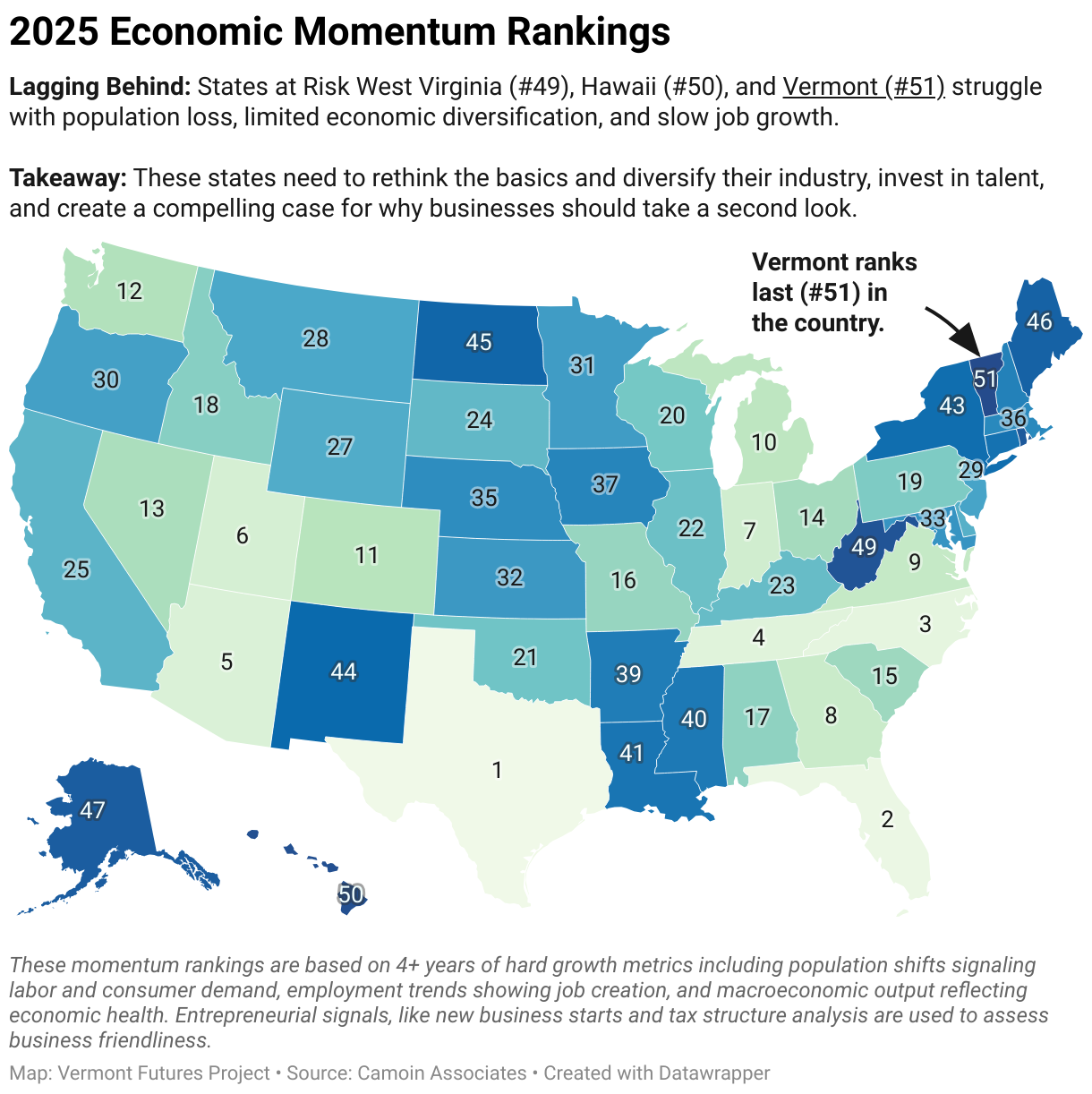
2025 Economic Momentum Rankings
Lagging Behind - States at risk include West Virginia (#49), Hawaii (#50), and Vermont (#51)
About the Vermont Chamber of Commerce
The Vermont Chamber of Commerce is dedicated to advancing the Vermont economy. Trusted by the businesses that make living, working, and thriving in Vermont possible, we prioritize collaboration and uphold the core values that define our state. As the preeminent not-for-profit business organization, we advocate, build community, and provide resources for businesses statewide.
Montpelier, VT (April 30, 2026) – Vermont Chamber of Commerce
To support vital journalism, access our archives and get unique features like our award-winning profiles, Book of Lists & Business-to-Business Directory, subscribe HERE!
 Vermont Business Magazine