
A Weekly State House Recap By Maggie Lenz and Gwynn Zakov (on behalf of Atlas Government Affairs
and Garnet Government Relations
LURB Talks Timing, Trust, and the Future of Act 250
When the Vermont Land Use Review Board was created under Act 181 last year, it didn’t exactly arrive quietly. The law, one of the most sweeping overhauls of Act 250 in decades, was billed as a “grand bargain” between housing advocates and environmentalists. The pitch was simple. If Vermont eases Act 250 review in designated growth areas to encourage desperately needed housing, we can strengthen protections for sensitive natural resources elsewhere.
In practice, it has been anything but simple. Over the last few weeks, multiple legislative committees have had direct, extended conversations with the LURB. The board was stood up midway through last session, so lawmakers are only now getting a fuller picture of how the reforms are playing out on the ground. And the timing is significant. Many legislators this year are taking a hard look back at Act 181, searching for technical fixes and bigger adjustments to make Act 250 more responsive, both to applicants and to meet the needs of Vermonters.
Act 181 remains controversial because it fundamentally rebalances the state’s approach to development and conservation. A primary criticism is that it expands Act 250 jurisdiction into significant portions of rural Vermont that were not previously covered. Farmers, woodlot owners, and individual landowners worry that building on affordable land, or even creating a homestead, could now require state-level review that adds time and expense. Local officials have voiced concern that the new board and its mapping process centralize authority in Montpelier, narrowing local decision-making power.
The LURB is well aware of these tensions. If anything, its recent testimony has underscored how seriously board members are taking the responsibility of implementation, and how candid they are about where the statute may need refinement.
A major focus has been Tier 3 lands, where Act 250 jurisdiction is preserved for areas identified as critical natural resource zones. Board members acknowledged that the initial draft maps and rules shared late last year generated confusion. Many Vermonters struggled to understand what the maps actually meant, which resources were being captured, and how their own properties might be affected. That confusion, the board suggested, risks eroding public trust at precisely the moment when transparency and buy-in are most needed.
Rather than dismissing that feedback, the LURB has leaned into it. Board members told legislators they need time for more public education, additional outreach sessions, and iterative revisions to the Tier 3 maps and rules. Habitat connectors, resource definitions, and rule triggers all raised concerns. Implicit in their testimony was a clear message: statutory effective dates should align with realistic timelines for public engagement and technical refinement. Without that alignment, ecology-focused jurisdiction could take effect before stakeholders fully understand its implications.
Clarity and predictability emerged as consistent themes. The board suggested that the Legislature consider refining certain statutory definitions and thresholds to reduce ambiguity about when Act 250 applies. They pointed to areas where language governing legacy permit transfers, municipal plan designations, and jurisdictional triggers could be clarified to reduce uncertainty for towns and applicants alike. While they did not present fully drafted amendments, the subtext was unmistakable: if lawmakers want smoother implementation, they may need to tighten and codify expectations in statute.
Timing is another critical issue. The LURB is simultaneously managing Tier 2 and Tier 3 rulemaking, future land use mapping, and other directives embedded in Act 181. Board members have described the capacity constraints inherent in standing up a new institution while maintaining existing Act 250 responsibilities. Several suggested consolidating multiple rulemaking deadlines into a unified timeline, potentially pushing key milestones to the end of 2027. The goal is not delay for delay’s sake, but consistency and administrative coherence.
Another flashpoint is the new “road rule,” which subjects private roads longer than 800 feet to Act 250 review. Critics argue that this disproportionately affects rural development and may discourage housing growth. Meanwhile, debate continues over whether appeals from land use decisions should move from the Environmental Division of Superior Court to the LURB itself — a shift that raises questions about institutional knowledge and legal continuity.
Through it all, the board’s tone has been notably pragmatic. Members have emphasized that they are carrying out the law as written, but they are also trying to help lawmakers understand where theory and practice diverge. They have repeatedly stressed that durable reform depends on coordination, between local plans, Act 250 triggers, regional frameworks, and energy siting policies. Misalignment among these systems could create parallel review processes that frustrate applicants and regulators alike.
For the business community, the stakes are high. Developers need certainty about where they can build and what standards apply. Landowners want clarity about whether their property is subject to new restrictions. Municipalities want assurance that their planning work matters.
What the recent hearings revealed is a board attempting to walk a careful line of honoring the conservation commitments embedded in Act 181 while acknowledging that Vermont’s housing and economic challenges demand a system that is clear, predictable, and workable. By emphasizing outreach, realistic timelines, and statutory refinement, the LURB signaled that meaningful land-use reform is not just about drawing new lines on a map. It’s about aligning legislative intent with administrative reality, and making Act 250 not only protective of Vermont’s landscape, but more user-friendly for the people trying to live and build within it.
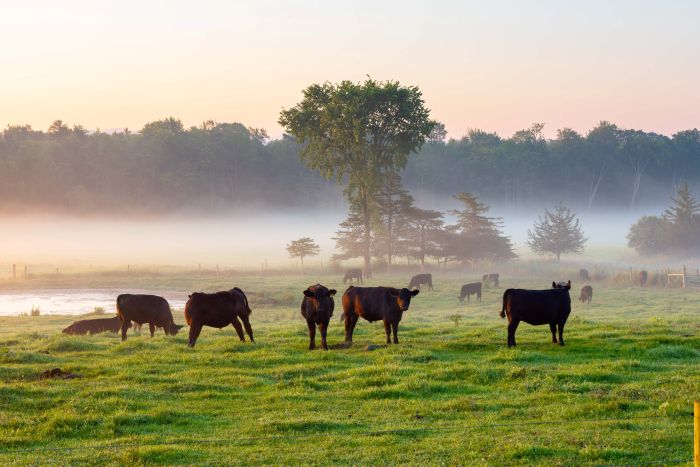
Curiosities: a weekly peek at the odd and intriguing happenings under the Golden Dome
Through the Lens
Lawmakers, lobbyists, staff. The safe assumption is most of them lead rich lives outside the halls of government. There are musicians, writers, painters, and photographers, like Bill Driscoll, the lobbyist for Vermont’s manufacturers.
Most people in the building know Driscoll through his work with Associated Industries of Vermont. He has been there since 2001. Before that, he worked in Washington for a New Hampshire Congressman and earned a master’s degree in international relations. His early professional life revolved around policy, studying nationalism and global conflict. His current one revolves around regulatory language and the incremental work of representing manufacturers at the Legislature. Photography entered much later.
He told me he had always been interested in it, even as a kid, but never seriously pursued it. He did not grow up with expensive equipment or formal training. The shift came around 2018 or 2019 during winter visits to a family camp in Ferrisburgh on Hawkins Bay. The camp, built by his great grandfather, has long been part of his family’s ties to Vermont.
At first, he was simply documenting those trips with his phone. Sharing them. Recording where he was. But gradually the purpose changed. Instead of photographing the trip, he began focusing on the scenery itself. Instead of documenting, he started composing.
He described becoming more attentive to how a scene fits together. Composition became central. He began noticing structure. Horizon lines. Tree lines. Layers within a landscape. He found himself looking not just at what was there, but at how it arranged itself within a frame.
Eventually a friend lent him a Canon Rebel XTi. It was not a high end camera, but it was a step beyond a phone. He used it for a while. Then he bought his own equipment and additional lenses. He now shoots with a Canon R7.
He also moved from relying on automatic camera settings to shooting in RAW format. In simple terms, that means the camera captures all the available data from a scene without making final decisions about exposure and color. He processes those images himself in Lightroom. That part, he emphasized, is its own kind of work. Sometimes he will process an image and feel satisfied. Sometimes he will return months or even a year later and see it differently. The work is not finished when the shutter closes.
Most of his photography falls into landscape and wildlife. He pays attention to time of year and to light. Sunrise and sunset matter. The position of the sun changes over the course of the year, and he notices how that alters a location. He might see a scene and know it would look better under different conditions, then return later when the light is right.
He also experiments with intentional camera movement. In this technique, the shutter remains open long enough for him to physically move the camera during the shot. The result is abstract. Forests blur. Lines stretch. The image becomes less literal and more interpretive. It is controlled motion.
What struck me most in our conversation was not simply that he takes photographs. It was how much thought he has put into the craft. Equipment choices. Sensor differences. The advantages of an APS-C mirrorless camera for wildlife. The balance between getting the shot in the field and processing it later. The way composition trains your eye so that even when you do not have a camera, you begin seeing the world in frames.
He described that shift explicitly. Once you start thinking in terms of composition, you cannot entirely turn it off. You notice how elements line up. You consider how a scene might look cropped differently. The act of photographing changes how you see.
During legislative session, photography slows down. There are only so many hours in a day, and the work of the State House expands to fill them. Winter weather adds its own limits. But it does not disappear. It remains part of his life, not an occasional indulgence.
At one point in our conversation, we talked about how the culture of the State House has changed over the years. He noted that there is less socializing than there once was. Fewer moments where people see each other outside their immediate roles. That narrowing can make it easier to reduce people to what they represent rather than who they are.
The State House is full of people whose public roles are only one part of their lives. The work we see is intense, visible, and often consuming. The other parts are quieter. They unfold at dawn on a frozen bay. Or late at night in Lightroom, adjusting exposure and color. Or on a winter afternoon, waiting for light to move across a field.
We tend to interact with each other in narrow slices. Committee testimony. Negotiation. Strategy. It is easy to forget that the person across the table is also carrying something else entirely.
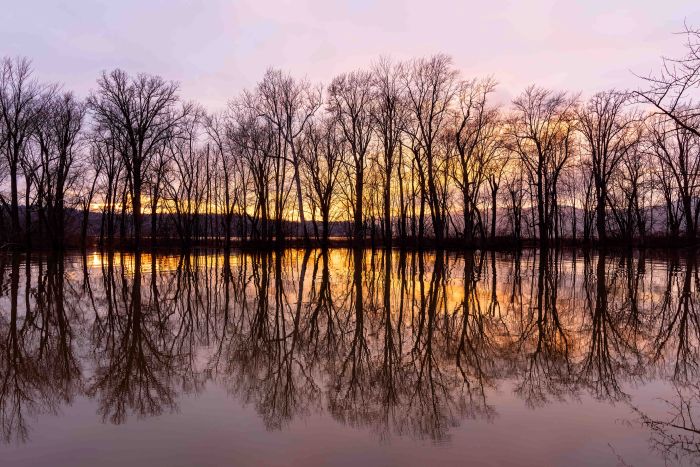
Photos by William Driscoll www.wjd.photography @william.driscoll.iv
To support vital journalism, access our archives and get unique features like our award-winning profiles, Book of Lists & Business-to-Business Directory, subscribe HERE!