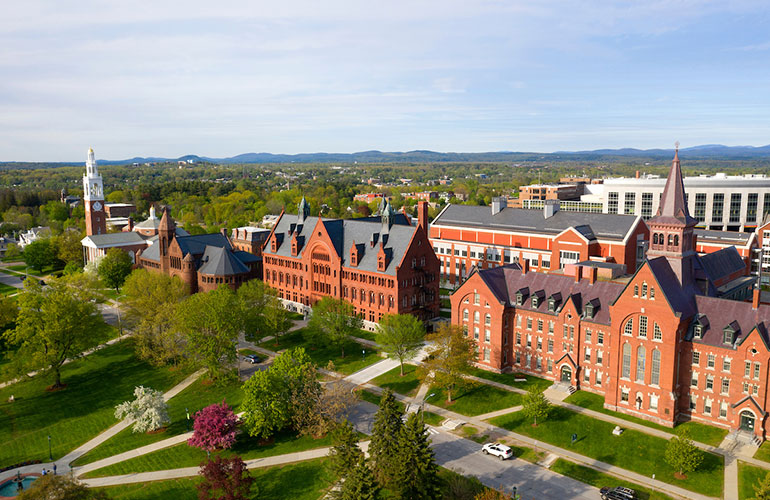
Photo: UVM drone photo. Photo by Kelly Schulze
by Timothy McQuiston, Vermont Business Magazine
Marlene Tromp, an accomplished scholar in Victorian literature and culture with extensive experience in higher education administration, officially began her tenure July 1 as the 28th president of the University of Vermont.
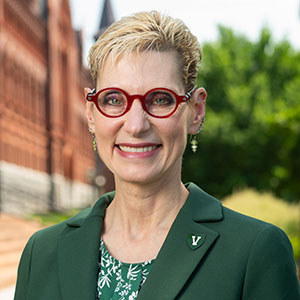
Photo: UVM President Marlene Tromp.UVM photo.
On that same day at Middlebury College, Ian Baucom, a widely regarded leader who has long championed the role of colleges and universities as civic institutions, took the reins of the presidency from Laurie Patton.
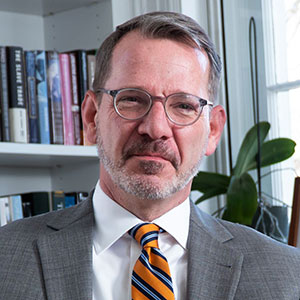
Photo: Middlebury President Ian Baucom. Photo by Jeneene Chatowsky | The Middlebury Campus
Both new leaders, like their colleagues across the country, enter office facing budget and enrollment challenges as well as uncertainty and concern regarding Trump administration policies and actions that affect higher education. However, each comes to Vermont under profoundly different circumstances.
Tromp joins UVM after six years as president at Boise State University, a school known for its vibrant campus life, strong athletic programs and research opportunities, particularly in areas like engineering and the health professions. UVM’s Board of Trustees announced Tromp’s selection on March 20, following an extensive search that examined over 100 candidates and included input from the university community.
Tromp succeeds interim President Patty Prelock, who guided the state’s flagship university after Suresh Garimella left UVM last October to lead the University of Arizona. Her salary was set at $575,000 per year.
UArizona had moved quickly to replace its former president, Robert C. Robbins, as the state university was suffering a budget deficit of more than $100 million. So motived was the Tucson-based school to install new leadership that it will pay Robbins through June 2026. His and Garimella’s overlapping base salaries total about $1.5 million combined. With the usual add-ons, the annual total compensation works out to about $2 million.
The Arizona Board of Regents subsequently hired Prelock as UArizona’s next provost, reuniting the former UVM team.
The university suffered a tumultuous 2024 as Robbins stepped down following a pay cut and the regents elected a new chair. Garimella was named president on Aug. 9 of that year.
UVM trustees acted much more deliberately than their UArizona counterparts in their hiring process. Tromp interviewed for the open position last winter and announced she was leaving Boise after she became the lone announced candidate for the UVM job in March.
Tromp stepped into the presidency at Boise State amid intense DEI blowback in Idaho. Her predecessor had boasted of his administration’s diversity, equity and inclusion efforts while boosting the school’s enrollment and academic standing.
These accomplishments, however, were not hailed by the state’s elected leaders in the deeply conservative state, which voted for Donald Trump by a wider margin than Vermont voted for Kamala Harris in the last presidential election.
Despite the academic and financial success during Tromp’s tenure at the helm of Boise State, while also guiding the university through the COVID-19 pandemic, she could not overcome the ongoing political ire.
Shortly before Tromp came to Vermont, UVM Vice President for Finance and Administration Richard Cate announced he would retire from the university effective June 27, after a 17-year career. In a move that paralleled that of Prelock’s jump to UArizona, UVM appointed Alicia Estey, Boise State’s chief financial officer and vice president for finance and operations, to succeed Cate.
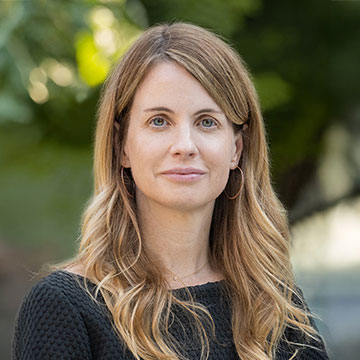
Photo: Alicia Estey, UVM finance vice president. UVM photo
Estey had served in several capacities at Boise State over a 19-year career there and spearheaded the university’s response to the COVID-19 pandemic. She also had been Tromp’s chief of staff.
Among her accomplishments as CFO was eliminating a $15 million structural deficit while managing Boise State’s $743 million budget.
Estey also was a defendant in a civil case, in which Boise State ultimately lost a $3 million judgment, according to local news reports. The case involved a short-lived coffee shop on campus. The café’s owner claimed she was discriminated against for displaying a “thin blue line“ flag in support of law enforcement following the 2020 murder of George Floyd in Minneapolis by a police officer.
While Tromp was called to testify in the case, she was not a defendant. The verdict was rendered in September 2024, which Boise State has appealed.
Meanwhile, the Idaho State Senate, while generally praising the financial recovery of the university, slashed $2 million from the school’s budget directly related to its DEI policies, most of which had been instituted by Tromp’s predecessor and removed in subsequent years. One Democratic senator called it a “punishment,“ according to idahopress.com, but nonetheless voted in favor of the measure.
In a video message shared with the UVM community, Tromp expressed her excitement at joining UVM and pursuing the vital work of improving life for individuals and communities across the state and beyond.
“I’m so happy and excited to be joining UVM as your president,“ she said. “I’m so grateful for the welcome I’ve had from this community and so inspired by the work the university is doing.
“I’ve experienced the power of education to transform lives. My passion and commitment are to ensure that we can change people’s lives, so they can change the world,“ added Tromp, who brings three decades of experience in teaching, research, and higher education administration to UVM.
At Boise State, Tromp guided the institution to record graduation rates and levels of philanthropic funding, while also expanding its research funding. She also led the formation of strategic industry partnerships and programs to deepen Boise State’s engagement with its surrounding community, according to her biography.
A humanities scholar with a concentration in Victorian literature and culture and its relationship to current society, Tromp has published widely, including nine books and dozens of peer-reviewed papers. Prior to Boise, she was campus provost and executive vice chancellor at the University of California at Santa Cruz; vice provost and dean of the New College of Interdisciplinary Arts and Sciences at Arizona State University; and chair of the faculty as well as director of women’s studies at Denison University.
Tromp has won numerous awards for her teaching, scholarship and community service. She served on the NCAA Division I Board of Directors and consults on higher education with the Federal Reserve Board of San Francisco.
Raised in Wyoming, Tromp earned her Bachelor of Arts degree from Creighton University as a first-generation college student, a Master of Arts in English from the University of Wyoming, and a Ph.D. from the University of Florida.
“It gives me great pleasure to welcome Marlene Tromp as the 28th president of the University of Vermont,“ said Cynthia Barnhart, chair of the Board of Trustees and co-chair of the Presidential Search Advisory Committee. “The leader of UVM is also a vital leader for the community and state, and Dr. Tromp brings with her the experience and ability for great success that will benefit all three. She has demonstrated excellence as a leader and a scholar who can foster deep and meaningful connections across the university and beyond.“
Tromp closed her video message to the community by expressing, “Together, we are going to do some amazing things for our students, our state and the world.“
For academic year 2024-25, Boise State University enrolled a total of 26,670 students. During that same period, UVM enrolled 14,320 students.
Middlebury College
Unlike the drama surrounding the sudden departure of Garimella and the hiring of Tromp at UVM, Middlebury College enjoyed a seamless transition between presidents. Patton, the university’s first woman president, announced her intention to step down months ahead of her January departure to become president of the American Academy of Arts and Sciences in Cambridge, Massachusetts.
On Jan. 22, the Middlebury Board of Trustees announced Baucom, 57, the Robert C. Taylor Professor of English and provost at the University of Virginia, as its pick to serve as the institution’s 18th president.
Dean of Language Schools Stephen Snyder served as interim president until Baucom began his duties on July 1.
Like Patton, Baucom brings extensive leadership experience in higher education to his new position. Prior to serving as UVA’s provost, he worked for eight years as dean of its College and Graduate School of Arts and Sciences. Before that, he taught at Yale University and served as chair of the English department at Duke University.
“I love the mission of Middlebury, I love residential liberal arts education,“ Baucom said in an interview with the student-run newspaper, The Middlebury Campus, last winter. “I’m looking forward to learning how to ski, but really the student experience and getting to know the faculty and being in this place is what’s drawn me to Middlebury.“
Baucom, who grew up in South Africa, said he was excited at the idea of joining a small liberal arts community after spending his undergraduate years in a similar environment at Wake Forest University.
“A lot of it is learning from the richness of that, the relationships that we were able to build with students. I love the idea of having a class of 600 students, ideally all of whose names I would like to get to know,“ Baucom said.
“Part of what drew me to Middlebury was how deeply, as I understand it, that the college is committed to the town of Middlebury,“ he added.
Baucom said he recently toured the new child care center in town as well as the site of a future affordable housing center.
“That is going to be an important part of trying to build and strengthen that relationship,“ he said.
Baucom takes the reins at MIddlebury during a period growth in scope and resources during the past decade.
“There are a handful of defining colleges and universities across the globe,“ Baucom said. “Middlebury is one of them.“
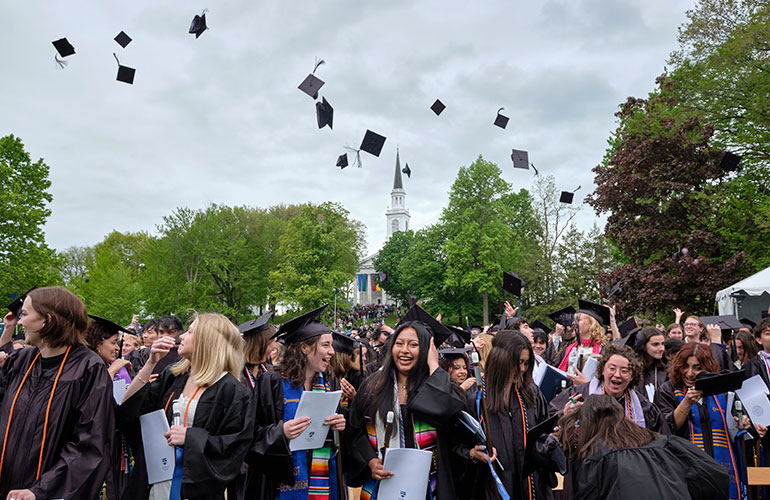
Photo: Middlebury’s Class of 2025 celebrates at commencement. Photo: Todd Balfour/Middlebury College.
Board chair Ted Truscott called Baucom “an inspired choice“ to serve as the college’s next president.
“It was clear from our first conversation that we share values around what’s most important at a place like Middlebury — immersive education, developing global awareness while living and contributing on a local scale, and respecting the experiences of others. I speak for the entire board when I say we can’t wait to get started.“
However, Middlebury continues to face serious challenges that Baucom will be tasked with leading the college through, including overenrollment; employee compensation and understaffing; artificial intelligence; the honor code; and town-gown relations, to name just a few.
According to middleburycampus.com, the college faces a $14.1 million deficit. Faculty members voted overwhelmingly last spring to demand the college reverse cuts to employee compensation (to reduce expenses) and plans to increase enrollment (to increase revenues).
The faculty motion stated that the proposals would increase enrollment up to 2,650 (above the historic norm of the low 2,500s over the last 20 years). They said the increase would strain faculty and staff while diminishing the student experience.
Faculty also asked why the underperforming Middlebury Institute of International Studies at Monterey in California was not addressed by the administration when it alone accounted for $8.7 million of the total deficit, according to middleburycampus.com.
Additionally, there remain uncertainties around pronouncements from the White House to curtail or suspend critical federal funding to those colleges and universities that fail to rein in DEI programs and initiatives. Middlebury maintains an Office of Institutional Diversity, Equity and Inclusion and has a large number of foreign students.
Since Baucom was named the new president, Middlebury has announced that it received a total of 11,831 applications for the Class of 2029 and 2029.5, with a record high number of international students in the pool. Acceptances were sent to 13.9% of the applicant pool.
In July, the college announced it had raised more than $102 million in gifts and pledges in fiscal year 2025, marking one of the strongest fundraising years in its history. This year’s contribution brings the total raised during For Every Future: The Campaign for Middlebury to $559 million, putting Middlebury on pace to reach its $600 million goal by 2026, nearly two years ahead of schedule.
Summer tends to be a very quiet time on college campuses. The vociferous attacks against DEI, Harvard, Columbia (which paid a $200 million fine in late July over antisemitism claims) and other institutions from last spring has largely migrated to the courts or been replaced by other points of contention at the White House. But students are returning to campus soon.
To support vital journalism, access our archives and get unique features like our award-winning profiles, Book of Lists & Business-to-Business Directory, subscribe HERE!