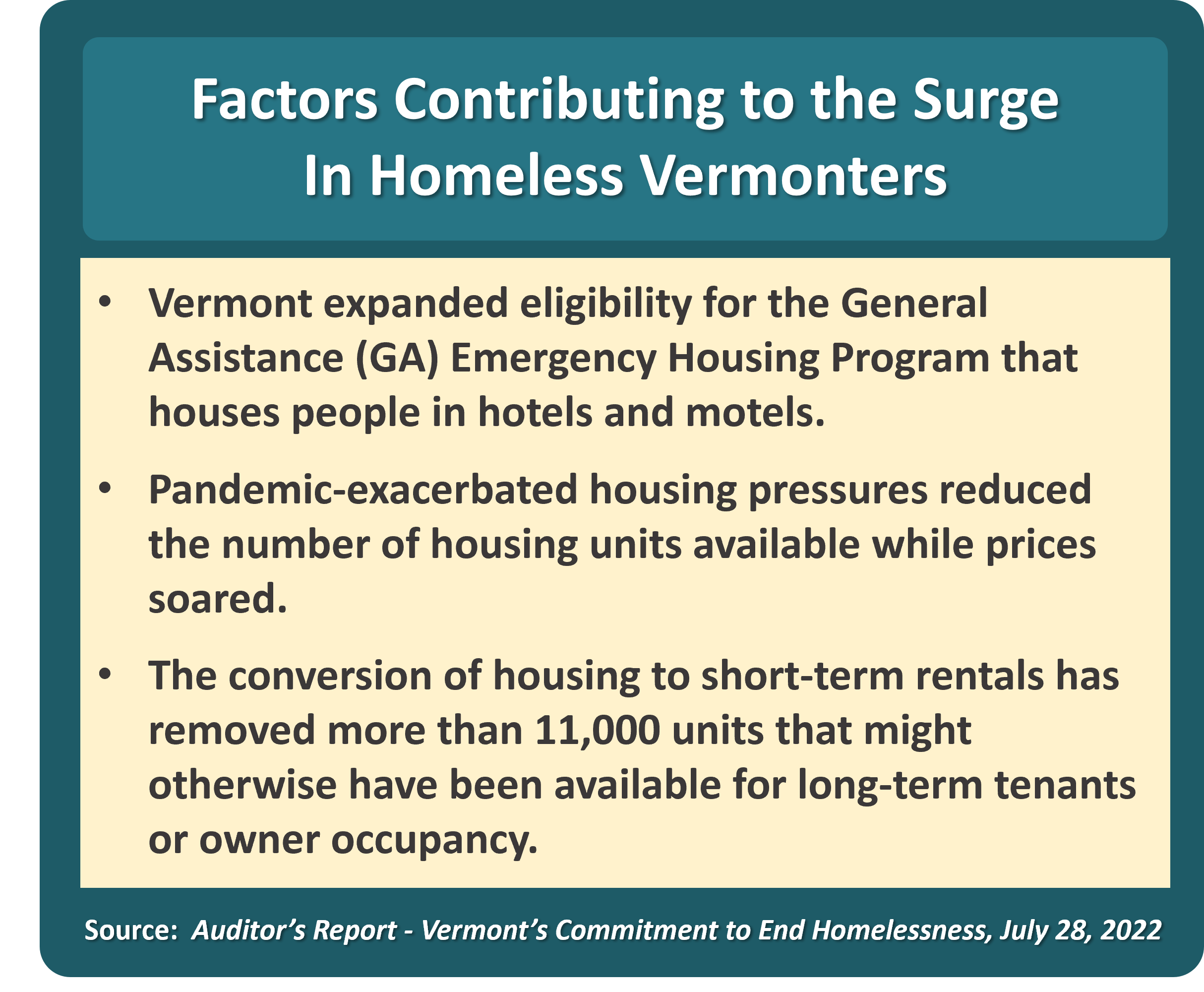
by Vermont Auditor of Accounts Doug Hoffer Ten years ago, it would have been unimaginable to think that our small state would spend an amount exceeding $800 million in the coming decade to address homelessness and that important policy decisions would be made without sufficient data or analysis, but that’s what’s happened.
The human and financial toll of the status quo cannot be sustained. Policymakers need better information to solve this problem. Therefore, we urge the Scott Administration to collect and analyze more and better data to inform better discussion to this ongoing crisis.
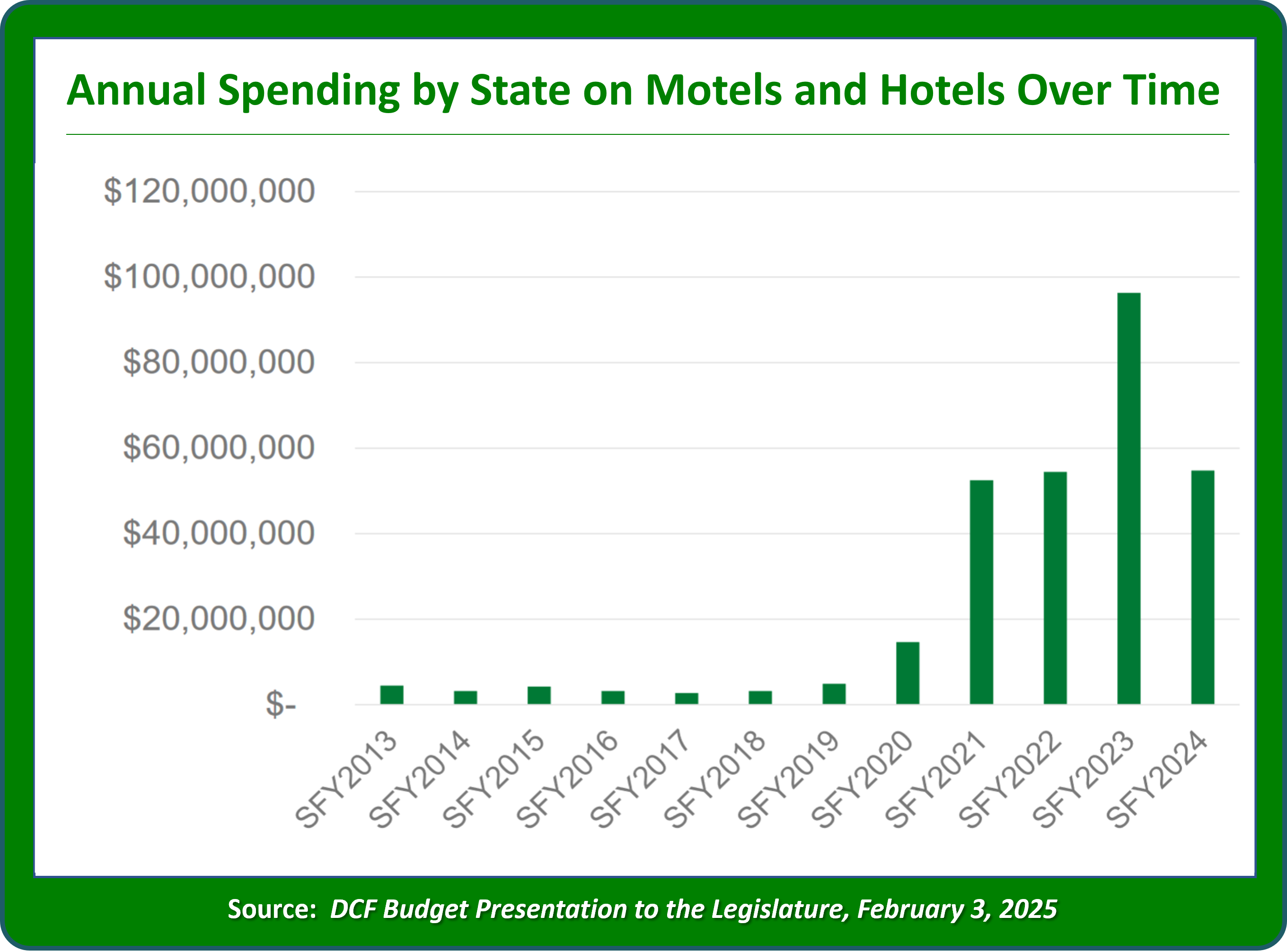
Three years ago this week our office released a report that, for the first time, calculated the total financial commitment Vermont has been making to address homelessness. We concluded that Vermont had spent more than $455 million in the six years we reviewed (a period ending June 30, 2022). Annual totals in the first four years ranged from $33M to $51M, but when COVID hit the annual total shot as high as $153M. The grand total for the last nine years easily exceeds $800 million.
In the last twelve months, Vermont spent more than $33 million on motel and hotel stays for the homeless alone.
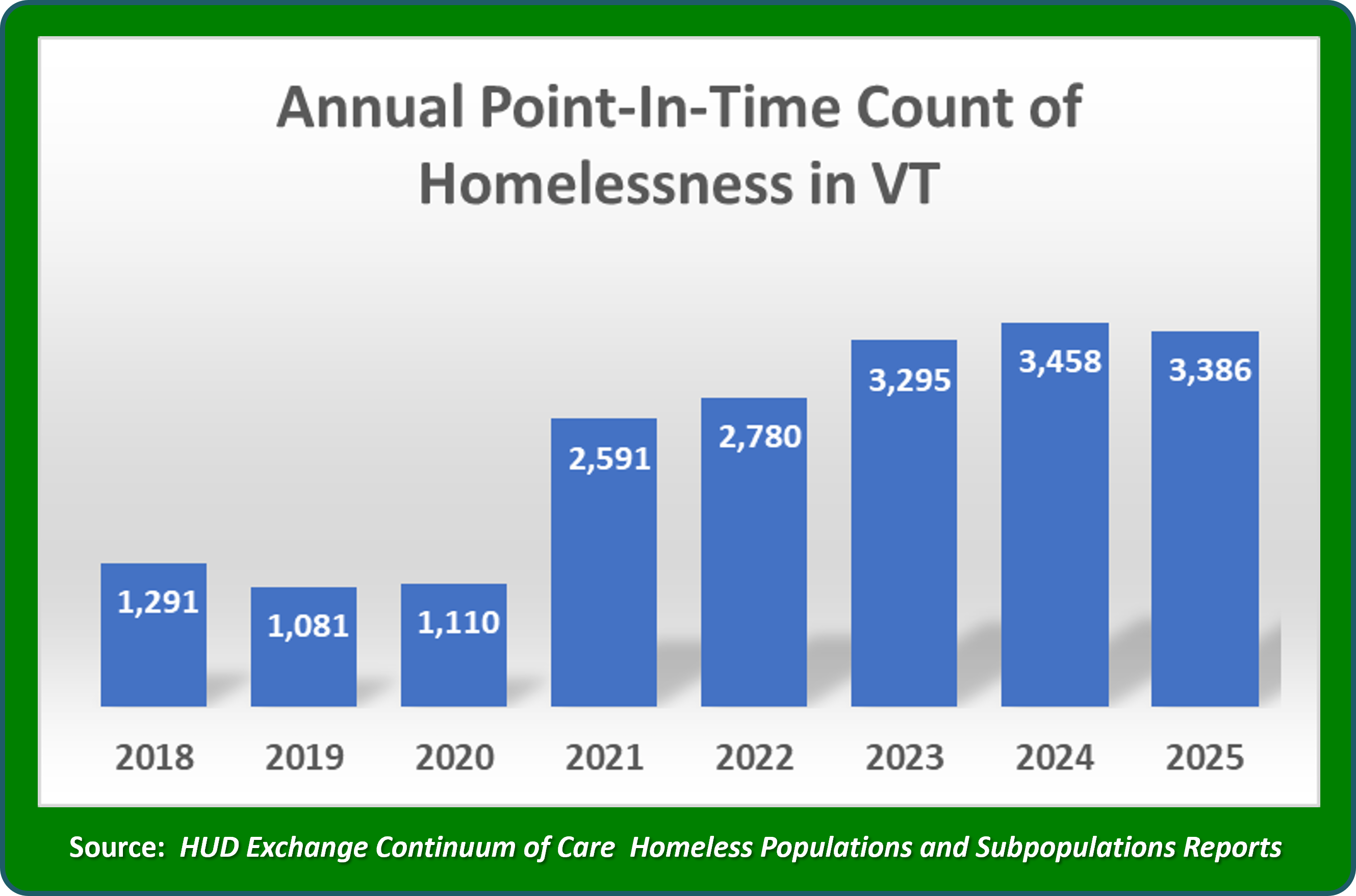
Despite all this spending, the problem of homelessness is worsening. Prior to the pandemic, Vermont’s Point-in-Time Count – an annual one-day snapshot of homeless persons – hovered between 1,000 and 1,300 people, but the number increased significantly during the pandemic. The 2023 count was 3,295, and in 2024 the count was an all-time high of 3,458.
Homelessness is a challenging public problem. For years, the Legislature and the Scott Administration have failed to agree on what to do about it. In the 2025 legislative session, a bill that would have deployed a new strategy was vetoed by Governor Scott.
We do not take a position on the correct strategies, but we were disappointed that new and improved data reporting requirements which were wisely included in the bill by the House Human Services Committee fell victim to the veto pen. It is our hope that the Scott Administration will begin collecting the data that was in the bill anyway, since they don’t need legislation to do so, and because good data is so badly needed in this area.
Vermonters may be surprised to learn that after taxpayer spending that is climbing toward a billion dollars in just one decade, and with a tripling of the homeless population, little data is being collected that indicates which strategies are working and which ones are not in terms of preventing people from falling back into homelessness after finding housing.
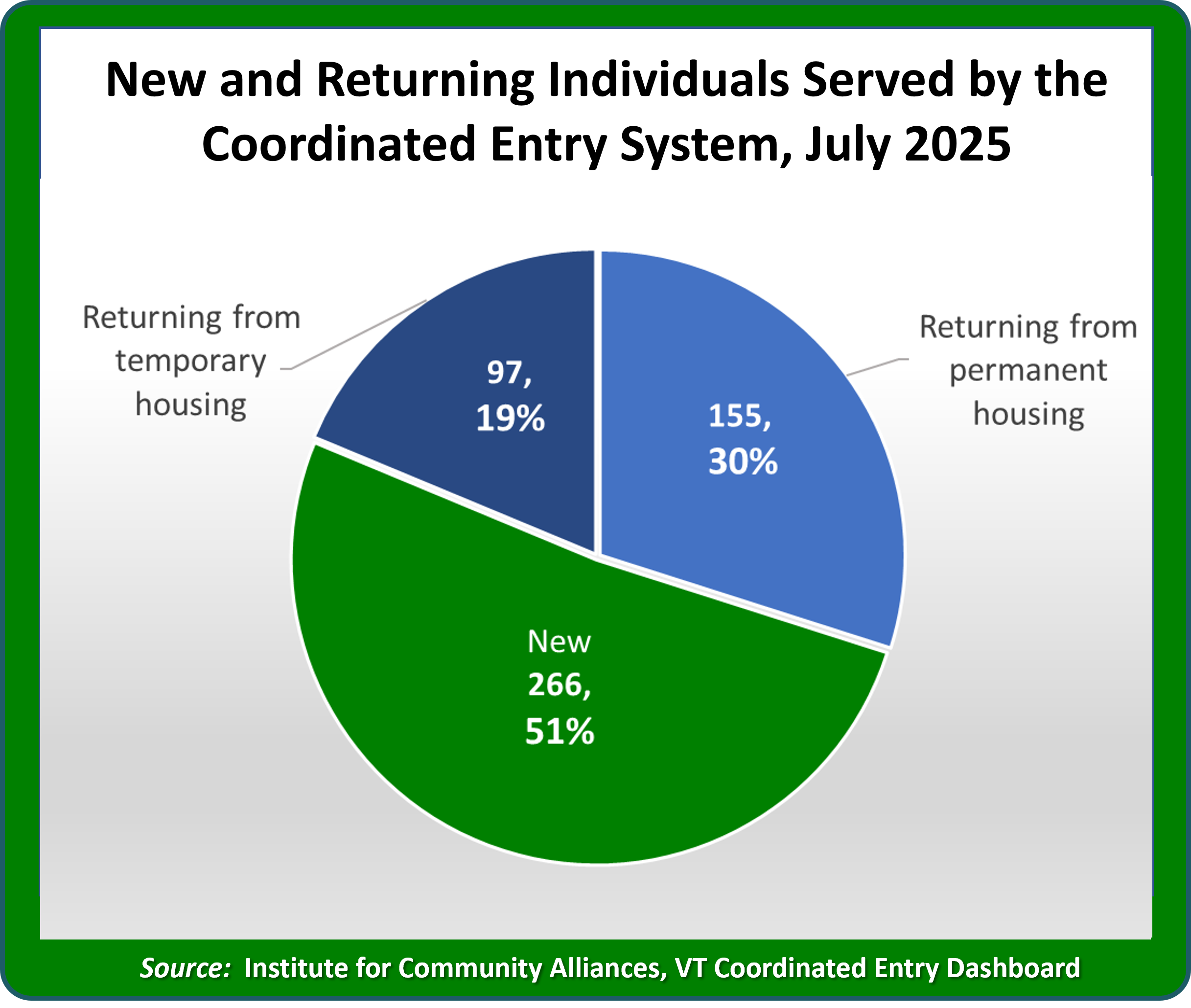
Consider the chart below. Each month, the Scott Administration reports information to the Legislature about the individuals being served by the Coordinated Entry (CE) system. CE is the work of a group of regional housing organizations who assist homeless Vermonters to find housing. The numbers in each color represent individuals served in the last month. “New” represents individuals being served by CE for the first time. “Returning” means someone who was previously served by CE, was placed in temporary housing, but is again homeless or “at risk,” which signifies being in such an unstable situation that homelessness is an imminent possibility. “Returning from Housing” means the individual was previously served by CE, was placed in permanent housing, but is once again homeless or at risk of homelessness.
As you can see, nearly half the people being served by the local CE groups are returning to homelessness. We did some digging to understand why that is the case.
We wanted to know more about which settings these households were returning from, and what caused them to become homeless again. Such information could have a number of benefits – knowing which programs to fund, determining whether some landlords or housing organizations are associated with greater numbers of households returning to homelessness, and identifying which services seem to be most helpful to keep people housed.
Here’s what we learned from our attempt to access good data:
- The Department for Children and Families (DCF) doesn’t track what’s happening with this group of homeless households at a level of detail necessary to strategically address the churn shown in the chart.
- DCF put us in touch with the Institute for Community Alliances, which hosts the statewide dashboard from which the chart is derived. The data they could provide was extremely limited. They do not know what caused the return to homelessness, who the property owners/landlords were, or how long the household was housed before returning to homelessness. As a result of these gaps, they don’t know which State programs or property owners (if any) are associated with the disproportionate returns to homelessness.
- The data itself that has been reported to the Legislature is incomplete and has accuracy issues. It is incomplete because not all households in the motel program are included in the CE data set, nor are households who are experiencing homelessness due to domestic violence (due to federal requirements). The accuracy problem, as relayed to us, is because the data is simply not always clean or current.
- At this point, accessing case files directly from local CE groups would be the only way to really know what explains the return to homelessness of so many households in order to inform funding and policy decisions. That is not happening at this time.
In short, despite many good intentions and much hard work, we do not believe any state agency is trying to systematically learn from those returning to homelessness to make data-informed decisions about which programs and supports are working best.
The Scott Administration can rectify this. We recommend that the Governor direct DCF to review the case files of a broad sample of households in the CE system who have returned to homelessness to see if themes emerge that would inform funding and policy decisions moving forward.
We can and must do better.
To support vital journalism, access our archives and get unique features like our award-winning profiles, Book of Lists & Business-to-Business Directory, subscribe HERE!