

It increases labor force participation, lowers downstream costs for Vermonters, and most importantly, heals individuals and communities to reclaim a future filled with possibility.
by Daniel Franklin and Kevin Chu
Vermont’s future depends on a pivotal choice: embrace growth and abundance or succumb to stagnation and scarcity. This is not just about economics. It's about the social fabric of our communities and the well-being of Vermonters. A healthy economy merely enables affordability and ample services.
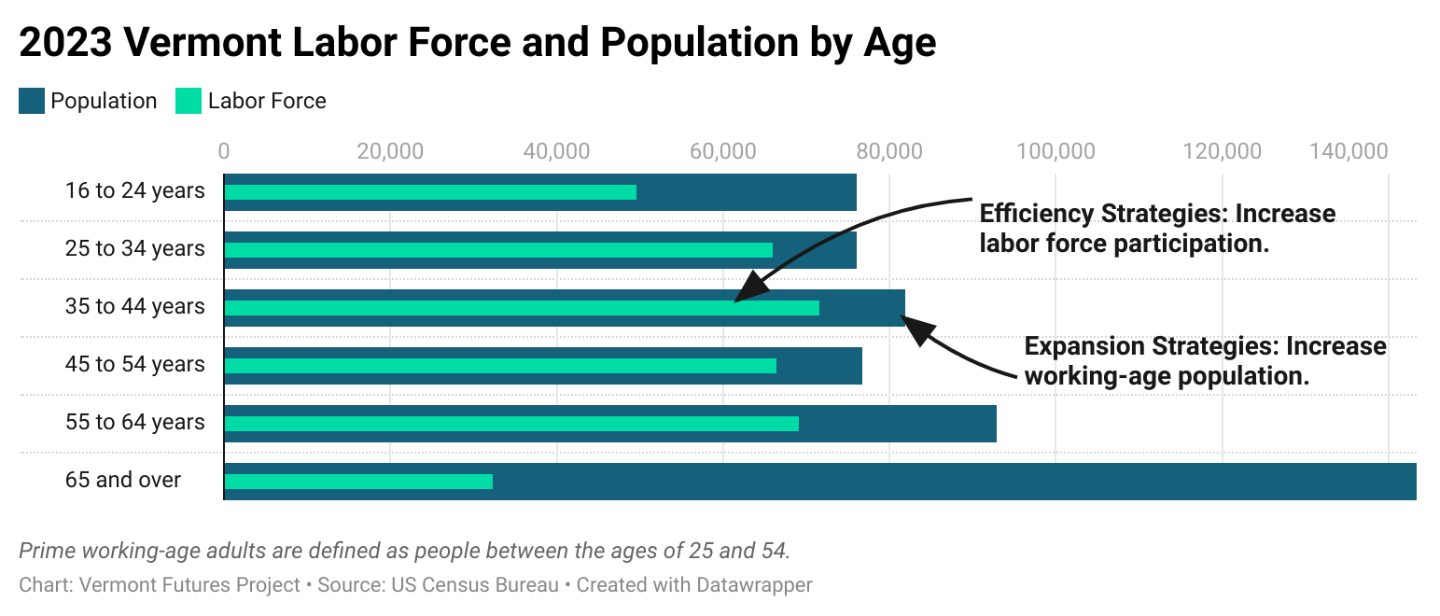
One lever for inclusive economic growth is investing in recovery services for Vermonters affected by substance use disorders (SUDs). These investments aren’t just compassionate; they’re strategically aligned with the Vermont Economic Action Plan’s goal to increase labor force participation rate to 70% by 2035.
To get there, we must remove the barriers that keep tens of thousands of Vermonters sidelined from the workforce, including those in recovery.
The economic and social toll of SUDs is profound.
Nationally, the Centers for Disease Control and Prevention (CDC) estimated the cost of the opioid epidemic in the U.S. exceeded $1 trillion in 2017, which encompasses healthcare expenses, lost productivity, and criminal justice costs.
In Vermont, rates of overdose deaths are higher than the national average, and 34% of adults with mental health issues report an unmet need for counseling or therapy compared to 28% nationally. But within these numbers is an opportunity: every Vermonter in recovery represents untapped potential to strengthen our communities.
Recovery programs work. They reduce recidivism, ease the burden on the criminal justice and healthcare systems, and most importantly, reconnect people with purpose. The Vermont Association for Mental Health and Addiction Recovery’s (VAMHAR) important work – advocating for treatment access, supportive housing, and recovery-friendly workplaces – helps people overcome stigma and reintegrate as employees, neighbors, and contributors to society.
These are efficiency strategies aligned with the Economic Action Plan to address Vermont’s workforce shortage by increasing labor market participation and productivity of current Vermonters.
Recovery also intersects directly with another urgent need in Vermont: housing. Stable housing is a cornerstone of recovery, and developing recovery residences adds to Vermont’s housing stock while supporting human and community transformation through economic growth.
Vermont cannot reach its long-term goals without embracing the potential of all Vermonters. Investing in recovery is an economic development strategy – it reconnects individuals to work, adds to housing abundance, reduces public costs, and expands the tax base. Without inclusive growth, Vermont faces a path towards scarcity where rising costs or cuts to services become the only options.
The Vermont Futures Project Economic Action Plan charts a better path, one that’s rooted in affordability and abundance. Supporting recovery is a strategy that expands opportunities, while economic growth generates resources to sustain the services. It’s a virtuous cycle that benefits individuals, employers, and communities.
Choosing abundance means valuing every Vermonter’s potential. By embedding recovery into our statewide economic strategy, we move from managing crisis to building a more resilient and inclusive future
About VAMHAR
The Vermont Association for Mental Health and Addiction Recovery is a statewide non-profit organization dedicated to advocacy, education, and advancing recovery-oriented systems of care. VAMHAR works to promote the power of lived experience and to build inclusive, equitable pathways to wellness for all Vermonters.
About the Vermont Futures Project
The Vermont Futures Project is an independent non-partisan organization pursuing answers to their mission question: How can we use data to support the evolution of Vermont’s economy towards a thriving future full of opportunity for all?
Daniel Franklin is Executive Director of the Vermont Association for Mental Health and Addiction Recovery, and Kevin Chu is Executive Director of the Vermont Futures Project.
Vermont Business Magazine