

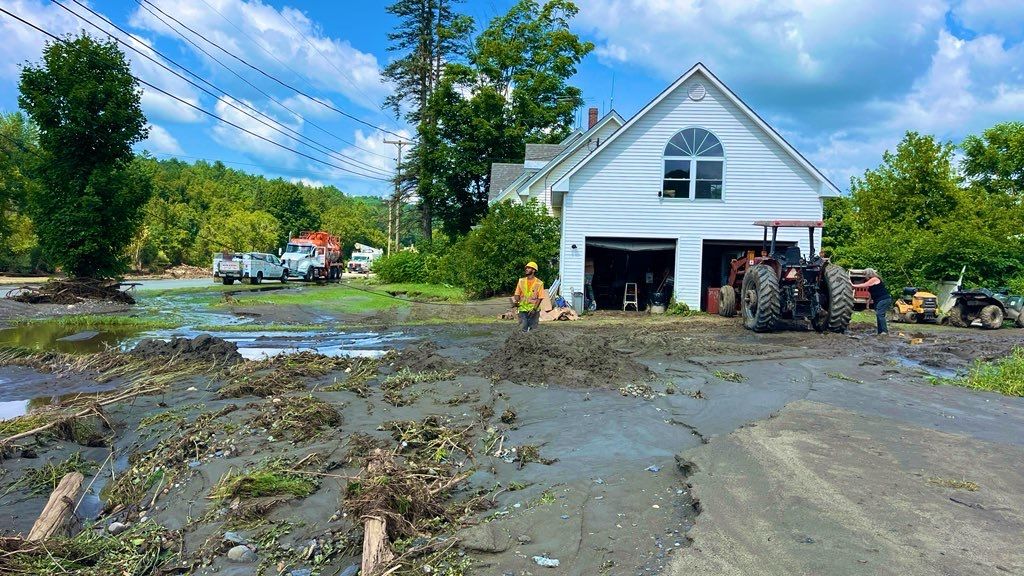
Home flooded in July 2024. Photo courtesy Vermont Agency of Commerce.
by Vermont Senator Anne Watson, Chair of Senate Natural Resources & Energy
It has been heartbreaking to see flash flooding occur in Vermont for the past three summers, and increasingly around the country as well. I, for one, don't want to let this kind of news begin to feel normal. This is not the Vermont I grew up in. It is already hotter and wetter from climate change and there are a number of things we can do as individuals, homeowners, and renters to be prepared for the next natural disaster. What the last three years have taught me is that flooding and erosion can impact anyone anywhere in Vermont, depending on what areas receive intense rainfall. So it's important that we are all prepared for that possibility.
Every choice we make matters. And the choices we make right now will affect how prepared we are for our next natural disaster. Here are some practical steps you and your family can take to be better prepared for potential flooding events. Some of them may apply to you, some may not, but these are taken directly from Vermont Emergency Management's website: vem.vermont.gov/preparedness/floods:
- Install “check valves” in sewer traps to prevent flood water from backing up into the drains in your home.
- Ensure your home is ready. Where possible, minimize damage from basement flooding by elevating utilities and materials that could be damaged by limited basement flooding.
- Anchor fuel tanks to ensure that they do not wash away, creating a safety and environmental issue inside or outside the home.
- Develop a Family Emergency Kit.
- Make a Family Communication Plan. Designate an out-of-state relative as a central point of contact.
- Be prepared to turn off electrical power when there is standing water, fallen power lines, or before you evacuate. Know how to safely turn off gas and water supplies before you evacuate.
- Contact your insurance agent or local government to discuss flood insurance coverage.
Other recommendations from ready.gov include: know evacuation routes, safeguard documents, and plan with your neighbors.
Also, if you haven't signed up for VT Alerts, now would be a great time to do that. You can sign up by going to this website: vem.vermont.gov/vtalert. Click Register for VT-ALERT and follow the instructions from there. As stated on the State’s website:
“VT-ALERT is used by the state and local responders to notify the public of emergency situations. Those include, but are not limited to, evacuation information, chemical spills, shelter-in-place alerts, severe weather advisories, boil water advisories, and roadway interruptions. Residents can tailor the alerts to specific locations, types of alerts and on which devices they will be notified.”
I’d highly recommend signing up to anyone living or working in Vermont, but WCAX reports that only 90,000 Vermonters have signed up to receive these alerts. That's only 14% of the state's total population.
Finally, I'll add one recommendation of my own. Since we know these events are driven and exacerbated by climate change, we all also have an obligation to do what we can to reduce our fossil fuel consumption. Thankfully most of these renewable alternatives are much cheaper to operate than their fossil fuel counterparts. Maybe this means taking the bus, carpooling, leasing or buying an EV or plug-in hybrid, adding a heat pump, pellet stove, or other renewable heating system. For each of us the solutions may look different, but it’s important that we are all looking to take that next step toward the ways in which we can reduce carbon pollution.
Meanwhile, the Legislature will continue to have more work to do this next session to protect and prepare Vermont for potential natural disasters. This includes ensuring that Vermont’s dams are safe, and that we are protecting our wetlands to help prevent and reduce the risks from these kinds of events in the future.
We all have a part to play and we can all make a difference to ensure that our families and neighbors are safe and able to weather the storms that we know are likely to continue on into the future.
Multiple languages here: vem.vermont.gov/preparedness/language Many other resources including a free workbook: vem.vermont.gov/preparedness
Sincerely, Vermont Senator Anne Watson, Washington District