by Vermont Auditor of Accounts Doug Hoffer The Governor recently signed Act 57 into law. The bill relates to emergency management and flood response. We were especially interested in this legislation having completed recent audits of the State’s Hazard Mitigation Plan and the Agency of Natural Resource’s Dam Safety Program.
Hazard Mitigation: Our audit of the 2018 State Hazard Mitigation Plan found that the State completed just 33% of the mitigation actions it called for. That included less than 50% of the actions identified as “priority” actions in the plan. We made a series of recommendations to the Administration to improve this performance. The recommendations aimed to make the so-called Planning and Policy Committee, which is responsible for implementing the Plan and is comprised of agency leaders, more accountable to actually complete the actions called for in the plan. Other recommendations focused on improving monitoring and evaluation, training, and action prioritization.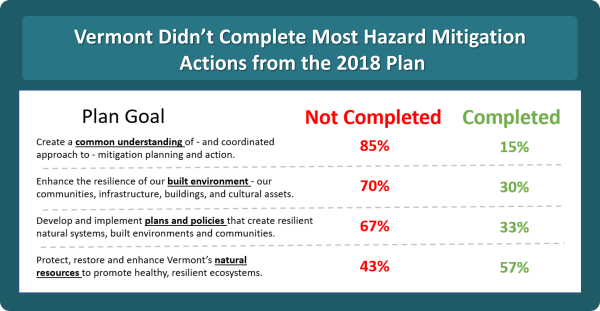
The new legislation requires Vermont Emergency Management staff, who handle the day to day of State emergency planning, to present an annual progress report covering all actions in the all-hazards mitigation plan. We welcome this provision, which addresses an additional recommendation in our audit.
The all-hazards mitigation plan is an important road map outlining the actions State experts believe are most critical to mitigate the loss of or damage to life and property due to hazardous events like floods. The Legislature should receive an annual progress report. After all, if they don’t know what is or isn’t being done (which has been the case) they can’t determine how to best allocate resources to keep people safe.
The legislation doesn’t address a number of the other recommendations, but that doesn’t prevent the Governor from directing his staff to implement them immediately.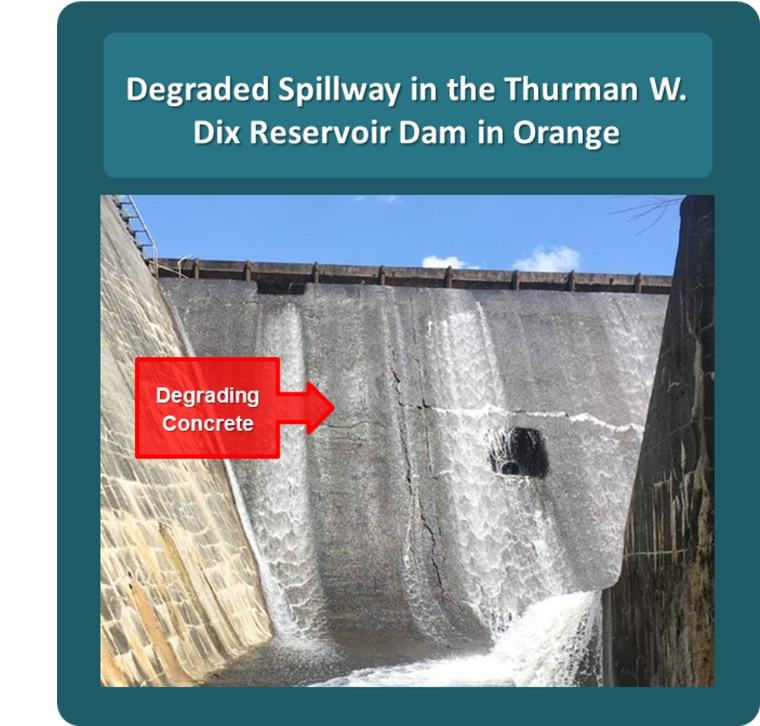
Dam Safety: The new law creates a new process by which dam owners can draw down water levels in anticipation of flood events during which a dam failure is likely to cause substantial damage or injury to persons or property. While not addressed in the bill, our audit of the Dam Safety Program found that a number of State-owned and privately-owned High Hazard Potential dams are in poor condition and have been so for a long time.
It’s worth noting that a High Hazard Potential dam is defined by ANR as one for which “failure or mis-operation will probably cause loss of human life.” And a dam in “poor” condition is defined as having “Significant structural and or operation and maintenance deficiencies are clearly recognized under normal loading conditions.” Emergency measures in the lead up to expected weather events are appropriate, but it’s no less important to re-double efforts to address dams which might cause death or destruction under more normal conditions.
We recommend the Governor’s team work with DEC staff to ensure all of our recommendations are implemented. An important component of our recommendations is the adoption of new dam safety rules which were initially to be adopted by July 1, 2022. They have been pushed back several times. At last check, ANR intends to adopt the new rules by July 1, 2026, a full four years after the original deadline. Every year of delay puts Vermonters at greater risk of tragedy.
We’ll continue to monitor and provide updates on these life safety issues.
Vermont State Auditor
Montpelier, VT 05633-5802
www.auditor.vermont.gov
To support vital journalism, access our archives and get unique features like our award-winning profiles, Book of Lists & Business-to-Business Directory, subscribe HERE!