by Timothy McQuiston, Vermont Business Magazine May revenues for the General Fund, Transportation Fund, and Education Fund collectively totaled $201.7 million, falling short of the consensus target by $12.3 million (-5.8%).
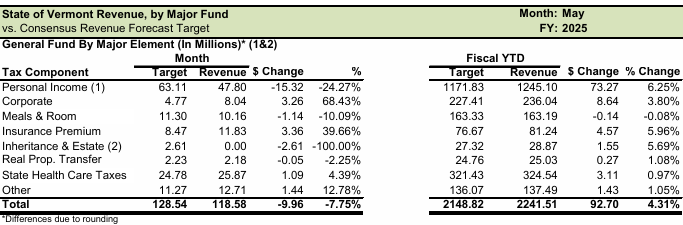
- General Fund: May receipts were $118.6 million, or $10 million (-7.7%) below target. The Personal Income Tax underperformed significantly at -24.3%, or $15.3 million below target. Other contributors to the shortfall included the Estate Tax, Meals and Rooms Tax, and Bank Franchise Tax. Note: The Estate Tax hit its statutory cap of $28.875 million, with additional receipts redirected to the Higher Education Trust Fund. While the Personal Income tax is the most vital revenue source for the state, the Corporate Income tax continues to out-perform its targets, as, in fact, is the PI on an annual basis, up 6.25% for the year. Because of the recent tax reporting and refund season, the PI can jump around. June will be the final month of the fiscal year, as the General Fund to date is $92.7 million ahead of targets set by the Emergency Board in January.
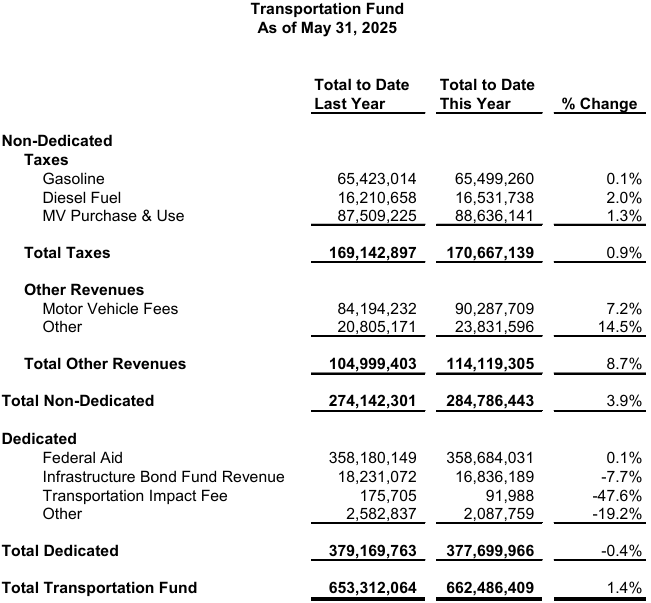
- Transportation Fund: Collected $27.3 million, or $1.6 million (-5.6%) under the May target. While the Diesel Tax slightly outperformed, other categories like Motor Vehicle Fees (-8.9%) and MV Purchase & Use (-5.9%) underperformed.
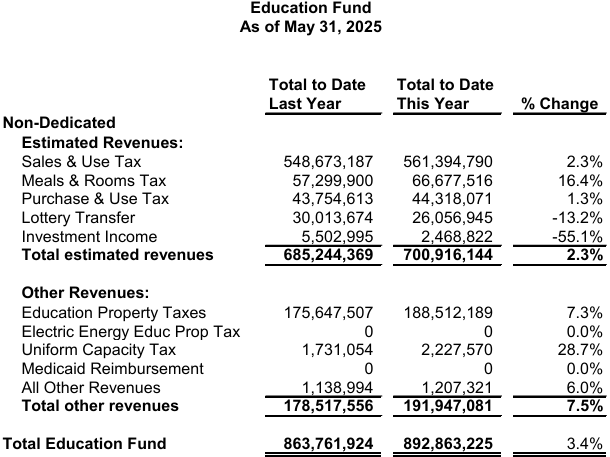
- Education Fund: Recorded $55.8 million, missing its target by $0.76 million (-1.4%). A strong showing by the Sales & Use Tax (+$1.5 million) was offset by underperformance in Lottery Transfers and Meals & Rooms revenues.
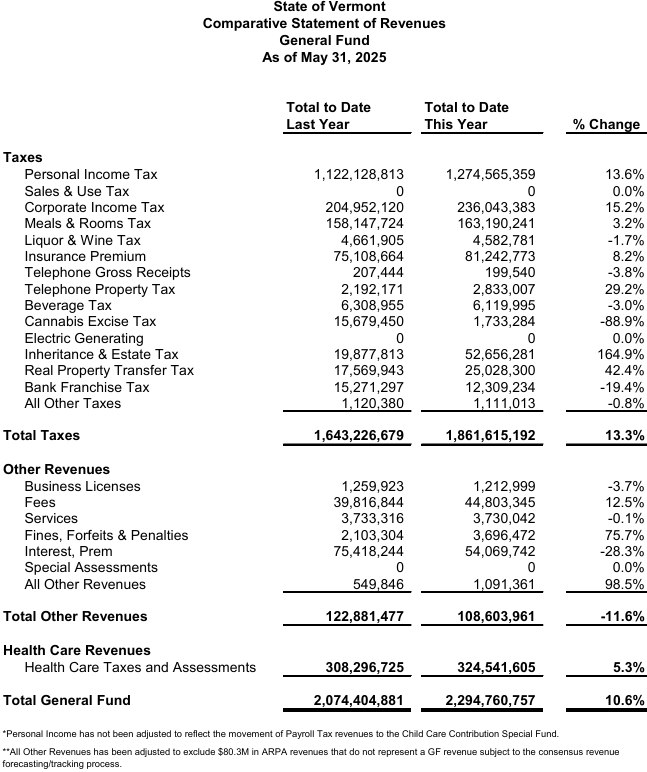
Other elements of the revenue report of note include an 88.9% decline in the Cannabis Excise Tax, year over year (-$14 million); Interest down 28.3% (-$21 million), as pandemic recovery funds get used up; and Lottery transfer revenues down 13.2% (-$4million). Meanwhile in the Ed Fund, the Sales & Use Tax was up 2.3% ($13 million) and the tourism-related Meals & Rooms Tax was up 16.4% ($8.5 million); and the unpredictable Inheritance & Estate Tax was up 164.9% ($32.8 million).
Also, the state took in $6.1million in sports wagering income through May. It is not reported on the monthly revenue reports because it goes into the sports wagering enterprise fund, which is then swept into the General Fund at year end. Gambling on sports only became legal in Vermont in January 2024. State officials expected wagering to bring in about $7 million in the first full fiscal year, which ends June 30.
SEE TABLES BELOW
Administration Secretary Sarah Clark said: “Although revenues were below monthly targets, cumulative General Fund receipts continue to be above consensus expectations in May, with an end of year surplus likely remaining. The Education Fund also continues to be on track to slightly exceed its cumulative target for the year. The outlook for the Transportation fund is more mixed as federal tariff policy continues to unfold.”
Year-over-Year and Monthly Fund Performance Total
| Fund | May 2025 vs. Target | FYTD Total Revenue (YoY Change) | Key Drivers |
|---|---|---|---|
| General Fund | -$10M (▼7.75%) | $2.29B (▲10.6%) from $2.07B | Strong: Personal & Corporate Income, Insurance Premiums, Estate Tax |
| Education Fund | -$0.76M (▼1.35%) | $892.9M (▲3.4%) from $863.8M | Strong: Sales & Use Tax, Meals & Rooms Tax; Weak: Lottery, Investment |
| Transport Fund | -$1.63M (▼5.63%) | $662.5M (▲1.4%) from $653.3M | Mixed: MV Fees & “Other” strong; Infrastructure Bond & Fees weak |
- Personal Income Tax in May was down $15.3M, but still up 13.6% YoY overall.
- Inheritance & Estate Tax: Hit statutory cap early; YoY increase of 165%.
- Lottery Transfers underperformed both monthly and yearly (▼13.2% YoY).
- Transportation Revenue rose marginally on the year, with MV Fees (+7.2%) and miscellaneous fees (+14.5%) helping counter weaker fuel-related sources.
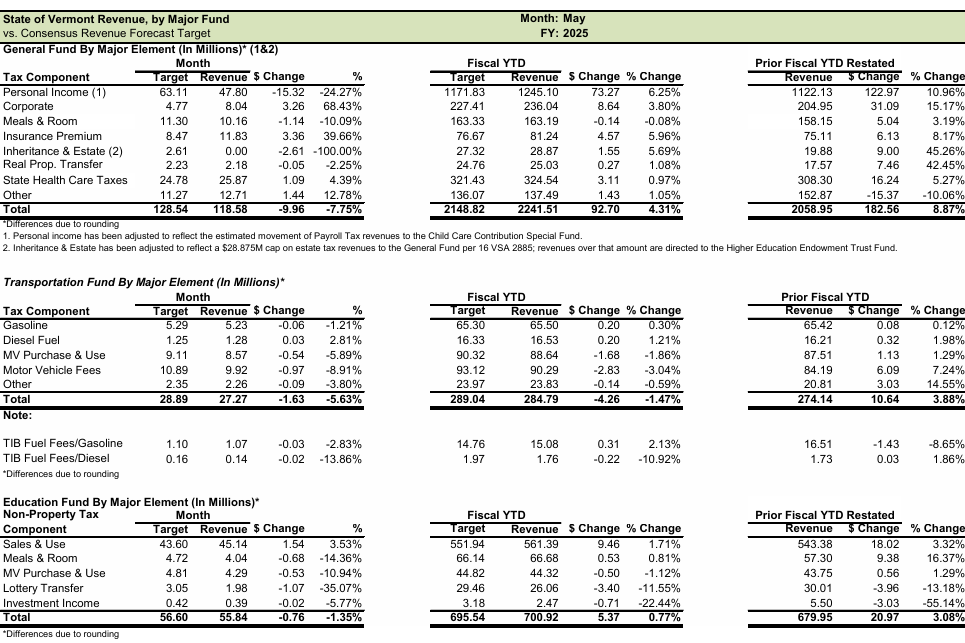
6.19.2025. Vermont Agency of Administration
To support vital journalism, access our archives and get unique features like our award-winning profiles, Book of Lists & Business-to-Business Directory, subscribe HERE!