A Weekly State House Recap
by Maggie Lenz and Nick Charyk on behalf of Atlas Government Affairs
Half Hearted
H.454, the legislature’s education transformation bill, is expected to hit the Senate floor this week. Since passing out of the House, it has cleared three Senate committees and continues to consume a significant share of this session’s bandwidth. But confidence in the bill itself remains in short supply. At nearly every turn, lawmakers have raised serious questions about the policy. They have voted to advance it anyway.
The premise behind the bill is straightforward enough. Vermont is shifting toward a foundation formula, a school funding model used in most other states, where a fixed amount is allocated per student and then adjusted based on need. Students who are learning English, living in poverty, or require additional supports are assigned more weight, which translates to more funding. The idea is to deliver equity by building need directly into the funding structure.
But in the Senate version, those weights have been adjusted in ways that drift from research models. Some were negotiated. Others were added back at the last minute. No final modeling was released before committee votes were taken. As one senator put it during the May 2 vote in the Senate Education Committee, “We might have not done what we intended here.”
That line has hung over the process ever since.
Several Senators who voted to move the bill along said openly that they were not sure they would support it on the floor. On Thursday in the Senate Finance Committee, Sen. Thomas Chittenden (D-Chittenden Southeast) called his committee vote procedural and said he was leaning no overall. Others, like Sen. Ruth Hardy (D-Addison), did not hedge. She called the bill inconsistent and warned that it would fail to deliver relief to those who need it most. She described it as a step backward for Vermont schools and said plainly, it is a sad day for public education.
Sen. Martine Gulick (D-Chittenden Central), reflecting on the rushed timeline and the volume of unresolved questions, said she felt disheartened by the process and disappointed in what the Legislature was preparing to send forward. “I am really sad, and I apologize to my voters and my constituents.”
Even among those who supported the bill, enthusiasm was rare. Sen. Randy Brock (R-Franklin) said he had little confidence in the data the bill is built on but believed doing nothing would be worse. Sen. Scott Beck (R-Caledonia) called it a starting point and said lawmakers would likely need to revisit the structure in 2026.
The discomfort extended into the Senate Appropriations Committee on Friday, where the committee again advanced the bill but underlined that much remained unresolved.
Sen. Richard Westman (R-Lamoille) voted no, saying he could not support a system that gives districts the option to spend more than the base amount but no option to spend less or return savings to taxpayers. Sen. Anne Watson (D/P-Washington) said she viewed the bill as a work in progress and was supporting it with the hope that it would continue to improve. Sen. Andrew Perchlik (D/P-Washington) echoed that sentiment but added that he was concerned about how little time the Legislature would have to approve district maps once the redistricting task force finishes its work. With just weeks to review and vote and only eight legislators drawing the map, he said it felt like too much power was being concentrated in too few hands.
In a joint letter sent earlier last week, the Vermont Superintendents Association, Vermont Principals’ Association, Vermont Association of School Business Officials, and Vermont School Boards Association warned that the current draft weakens accountability, removes tools like class size guidance, and increases legal risk under Vermont’s equity precedent. They wrote that the Senate version undermines the bill’s ability to meet its stated goals of equity, opportunity, and cost efficiency.
On Friday, the Burlington School District, Vermont’s largest and most diverse school district, sent a letter to House and Senate leadership warning that the Senate version could result in a loss of more than six million dollars and risk undoing progress made under Act 127. They urged lawmakers to complete the governance work first and take up the funding formula next session once school district boundaries are finalized.
If the Senate passes the bill this week, it will likely head to a conference committee soon after. There, three members from each chamber will be responsible for negotiating the final version. The conference committee will not be able to continue the pattern of unhappily voting yes, with the expectation that it will get fixed at the next stop. They are the final stop.
“I cannot remember ever feeling as sad about a vote as I do on this one,” said Senate Finance Chair Ann Cummings (D-Washington), after the committee advanced the bill last week.
And that really does sum up the entire mood.
Curiosities: a weekly peek at the odd and intriguing happenings under the Golden Dome
A closer look at who can afford to serve in Vermont’s citizen legislature and who cannot
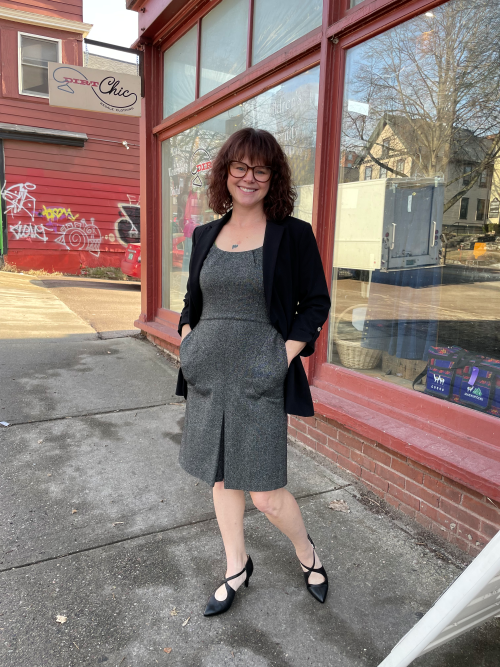
Kate Logan
Vermont likes to pride itself on having a citizen legislature. In theory, it means people from all walks of life. In practice, it has become something else. Not a cross-section of Vermont. A filter. Not a civic duty. A privilege.
The state constitution calls for reasonable compensation but warns against making public office profitable. That clause, written in 1777, has guided more than two centuries of resistance to professionalization. Today, the Legislature is still considered part time, but the demands stretch year-round. Most lawmakers earn about sixteen thousand dollars annually. They are paid only during the session. There is no health insurance. No pension. No salary for constituent or policy work in the off-season unless they are appointed to a committee. Many do not have job security back home.
Rep. Kate Logan (P-Burlington) is finishing her second term and stepping down after she finishes this biennium.
“Low compensation is one hundred percent of why I’m leaving,” she says. A single mother of two, she lives in a housing cooperative in Burlington and works full time in the nonprofit sector.
“Even with two incomes, I could not qualify for a mortgage. The job is just too financially risky unless you already have money or someone supporting you.”
Logan speaks with deep respect for her colleagues, but the demographics are stark. “The people who can afford to stay are those with partners who can support them, or people who are independently wealthy, or who own businesses or work as consultants. That means most legislators do not live the same day-to-day reality as the average Vermonter.” She notes that thirty percent of Vermonters are renters. Fewer than five out of 180 legislators are. Nearly one in five households is led by a single parent. She knows of only two others in the State House.

Lucy Rogers
Former Rep. Lucy Rogers faced similar pressures. She served Waterville for four years beginning at age twenty-three.
“I worked ten-hour shifts three days a week at a sawmill so I could afford to keep doing unpaid legislative work during the off-season,” she says. “I bought my own health insurance. I had no benefits. I could not afford to save anything for retirement.”
A scholarship to UVM made it possible.
“If I had student loans, there is no way I could have done it.”
Even small costs added up. “There were [Democratic] party dinners that cost twenty dollars. I felt like I had to go, but I would have to think really hard about whether I could swing it.”
Rogers also saw how money shaped influence.
“We want to invest in people who are going to be there for the long haul. That ends up meaning people who are older, financially stable, and without caregiving obligations. Everyone else gets treated like they are temporary.”

Corey Parent
Former Franklin County Senator Corey Parent saw the same pattern.
“You see people in their twenties step up. But once they hit their thirties or start families, it gets a lot harder to stay.” He served eight years while raising two young children and juggling flexible jobs. “If the pay had been more livable, I would have likely run again in 2022.”
He felt the toll on both his finances and his family.
“There’s no retirement match, no benefits, and it affects what you can earn in your regular job. I missed Fourth of July, missed Memorial Day barbecues. I missed votes the day my son was born, and people were upset I wasn’t there. How many people get criticized for that?”
Parent says the sacrifices accumulate in quiet ways.
“I want to take my kids to Disney. I want to go to Lambeau Field with my dad and my son. You start to realize how much life gets postponed.”
He still encourages others to serve, but says the structure needs to change. “It’s a great job. I loved representing Franklin County and Alburgh. But the schedule was built for a different era, and it just doesn’t work for most working families today.”

Kiah Morris
Kiah Morris, who represented Bennington until 2018, remembers the toll.
“I was effectively working three jobs. Lawmaker. Caregiver. Provider. And there was no support structure for any of it.”
When a family emergency struck, she left.
“If the pay had been sustainable, I might have stayed.”
Morris lived just ten miles from the New York border.
“I thought more than once about moving to Hoosick Falls. Their legislature pays enough to serve. Ours does not.”

Sam Young
Sam Young, who served the Northeast Kingdom for ten years, still feels the impact.
“I am in my late forties and still financially insecure because I spent my prime earning years in the Legislature.”
People often assumed he was financially comfortable.
“I was not. I just did it anyway. The only reason I was able to make it work is because I was not married, I did not have kids, and I did not own a home. If I had any of those things, it would have been impossible.”
He adds, “You can be retired. You can be wealthy. Or you can struggle. That is it.”
The problem is not just who leaves. It is who never runs. Rogers has tried recruiting smart, community-minded people. “They look at the pay and the schedule and say no. It is just not feasible.”
In 2023, the Legislature passed a bill to raise pay modestly and offer access to the state employee health plan. It would have brought base compensation up to about twenty-nine thousand dollars by 2027. Governor Phil Scott, whose annual salary exceeds two hundred thousand dollars, vetoed it.
“It does not seem fair for legislators to insulate themselves from the very costs they are imposing on their constituents by doubling their own future pay,” Scott wrote in his veto message. He warned that higher pay could encourage longer sessions or even shift the Legislature toward a full-time model.
“We are destined for a year-round session,” he said. “That is something Vermont does not need.”
Many voters assume legislators already earn a full salary. The public conversation has not caught up with the reality that most lawmakers make less than a part-time retail job for what is, in practice, year-round work. Giving themselves a raise is politically difficult. Even when they have the votes to pass it, they often do not have the cover to explain it.
So, the structure holds. And the list of people who can afford to do it grows shorter. Logan puts it simply.
“We say we want a citizen legislature. But most citizens simply cannot afford to do this job.”
To support vital journalism, access our archives and get unique features like our award-winning profiles, Book of Lists & Business-to-Business Directory, subscribe HERE!