Kayaking in southern Vermont. Photo: Southern Vermont Deerfield Valley Chamber of Commerce.
by Timothy McQuiston, Vermont Business Magazine
Windham County and the broader southern Vermont region face many of the same structural headwinds as the rest of the state: housing shortages, workforce gaps and increasing demands on the tax base. Recent tariff pressures and global trade concerns are bringing new and very real threats to Vermont businesses that are inextricably linked to the global economy.
But economic development leader Adam Grinold, executive director of the Brattleboro Development Credit Corp., said he sees these challenges as opportunities to strengthen the regional economy through increased regional partnerships, targeted investments, long-term planning efforts and cross-sector collaborations. There also is a welcoming of New Americans. And for the region’s vital tourism industry, a jolly good winter.
“A very low common denominator that I observe is successful businesses have figured out how to attract and retain their talent,“ Grinold said. “Other successful businesses have buyers from outside of our economy, so they may be doing value-add to a product here, but selling it afar.
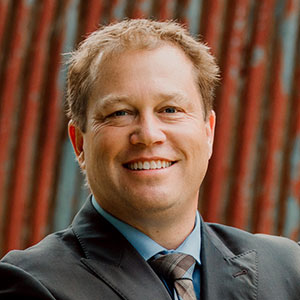
Adam Grinold, executive director, Brattleboro Development Credit Corp. Courtesy photo.
“Any healthy economy is where you export goods and you import capital. That capital gets sloshed around in the local economy and creates new wealth and higher wages.“
There are also significant local efforts to expand the economy through collaboration and investment. These include business expansion at WheelPad in Wilmington, housing development at the Chalet in West Brattleboro and cross-county efforts among Young Professionals and business organizations, notably through the upcoming Southern Vermont Economy Summit in May.
Grinold provided a long list of processes, successes and issues.
Housing, he said, is the foundation of economic growth “and it’s one of the most urgent issues we hear about — from manufacturers to hospitals to schools. Employers can’t recruit or retain staff if workers can’t find a place to live. That’s why BDCC has partnered with local employers and housing developers, and even worked on specific first-time homebuyer programs with organizations like Windham & Windsor Housing, to tackle both affordability and availability.“
A report prepared by the Vermont Housing Finance Agency, titled “2025-2029 Vermont Housing Needs Assessment,“ calculated a housing deficit of between 1,461 and 2,275 units in Windham County and between 985 and 1,588 units in Bennington County. There are 51,146 units now. The current population is estimated at 87,546 in southern Vermont (average age 47.8) and a state total of 667,641 (average age 43.7; U.S. 39.3).
“Workforce and demographics are closely tied. Vermont’s aging population means the labor force is shrinking just as demand for skilled workers is rising,“ Grinold said. “That’s why BDCC’s Pipelines and Pathways Program connects high school students with local career opportunities. It’s also why we launched the Welcoming Workplaces initiative — to help employers better attract, onboard and retain new talent, including newcomers to the region. The Expand Your Talent options found here help employers learn effective strategies.“
Southern Vermont has the lowest proportion of high-income households, defined as those earning over $200,000, in the state. Its median household income is $67,529, compared to the Vermont average of $77,065 and the U.S. average of $79,068.
To address these disparities, the BDCC is participating in Think Vermont’s GROW program (Grants for Relocation Outreach Work), a funding initiative designed to support relocation, recruitment and retention efforts in the state. The program is funded by the Legislature as part of the Department of Tourism and Marketing’s annual budget.
The GROW program provides one-on-one support to workers who are looking to move to the state, along with events and programs for newcomers through the Vermont Welcome Wagon. Relocation resources can be found at BDCC’s SoVermont website (sovermont.com).
“Supply chains and tariffs are more than global issues,“ Grinold said, “They have local consequences. Our region has several employers who rely on imports, and rising costs can be destabilizing. That’s part of why BDCC has been exploring the potential for a foreign trade zone in southern Vermont, which would help manufacturers defer or reduce duties on imported goods, making local production more cost-effective and competitive. We are also standing up a program to help businesses better model their financial planning, taking into consideration shifting costs of goods.“
Chris Campany, executive director at the Windham Regional Commission, noted that there continues to be investment in the region, citing examples such as the town of Rockingham’s redevelopment of the Bellows Falls train station, the conversion of the M&T Bank space in Brattleboro into the Snow Republic Brewery, the reopening of the Four Columns Inn and the Newfane Inn in Newfane, and the upcoming opening of the River & Rye restaurant in Jamaica.
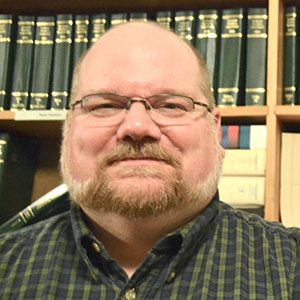
Chris Campany, executive director, Windham Regional Commission. Courtesy photo.
“My priority for the next 10 years or so will be using the Act 181 reforms to regional planning and future land-use mapping to work with towns to explore in greater depth and detail not only how they want to grow, but also how to grow up and away from flood hazards and mitigate other climate risks such as drought, heat and wildfire.
“In my experience,“ he added, “this means going beyond town plan policy, and supporting physical master planning, capital planning and capital finance planning and strategy that gets into the detail of what development is best suited where, and what physical infrastructure is needed to support it.
Land conservation is the other side of the development coin, Campany noted. With the increasing frequency of flooding, drought, and wildland fire risk, conservation of natural areas is essential to buffer these events and is the most cost-effective way to ensure southeast Vermont remains a safe place to live and work.
This spring, Campany said, the Windham Regional Commission is coordinating a four-town flood adaptation rapid conceptual design and scenario planning project with Dover, Wilmington, Whitingham and Readsboro in the Deerfield Valley, in collaboration with the Landscape Architecture and Regional Planning Graduate Program at UMass-Amherst and the Architects Foundation’s Communities by Design program.
“This builds off of lessons learned from the four-town housing planning project we did last year in the northwestern corner of our region,“ Campany said. “The idea is to bring towns together to explore challenges that they have in common, visualize design solutions and how they might sit on the landscape, and provide a report on land suitability and development scenarios that they can use in their own planning going forward.“
A Boost to Brattleboro
Brattleboro is making significant strides with innovative initiatives aimed at addressing its critical housing shortage and providing more affordable options for its residents.
The Windham & Windsor Housing Trust and its co-developer, Evernorth, have laid the groundwork to redevelop the historic Dalem’s Chalet property in West Brattleboro, which the trust had acquired in 2020 to provide emergency housing during the COVID pandemic.
The planned redevelopment will preserve the original Chalet building and create a new neighborhood with a mix of housing types and architectural features. The conceptual design was informed by residents currently living at the Chalet and in the immediate neighborhood, along with municipal staff and staff at Groundworks Collaborative, WWHT’s service partner.
This first phase of the multiphase project will provide 31 new apartments, 24 of which will target low-income households. Fifteen of these apartments will serve as permanent supportive housing units, offering a stable environment for individuals and families exiting homelessness. Additionally, Groundworks will provide voluntary, comprehensive, on-site services in the building for all residents.
The project’s funding drive began in February with a $6.2 million award from the Vermont Housing and Conservation Board. This was followed in late April by the Vermont Housing Finance Agency Board of Commissioners approving federal low-income housing tax credits, part of a broader initiative to fund approximately 128 new affordable homes across the state.
The funding comes at a critical time for Vermont as the state works to expand affordable housing options, particularly for low-income families, older adults and households who have experienced homelessness.
“We are grateful for the board’s support and commitment to the development of more affordable housing here in southeastern Vermont,“ said Elizabeth Bridgewater, executive director of the housing trust. “This funding allows us to continue moving forward with our vision of transforming the Chalet property into a vibrant, sustainable neighborhood with affordability for households earning a range of incomes, and new housing opportunities for our community while taking a meaningful step in reducing Brattleboro’s dire housing shortage.“
The project design includes single-family homes for homeownership, townhouses for rental opportunities, new multifamily rental buildings and a community space in the iconic Chalet building, which will be renovated with many of its historic features remaining intact.
Fifteen homes will be designated as permanent supportive housing. The construction of 70 homes in total will move forward in four phases, beginning in late 2025.
Once completed, the Chalet property is expected to contribute over $100,000 annually in taxes to the town of Brattleboro.
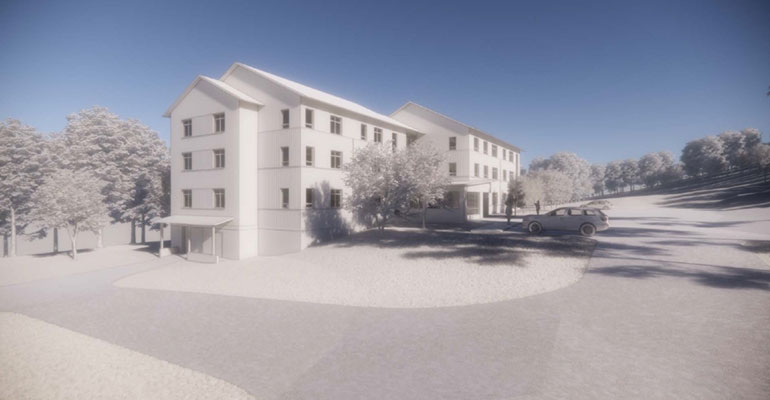
Rendering of the Chalet property in West Brattleboro. Courtesy photo.
Campany emphasized that housing remains “a core need“ for the region. In a significant step toward addressing those needs, a mixed-use development on the Winston Prouty Campus, the former site of the Austine School for the Deaf in Brattleboro, recently received Development Review Board approval for its initial phase, which will deliver 28 new apartments aimed at providing much-needed housing options. Simultaneously, construction has commenced on a project by Windham and Windsor Housing in Putney, slated to introduce 25 additional apartments, further bolstering the region’s housing inventory.
Tourism Remains Strong
Tim Dolan, marketing director at the Southern Vermont Deerfield Valley Chamber of Commerce, stated that tourism remains a key focus of his organization and that they are encouraged by ongoing trends, particularly with their organic website traffic showing a 26% year-over-year increase.
“This points to a strong and growing interest in our region and an increased awareness thanks to our recent marketing efforts.“
Regarding the past winter, Dolan noted that while snowfall was “about 20 inches below our 40-year seasonal average,“ the consistent cold and steady snowfalls allowed resorts to provide “a more reliable product,“ which ultimately led to improved visitation numbers.
Campany described it as “a refreshingly cold winter with plenty of snow down this way“ — a sentiment shared by many other officials with a stake in winter tourism.
Windham County boasts major ski areas at Mount Snow, Stratton and the private Hermitage (Haystack Mountain).
“Looking ahead,“ Dolan said, “our summer and fall seasons have continued to attract new visitors, reinforcing the area’s year-round appeal. As we navigate a shifting economic landscape, we’re optimistic that our proximity to major northeast metro areas will once again position us as a more accessible and affordable alternative to longer-haul destinations. This has worked in our favor during past economic downturns, and we plan to lean into that strength in the months ahead.“
Dolan expressed enthusiasm regarding recent housing and workforce development initiatives. He pointed to programs such as GROW, implemented in collaboration with the state, as successfully encouraging relocation to the area and cited effective visits occurring during the past winter. He also called attention to a local committee dedicated to addressing housing shortages that has been researching and developing plans, resulting in new programs slated for rollout in the coming months.
“We’re eager to see the positive impact of these efforts over the coming years,“ he said.
Reaching the Summit
While Windham and Bennington counties are geographically close to each other, travel between them can be lengthy. Route 9, despite recent upgrades, is a winding road over two mountain passes separated by the Deerfield River. This makes routes 7, 15, 100, 2 and 302 seem like superhighways, even before icy conditions.
But the two counties are connected by their historic economies and a general sense of purpose, from Young Professionals to the Summit.
BDCC and Bennington County Regional Commission will host guest speakers from around the country, state and region on May 20 at the eight annual Southern Vermont Economy Summit, at Mount Snow Resort in Dover.
Keynote speaker Josh Wright of Lightcast, a global leader in labor market analytics, will open the day by presenting findings from the recent report, “The Rising Storm: Building A Future-Ready Workforce to Withstand the Looming Labor Shortage.“
This report helps situate Vermont’s ongoing experience of demographic and workforce trends in a national context and provides insight into trends and solutions that will help the region adapt ahead of the next bands of this demographic “perfect storm.“
Following the keynote address, attendees will hear from local experts in the health care, construction and education sectors as they speak about how their industries are already making key adaptations to the current workforce realities.
Infrastructure Matters
Development of affordable housing relies critically on infrastructure improvements, which extend beyond roads and broadband to encompass industrial space and permitting.
Grinold explained that Brattleboro Development Credit Corp. has aided companies such as WheelPad in expanding into new facilities. This assistance has involved crafting innovative, low-risk real estate financing solutions and addressing environmental challenges through collaborative efforts like the Windham Regional Brownfields Program.
He further noted that the BDCC provides technical assistance and project development to modernize wastewater systems and navigate intricate federal requirements and reporting in support of rural communities such as Whitingham.
“To us, the vital challenge is not just adapting to these headwinds, but preparing the region to thrive in spite of them,“ Grinold said.
This includes fostering local ownership; thoughtful and intentional business secession; increasing access to capital through lending programs, in partnership with the U.S. Small Business Administration and U.S. Department of Agriculture micro loans; investing in workforce and youth; modernizing processes for building and permitting housing; and helping existing businesses transition, grow or change hands rather than disappear.
“Our recent focus on business succession planning and ownership structures is bringing value to the region in the retention of existing firms that might otherwise sell to outside equity, instead of pursuing employee ownership or cooperative ownership models,“ Grinold said.
Health Care Leads the Way
In the March Vermont jobs report, Windham County’s unemployment rate was 2.6% (not seasonally adjusted), lower than the state average of 2.8%. Windham County’s rate decreased by 0.2% from February, matching the state’s decrease. Vermont maintains one of the nation’s lowest unemployment rates, currently tied with North Dakota for second lowest at 2.6% (seasonally adjusted), with South Dakota having the lowest rate at 1.8%.
The 2024 Southern Vermont Compre-hensive Economic Development Strategy, covering Windham and Bennington counties, identifies health care as the largest employer (15% of the workforce, 6,600 workers) with projected growth. Government follows at 13%, accommodation and food service at 12%, retail at 10% and manufacturing (food and machinery) at 10%.
International migration has consistently boosted population growth since 2010, while domestic migration led to net losses pre-pandemic. However, domestic migration became the primary driver of population increase during the pandemic, though its continued impact remains uncertain.
Current population models include impacts resulting from pandemic period migration that are unlikely to continue, according to the report. Given the consistently negative natural population change (births minus deaths), the region must prioritize attracting and retaining talent to ensure future population growth. Encouraging the formation of young households is crucial for shifting the balance towards natural increase.
Southern Vermont is projected to add 1,309 jobs by 2028, reaching a total of 44,280. While the current average salary is $64,595, new jobs are anticipated to be higher-paying. Growth is expected in health care and social services, as well as in government, manufacturing and professional services, totaling 1,063 new above-average wage jobs.
Conversely, accommodation and food services, which pays around half the average income, is projected to decline by 1,070 jobs between 2018 and 2028.
Grinold said that small-business transitions in rural areas are a significant concern, noting increasing momentum around this issue within the economic development community and among small-business owners. He added that they are part of the Northeast Transition Initiative, which is collecting data across New England and upstate New York, indicating that an estimated 200,000 small business owners in those regions are looking to retire in the next few years.
Only 17% of those owners have a documented exit plan for themselves and their business. The smaller and more rural a business, the more likely it may liquidate and close when an owner retires, Grinold said.
“As we expand this work and the number of business owners and new entrepreneurs involved in transitions grows through our sellers, buyers and cooperative-focused initiatives,“ Grinold said, “we are developing a multifaceted strategy to highlight local success alongside regional and national data and initiatives.“
He added that showcasing positive transition outcomes can be transformative for community perception. He emphasized that crafting narratives about business owners who proactively plan for succession, ensuring their businesses remain local and operational rather than closing, is especially crucial at this time.
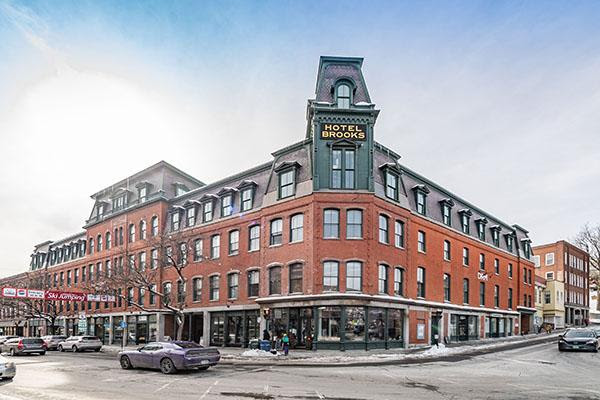
Brooks House, Brattleboro. Courtesy photo.
Brooks House For Sale
Cushman & Wakefield’s New England Multifamily Advisory Group from Boston, along with V/T Commercial from Burlington as local agent, announced at the end of April that it was offering for sale the iconic Brooks House, a mixed-use historic building located in downtown Brattleboro. The property originally operated as one of the premier hotels in New England and was gut renovated in 2011. Brooks House features 23 apartment units, six retail spaces and three office spaces, totaling 88,000 GSF.
The apartment units feature a mix of one-, two- and three-bedroom units with granite countertops, stainless steel appliances, hardwood floors, central air, and in-unit laundry.
The flyer listing Brooks House states that it is available on an “as-is” basis and is being offered without a formal asking price. Upon receipt of a signed confidentiality agreement, qualified investors will be provided with the offering materials and access to additional due diligence information. Once investors have had an opportunity to review the offering materials and tour the property, Cushman & Wakefield will schedule a “Call for Offers.”
V/T Commercial Principal Tony Blake told VermontBiz: “The iconic and historic Brooks House, located in the heart of downtown Brattleboro, is currently on the market for sale. The 88,000 square foot, multi-tenant property is situated on perhaps the most prominent corner of the town. An electrical fire in 2011 rendered the building uninhabitable, which triggered a gut renovation to bring it back to its former grandeur, which was completed in 2014.
“The building enjoys tremendous occupancy, anchored by office tenants including Vermont Technical College, Community College of Vermont, Downs Rachlin Martin law firm, a variety of wonderful retail stores including Plated Restaurant & Bar, and 23 residential rental units. Specific details on the offering are not available at this time.”
Blake said in early May that about 20 prospective buyers had already engaged in a walk-through of the Brooks House.
WheelPad Expansion
“This expansion allows us to increase our impact and better serve individuals and families who need accessible housing solutions,“ said Julie Lineberger, CEO and founder of WheelPad. “Our entire team is grateful to BDCC, VEDA, and the State of Vermont for believing in our mission and helping us take this next step.“
- WheelPad L3C, a manufacturer of modular, accessible living spaces for individuals with mobility challenges, expanded into a new industrial facility in Wilmington with the support of BDCC and financing through the VEDA Sub-3 program.
- BDCC owns the building and offers a lease-to-own model with no markup, aligning payments with loan amortization over seven years.
- BDCC worked with the Windham Regional Commission’s Brownfields program, led by Susan Westa, to complete environmental assessments that cleared redevelopment hurdles.
- The $240,000 in RIDP patient capital BDCC secured enabled this creative deal structure, de-risking the expansion and paving the way for job growth.
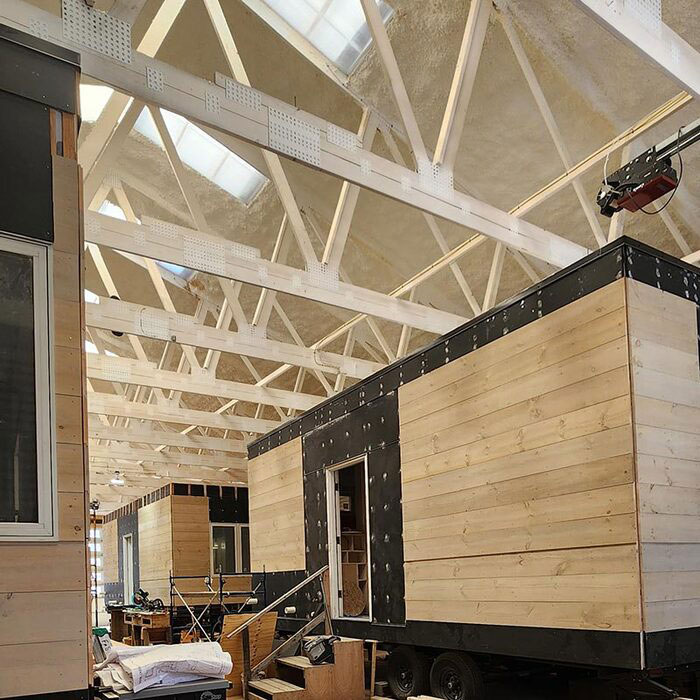
Photo: New WheelPad Manufacturing facility in Wilmington. Photo provided by Julie Lineberger.
Green River Data Analysis Transitions to Employee Ownership
“Having BDCC, VEOC, and Northfield Savings Bank as partners made this transition possible. They understood our vision for combining business success with the values of an impact-focused, collectively owned and governed organization,“ said Ian Kozak, CEO of Green River Data Analysis.
- The transition was financed through BDCC and the Windham County Economic Development Program (WCEDP).
- Green River, a data analytics firm focused on public health and housing, adopted an ESOP structure blended with cooperative governance—a first for the region.
- This milestone marks the first WCEDP project structured to support cooperative business transition and employee ownership.
Entrepreneurship Through INSTIG8’s Launch Pad
“Our organization is deeply committed to providing accessible entrepreneurial education,“ said Dani Delaini, BDCC’s Assistant Director and Head Instig8r. “Ensuring that all participants receive the support they need no matter where they are in their entrepreneurial journey.“
- The Launch Pad series provides free, six-week workshops for aspiring entrepreneurs, taught in-person with expert mentorship and peer learning.
- Participants gain access to templates, planning tools, and one-on-one coaching to develop sustainable businesses.
- BDCC sees entrepreneurship as a workforce development strategy, reducing job losses due to business closure or succession gaps.
Business Transition Program
- BDCC and HatchSpace launched a public education effort around business succession planning in the creative sector.
- Events explore transition models including direct sale, cooperative formation, and ESOPs, with support from the USDA Rural Cooperative Development Grant.
- These workshops are critical in a region with many legacy maker and artisan businesses without clear succession plans.
Workforce Development & Career Pathways
“It’s the P3 goal to see every student in Vermont graduate with a plan... students with a plan and purpose are bound for success,“ said Christy Betit of the P3 Program.
- BDCC’s Pipelines & Pathways Program (P3) operates in five high schools across Windham County, connecting students to employers, postsecondary options, and career pathways.
- P3 has received major private investment from M&T Bank, G.S. Precision, C&S Wholesale, and from foundations like McClure and Mergens.
- P3 includes pre-event prep, structured networking, and post-event support—ensuring students reflect and act on new opportunities.
Employer Talent Development & Welcoming Workplaces
“As the labor market grows tighter, BDCC is committed to helping employers implement strategies that leverage our existing workforce,“ said Alex Beck, Workforce Programs Manager.
- BDCC launched the Expand Your Talent Options workshop series for regional HR professionals.
- Topics included recruitment of underrepresented groups, training for internal career growth, and engaging nontraditional labor pools such as New Americans.
- This is part of BDCC’s Workforce Center of Excellence, funded through the WORC program and the Boston Fed’s Working Communities Challenge.
Young Professionals & Housing
“Our communities are full of extraordinary individuals working to make a difference,” said Jack Spanierman, SoVTYP Program Manager.
- BDCC supports the Southern Vermont Young Professionals (SoVTYP) to foster social and professional engagement.
- Alongside Windham Windsor Housing Trust, BDCC co-hosts First-Time Homebuyer Workshops, vital for recruiting and retaining young talent.
- Events like the Emerging Leaders Awards (170 alumni to date) celebrate young adults who are shaping the region’s future.
Data and Small Business
Windham County, in the Vermont March jobs report, had a lower unemployment rate (2.6%) than the state average (2.8%, the county-level data is not seasonally adjusted.) The Windham County rate also dropped 2-tenths from February, as did the state rate. Vermont has had one of the lowest unemployment rates in the nation and is currently tied with North Dakota for second lowest (2.6% seasonally adjusted, with South Dakota lowest at 1.8%).
According to the Southern Vermont Comprehensive Economic Development Strategy (CEDS) 2024, which includes Windham and Bennington counties, Health Care is the largest employer (15% or workforce) at 6,600 workers and is expected to grow. Government is second at 13%, Accommodation and food service is at 12%, Retail is 10% and Manufacturing (food and machinery) is 10%.
International migration has consistently contributed positively to population growth since 2010, while domestic migration resulted in net losses prior to the pandemic. During the pandemic, domestic migration became the primary driver of population increase in the region. Whether this continues to be the case is still to be seen.
Current population models include impacts resulting from pandemic period migration that are unlikely to continue, according to the report. Given the consistently negative natural population change (births minus deaths), the region must prioritize attracting and retaining talent to ensure future population growth. Encouraging the formation of young households is crucial for shifting the balance towards natural increase.
Southern Vermont's demographic profile skews older compared to other regions, with a median age of 47.8 in 2024, contrasting with 40.1 for Vermont and 39.3 for the United States.
In Southern Vermont, jobs are projected to grow by 1,309 by 2028 to a total of 44,280. The average salary now is $64,595, but new jobs are at the higher end of the income spectrum. The growth is expected not just in Health Care and Social Services, but also in Government, Manufacturing and Professional Services for 1,063 new jobs, all of which are above average.
And while Accommodation and Food Services pay about half the income average, jobs there will continue their decline through 2028, with a projected 1,070 jobs lost from 2018 to 2028.
Small business transitions in rural areas are a significant concern, and there's growing momentum around this topic within the economic development community and among small business owners themselves, Grinold said. “We're also part of the Northeast Transition Initiative, which is gathering data on this issue across New England and Upstate New York. Owners of 200,000 small businesses throughout New England and New York State are looking to retire in the next few years.”
Only 17% of those owners have a documented exit plan for themselves and their business. The smaller and more rural a business, the more likely it may liquidate and close when an owner retires, he said.
“As we expand this work and the number of business owners and new entrepreneurs involved in transitions grows through our Sellers, Buyers and Cooperative focused initiatives, we are developing a multi-faceted strategy to highlight local success alongside regional and national data and initiatives.
“Showcasing positive transition outcomes can be transformative for community perception,” Grinold said. “Crafting narratives about business owners who proactively plan for succession—ensuring their businesses remain local and operational rather than closing—is especially crucial right now.”

To support vital journalism, access our archives and get unique features like our award-winning profiles, Book of Lists & Business-to-Business Directory, subscribe HERE!