“Vermont Dairy Delivers” report brings today’s dairy farmers and processors impacts into view
by Scott Waterman, VT Agency of Agriculture, Food & Markets
What does the dairy industry mean to Vermont? The Vermont Agency of Agriculture, Food and Markets is pleased to introduce a new report, commissioned by the Vermont Dairy Promotion Council that helps answer that question.
The report, entitled “Vermont Dairy Delivers”, identifies the annual economic impact of Vermont’s dairy industry as $5.4 billion dollars, growing from $2.6 billion ten years ago. This is just one data point among many in the new report, showing how dairy has evolved and sustained itself, through the hard work of our state’s dairy farmers, the producers and processors that provide and create great nutritious dairy products, and the thousands of employees keeping our working lands productive and vital.
Other insights from the report include:
- 73% of Vermont dairy farms are small (under 200 cows)
- 52% of Vermont farmland is dedicated to dairy and dairy crops
- 7,349 dairy goats now populate 33 Vermont farms
- $3.6 billion annual revenue from milk, yogurt, butter and cheese sales
- 63% of all fluid milk production in New England comes from Vermont
- 73,000 tons of methane captured via the Cow Power Program
The new report reflects that Americans’ appetite for dairy products has increased. According to USDA’s Economic Research Service, dairy consumption reached record levels in 2023 when the average American consumed 661 pounds of dairy products. That is up more than 40 pounds from the prior decade, and the highest rate of consumption in the United States since the late 1950s. This trend is reflected in Vermont’s dairy economy. A decade ago, Vermont had 95 processors; in 2023 Vermont had 158 dairy processors—gaining 63 processors in ten years. More are on the way. Vermont is now exporting dairy products to Canada, Europe, Australia, and other people around the world.
Accompanying that growth is a broad commitment of dairy farmers to the stewardship of the land and environment. Ten years ago, Vermont’s farmers renewed their commitment to complying with new environmental regulations. This report reflects that those investments are working. Required agricultural practices that were put in place up to ten years ago have earned the Vermont dairy sector the distinction of being the number one catalyst for improving water quality in Vermont. It is clear that Vermont farmers are dedicated to environmental quality, first-class production facilities, care for people, animals, the land, and premium products—even while navigating a world pandemic and two major floods in the Green Mountains.
“We are grateful for all the contributions of our farmers and all those who support dairy,” said Anson Tebbetts, Vermont’s Secretary of Agriculture. “This report tells the story: the work is rugged but rewarding. Our suppliers, our fertilizer and feed companies, our veterinarians, our truck drivers, our dairy processors, and all those who support a working landscape are vital to Vermont’s farm economy.”
To read the full “Vermont Dairy Delivers” report visit: www.vermontdairy.com

Vermont Specialty Crops Grower and Buyer Survey Reminder
By Josh Knight, VT Agency of Agriculture, Food & Markets
A quick reminder to specialty crop growers in Vermont interested in selling to restaurants and restaurant owners/buyers interested in purchasing Vermont grown specialty crops. There is still time to complete the survey! The Vermont Agency of Agriculture, Food and Markets is still collecting responses to targeted surveys: one survey is for Vermont specialty crop growers, one survey is for restaurant buyers.
The Vermont Agency of Agriculture, Food & Markets is looking to connect Vermont specialty crop producers and restaurants for the purpose of increasing sales and enhancing marketing opportunities.
If you are not sure what qualifies: “Specialty Crops”, as defined by the USDA, include fruit & tree nuts, vegetables, culinary herbs & spices, and most horticultural crops. It is sometimes easier to say what specialty crops aren’t than what they are: if the crop is used for animal feed or fuel, it is NOT typically considered a specialty crop.
Participants will have the opportunity to provide input to help us develop and improve resources to overcome market barriers in the relationship between local producers and restaurants. Survey participants may be invited for future opportunities and events to help connect growers and restaurant buyers in their area.
If you are reading this in print, you can use your smartphone camera to access the link/QR code in the image or type the URL below into your browser.
If you are reading the digital / online version, you can click the links below:
Specialty Crop GROWER & BUYER Surveys: https://bit.ly/4ilLo9G
These surveys will close on May 31st, 2025 at 11:59 PM. Please email Joshua Knight at [email protected] with any questions.
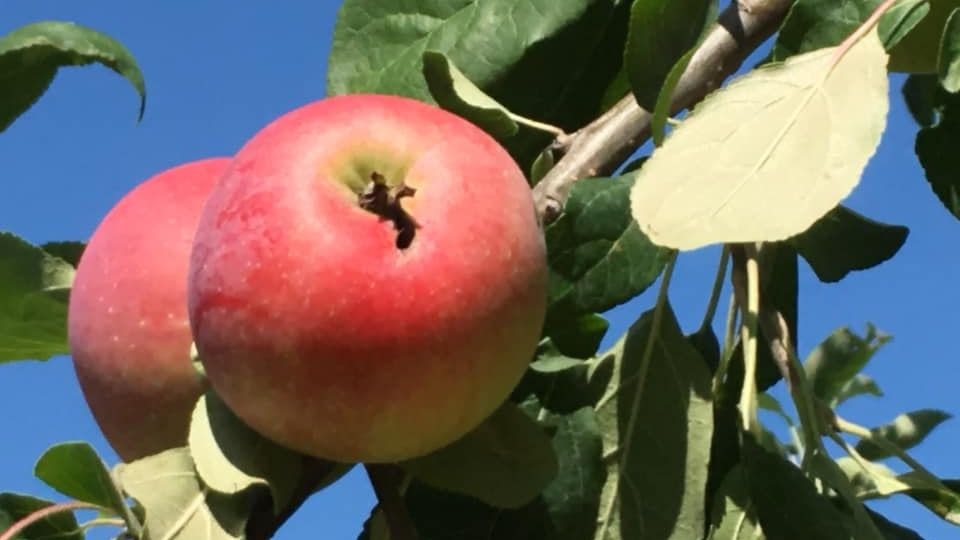
Apples are an important "specialty crop" in Vermont.
Read all the May 2025 Agriview Articles Here
Mushrooms, Fiddleheads, and Ramps, Oh My!
By Sam Ebeling, VT Agency of Agriculture, Food & Markets
With spring upon us, many are foraging for mushrooms, fiddleheads, and ramps. While the Vermont Agency of Agriculture, Food & Markets does not require foragers obtain a license, commercial harvesters may be subject to federal produce safety regulations. One such regulation is the Food Safety Modernization Act (FSMA) Produce Safety Rule (PSR). The PSR establishes minimum food safety requirements for the growing, harvesting, packing, and holding of produce.
Key produce safety practices include:
- Scout for animal manure or other possible sources of contamination around the harvest location and don’t harvesting affected plants
- Wash hands with soap and water before harvesting
- Use clean harvest tools and equipment
- If washing crops, use clean water (such as potable water)
Commercial harvesters should contact our Produce Safety team to discuss whether produce safety regulations apply to their operation.
For more information, visit https://agriculture.vermont.gov/food-safety/produce-program
Mushrooms
A helpful resource for growing or harvesting mushrooms is “Boosting the Quality and Safety of Specialty Mushrooms” by Mary Saucier Choate of UNH Extension. Mushroom cultivators and foragers often have a keen eye for monitoring microbial activity, which is the foundation of produce safety and a high-quality crop.
Find the full factsheet at https://extension.unh.edu/resource/boosting-quality-safety-specialty-mushrooms-fact-sheet
Fiddleheads & Ramps
Excessive harvest of fiddleheads and ramps have resulted in population declines. The Vermont Agency of Natural Resources reminds foragers to recognize previous harvest levels to ensure they harvest sustainably.
The Agency of Natural Resources also notes that commercial harvest of fiddleheads and ramps is prohibited on state and conservation land.
Find more details at https://anr.vermont.gov/content/sustainable-harvesting-wild-plants
Produce Safety Resources:
The Produce Safety Program is here to support you in evaluating produce safety risks and finding effective solutions, regardless of your operation’s size or production type.
We offer in-person visits to discuss safe produce growing and handling practices tailored to your operation. Reach out now to schedule!
For more information, please contact [email protected] or call 802-828-2433.

Photo: foraging for mushrooms, fiddleheads, and ramps.
Read all the May 2025 Agriview Articles Here

Getting Started on the RIGHT Foot with Saffron
By Dr. Margaret Skinner, University of Vermont
Saffron, the stigmas of a fall-blooming crocus flower, is the most expensive spice and medicinal herb in the world. It is now grown in many areas of North America by small, diversified farmers and could strengthen sustainable agriculture. Are you thinking of growing it for the first time? Have you been growing it for several years? The North American Center for Saffron Research and Development at the University of Vermont (UVM) and Rodale Institute in Pennsylvania are hosting the 9th annual workshop on Saffron on Thursday May 8, 11:00 am – 4:00 pm Eastern Daylight Time. The event will be held online and recorded for all registrants. There are presentations for both beginning and experienced growers.
Growers and researchers from the US and Spain will share their knowledge about growing, fertilization, intercropping, selling this precious crop and the economics of production. Registration is $60.
To learn more about the workshop and register, go to: https://na.eventscloud.com/ereg/index.php?eventid=837320&
Questions? Contact: Margaret Skinner via email at [email protected] or by phone at 802-656-5440
READ the May 2025 Agriview Edition Here
Since 1937, Agriview has been the flagship monthly news source of the Vermont Agency of Agriculture, Food and Markets. The new 'Agriview All-Access' email delivers a snapshot of the stories you'll find each month in the full print edition.
READ All Agriview Editions HERE
SUBSCRIBE TO AGRIVIEW TODAY / CLICK HERE
Click Here to View all Agency Newsletters, Blogs and Videos!
Read and Subscribe to the Agriculture Development Newsletter
Read and Subscribe to the 'Field Notes' Newsletter
Subscribe to the NE-DBIC Newsletter
Copyright © 2025 Vermont Agency of Agriculture, Food and Markets, All rights reserved.
To support vital journalism, access our archives and get unique features like our award-winning profiles, Book of Lists & Business-to-Business Directory, subscribe HERE!