Vermont Business Magazine Governor Scott’s education transformation plan is a comprehensive approach that involves changes to funding, governance, and education quality. This report explains the proposed governance changes that support the education quality objectives that the revised funding formula is intended to support. The governance model was developed to optimize support, promote equitable budgeting, foster local engagement, and develop a cohesive education ecosystem built upon strong public schools. The proposal adopts a systems change approach that centers governance considerations around the goal of equity for students and taxpayers. Changes are being proposed at the state, district, and school levels to promote alignment and build capacity of the whole Vermont public education system, fostering shared accountability, responsibility, and creativity. The implementation of the plan would not take place until September 2027, if approved.
Windows AI Assistant Summary. Governor Scott’s full "Education Transformation Proposal: Governance" is below.
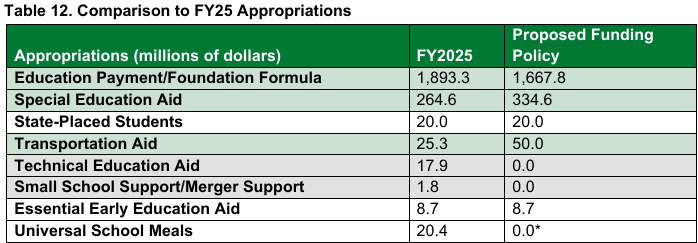
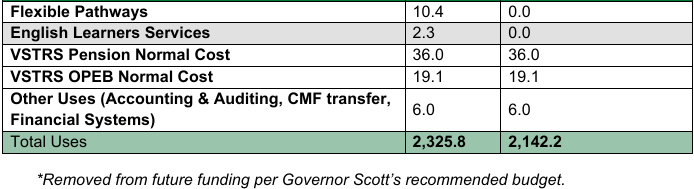
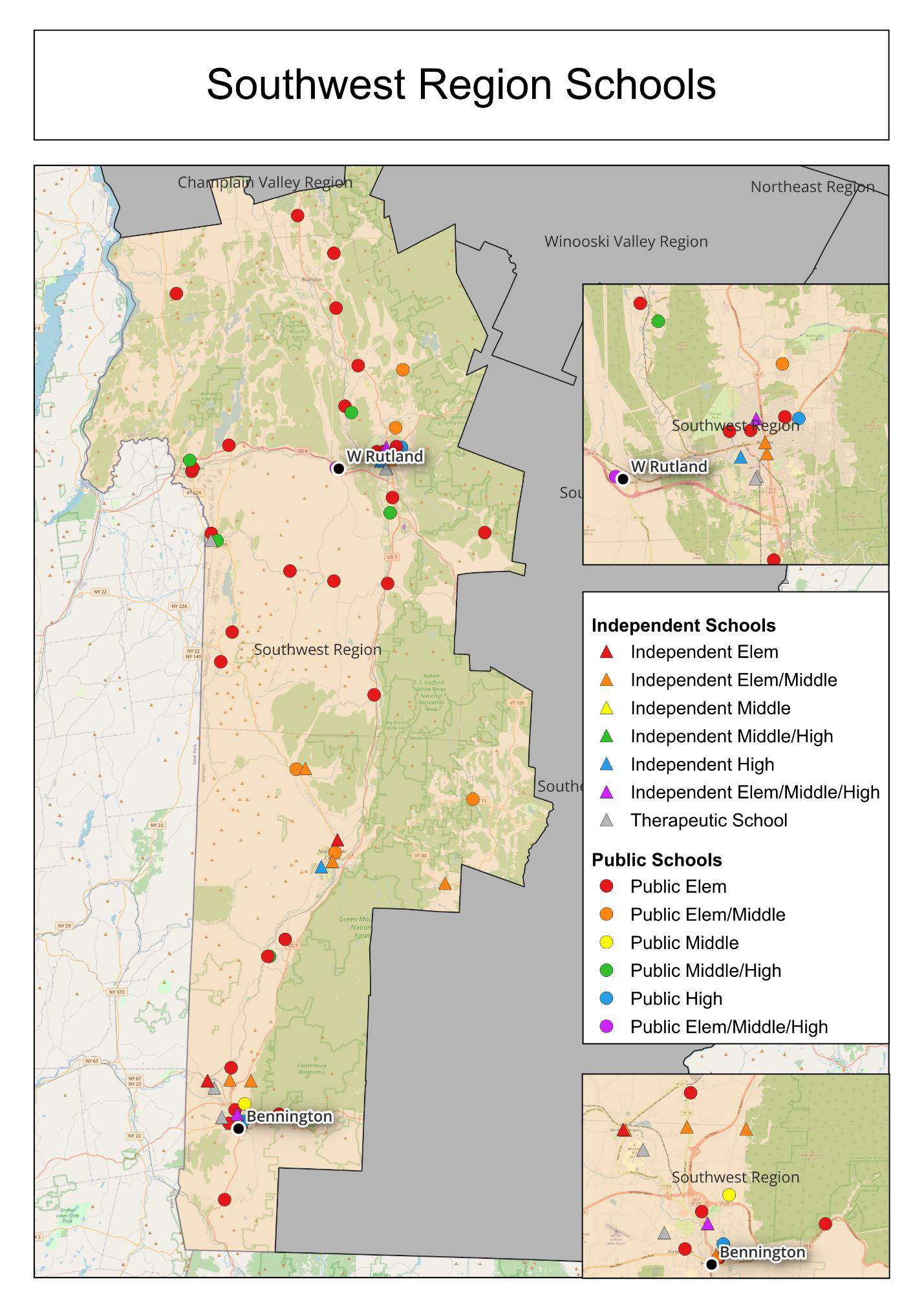
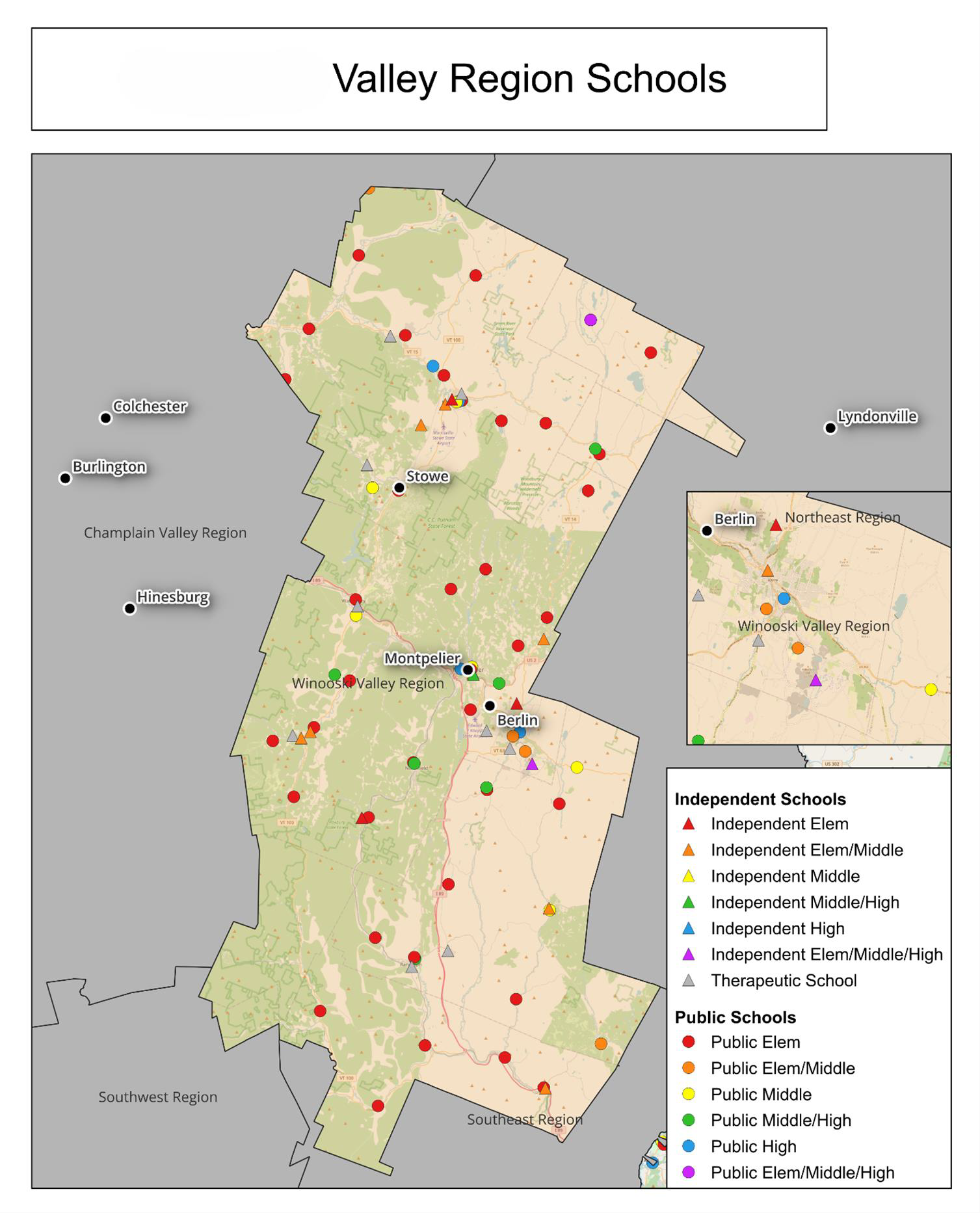
(Funding proposal tables are at the bottom with supporting links and district maps.)
The document outlines Governor Scott's comprehensive education transformation proposal for Vermont, focusing on governance changes to enhance funding, equity, and educational quality across the state's public school system.
The proposal outlines governance changes aimed at enhancing equity, local engagement, and resource allocation in Vermont's public education system.
- Governor Scott's education transformation plan proposes changes at state, district, and school levels to promote equity for students and taxpayers.
- The plan recommends the establishment of 5 school districts, each governed by a school board and supported by a central office.
- Each school will have a local School Advisory Council to ensure representation from students, staff, parents, and community partners.
- Proposed changes also include adjustments to the Agency of Education and State Board of Education to better support Vermont's public education system.
The text discusses Vermont's complex education governance structure and the need for a new funding formula to improve efficiency.
- Vermont has 52 supervisory unions and 119 districts serving 83,733 students, leading to resource diversion from classrooms.
- Smaller districts face higher per-pupil costs due to inefficiencies, impacting rural and high-needs communities.
- The current governance structure complicates budgeting, with one board member for every 75 students on average.
- The Agency of Education and State Board of Education share responsibilities, resulting in overlapping duties and limited authority.
This proposal outlines a new governance structure for Vermont schools, emphasizing regional districts and equitable policy-making.
- The proposal aims to simplify Vermont's school board governance by reducing the number of school districts from 119 to 5 regional districts.
- Each of the 5 proposed districts will have 5 school board members, with the Champlain Valley District potentially having 7 members for proportional representation.
- The initial election for school board members is scheduled for General Election Day 2026, with members serving four-year terms.
- School boards will adopt new responsibilities, including equity-based budgeting and evaluating performance under District Quality Standards.
- The central office for each district will expand to provide specialized services, with larger districts potentially having over 200 staff members.
- Local school advisory committees will be established to ensure community input on budgeting and school improvement plans.
- The proposal includes the creation of a statewide Education Service Agency (ESA) to enhance support for Special Education and Career and Technical Education (CTE) programs.
- Key principles for the ESA include building capacity, increasing coherence, promoting equity, and supporting strategic areas for educational improvement.
The proposal aims to strengthen public schools and school choice in Vermont, ensuring equitable access to quality education for all students.
- The proposal seeks to improve Vermont's educational capacity by enhancing public schools and promoting school choice.
- Every student will be assigned to a public elementary, middle, and high school within designated attendance zones.
- School districts must designate at least one School Choice School (SCS) based on state criteria, with no limit on the number of SCSs.
- SCSs can be either private or public schools and will have additional operational flexibility while maintaining accountability standards.
- A lottery system will determine student enrollment in SCSs for grades 9-12, with preferences for local residents and siblings.
- The State will directly fund SCSs for high school students, ensuring financial support aligns with student enrollment.
- The State Board of Education will oversee SCS designation and compliance with shared accountability requirements every five years.
- Special considerations will be made for students with special needs to ensure equal access to educational choices.
This section discusses the shared responsibilities of Vermont's education governance, focusing on the roles of the Agency of Education and the State Board of Education.
- Vermont's education governance is shared between the Agency of Education (AOE) and the State Board of Education (SBE).
- The AOE is the primary entity accountable to the federal government for education programs and compliance.
- The SBE is responsible for establishing long-term educational strategies and certifying schools for accountability requirements.
- Annual evaluations of school boards will assess their proficiency in governance, with results published by the AOE.
- The SBE will oversee the development of model policies and provide annual training for school board members.
- The AOE will enhance its rulemaking responsibilities to improve education quality and ensure equitable funding across districts.
- The Agency aims to strengthen Education Quality Standards and establish statewide graduation standards through public engagement.
- The governance reform seeks to improve oversight, accountability, and support for schools and districts in Vermont.
The proposed governance changes in Vermont aim to consolidate school districts to enhance efficiency and resource sharing, reducing administrative burdens. The initiative focuses on education quality, equity, and sustainability, ensuring all students have access to high-quality educational opportunities. This plan seeks to foster collaboration and improve educational outcomes across the state.
Governor Scott’s Education Transformation Proposal: Governance
A Plan to Build Stronger Schools, Stronger Students and Vibrant Communities
Executive Summary
Governor Scott’s education transformation plan is a comprehensive approach that involves changes to funding, governance, and education quality. This report explains the proposed governance changes that support the education quality objectives that the revised funding formula is intended to support. The governance model was developed to optimize support, promote equitable budgeting, foster local engagement, and develop a cohesive education ecosystem built upon strong public schools. The proposal adopts a systems change approach that centers governance considerations around the goal of equity for students and taxpayers. Changes are being proposed at the state, district, and school levels to promote alignment and build capacity of the whole Vermont public education system, fostering shared accountability, responsibility, and creativity.
The recommendation for 5 school districts is designed to achieve scale, expand access to specialized services, promote equitable decision-making, and achieve similar tax capacity. The proposed districts also coincide with the organization of the Regional Superintendents Association which have served as a forum for education planning. Each school district will be governed by a school board and operated by a robust central office, for a total of 5 school boards and 5 central offices. The central offices proposed are intentionally larger than what is typical in the current system, allowing for resources and expertise to be pooled at a regional level to better meet the needs of schools, educators, and students. To promote local engagement and student-centered budgeting, each school would be required to have a local School Advisory Council that would be representative of students, staff, parents, and community partners.
This proposal strengthens the overall education ecosystem by ensuring access to high-quality public schools while fostering choice through shared accountability. Lastly, the proposal contemplates changes to the Agency of Education and State Board of Education (SBE) to leverage the unique expertise of each entity in supporting the success of Vermont’s public education system.
Background and Current Context
The proposed funding formula realigns resources in a way that is most impactful for students, creates efficiencies, and expands educational opportunities. However, this plan would not be possible within Vermont’s existing structure, because it would cost too much to deliver at the current scale. Vermont’s current governance structure is complex, with 52 supervisory unions, under which there are 119 districts that serve 83,733 students. All of these layers in a relatively small state divert resources from where they are needed most, the classroom.
The lack of scale also creates competition for funding and tension among districts, career and technical centers, and independent schools. Smaller districts often face higher per-pupil costs due to inefficiencies, such as higher administrative costs and underutilized facilities. These districts frequently serve the most rural and high needs communities, exacerbating inequities in service delivery. Schools that are small by choice not only incur high operating costs but also struggle to offer a wide range of educational opportunities.
The supervisory union structure is both unique and complex, often comprised of multiple boards, with one board member for every 75 students on average. Significant time and resources are spent supporting each board and managing the budgeting process, diverting education leaders' attention from initiatives that directly improve student outcomes. The hyper-local budgeting process further prevents achieving economies of scale, limiting the system's overall efficiency and effectiveness.
At the state level, education accountability and responsibility are shared between the Agency of Education and the State Board of Education. As the State Education Agency (SEA), the Agency primarily handles federal compliance and is the only state entity responsible for ensuring a substantially equal education. However, the authority of the Agency is sometimes limited by the terms of rules adopted by the State Board of Education. This results in an overlap of responsibilities due to an incomplete division of duties when the General Assembly established the Agency from the former Department of Education.
School District Governance
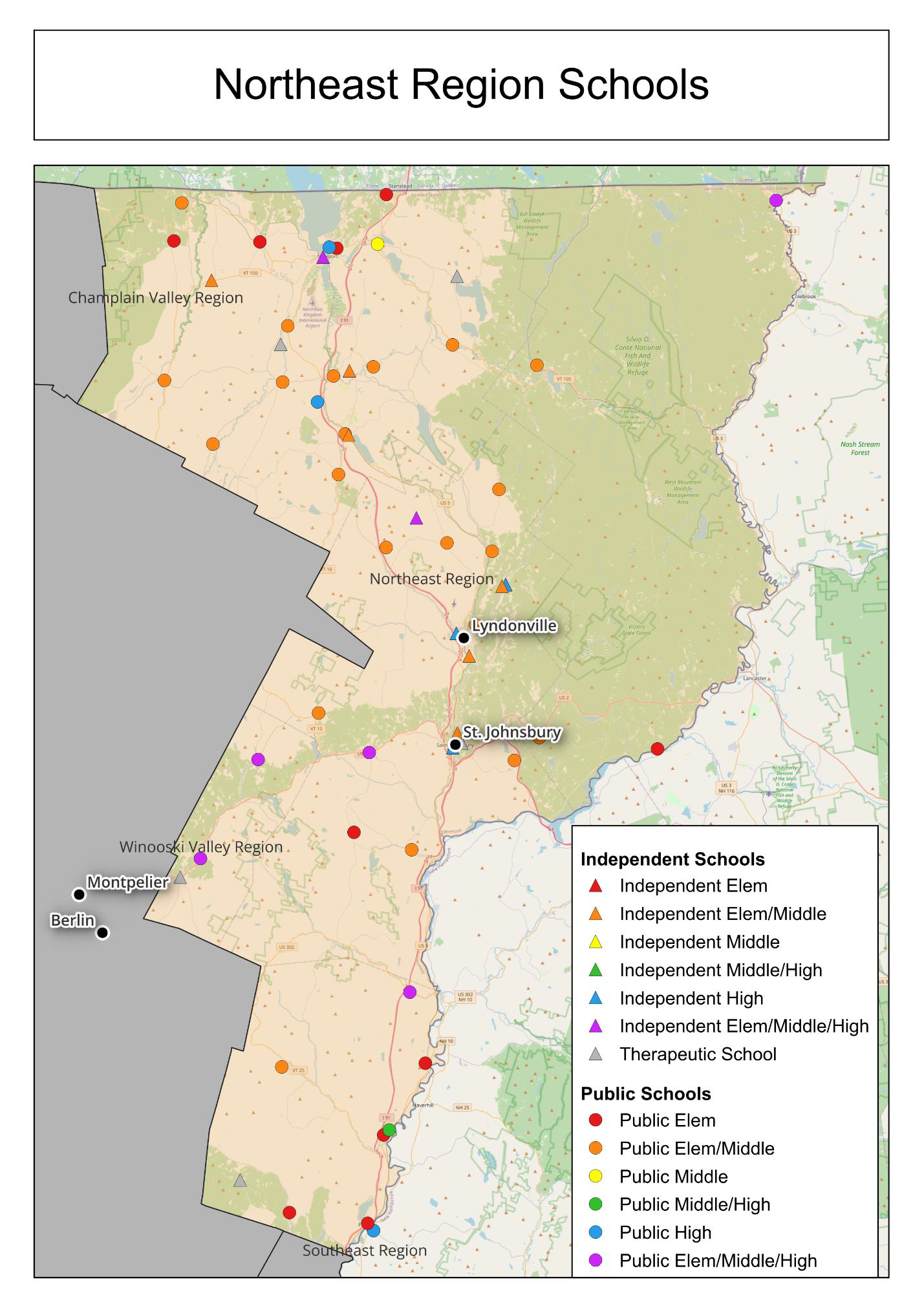
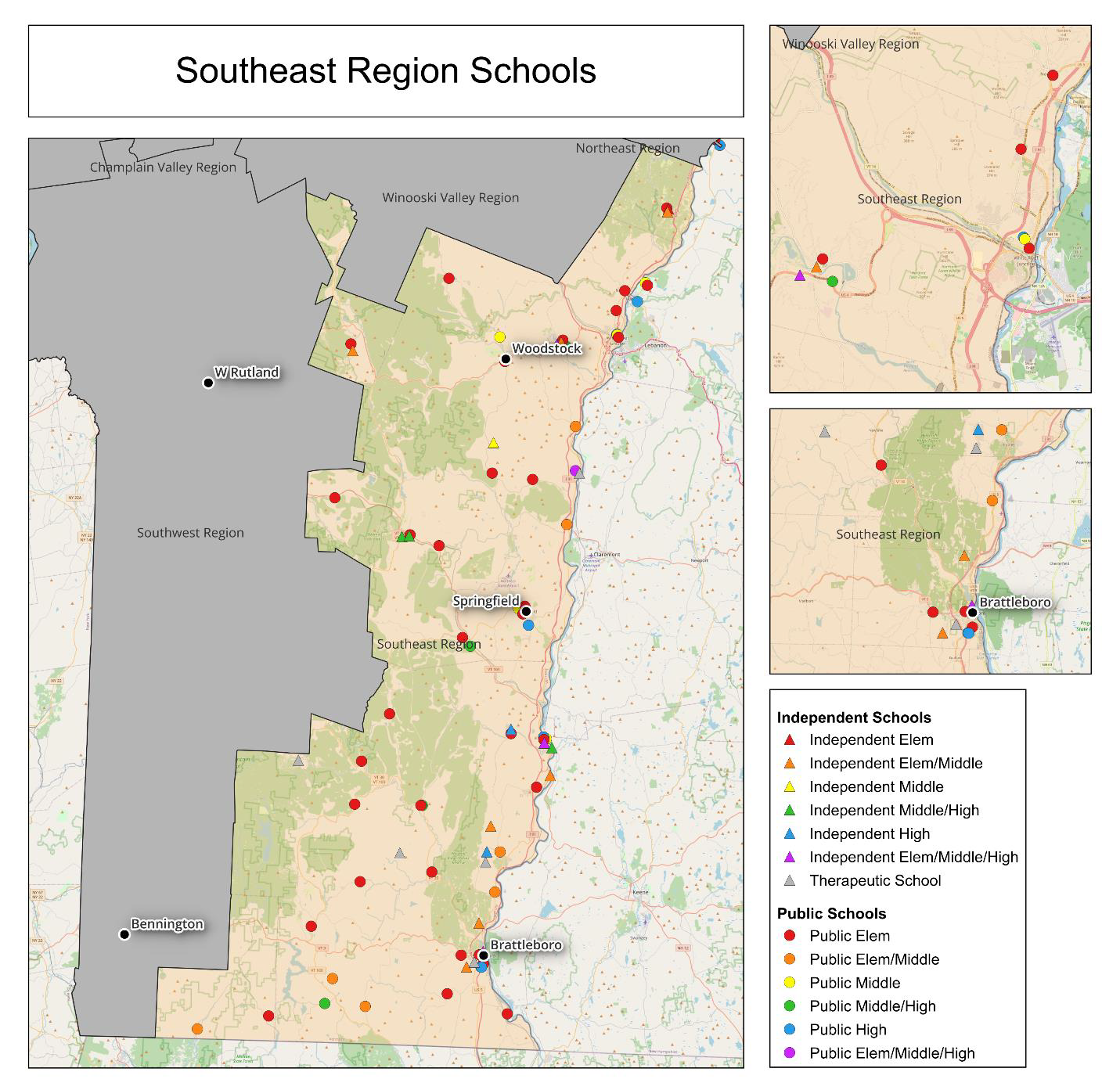
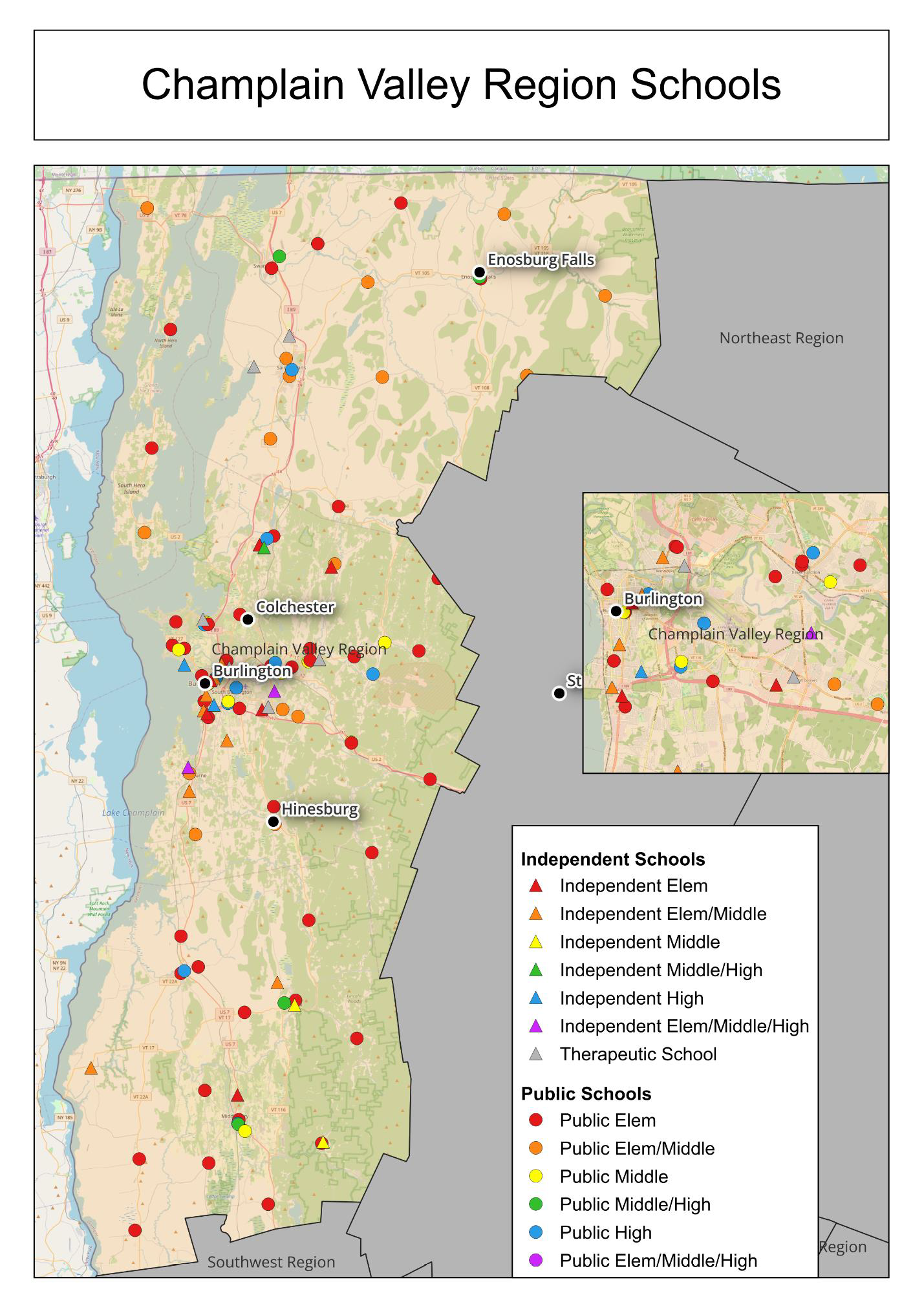
This proposal simplifies Vermont’s school board governance structure and supports equitable policy making and budgeting for students within a larger region that have a diverse set of needs. The plan recommends eliminating the supervisory union construct and moving from 119 school districts to 5 regional districts. Within this context, the school board has responsibility for a larger school portfolio and an expanded view of the challenges and opportunities facing students beyond the hyper-local context, creating more opportunities for coordination across the region. The 5 districts align with the longstanding structure of the Regional Superintendents Association which serves as an existing organization for education leaders to plan and share best practices. The proposed school districts would be comprised of the following boundaries:
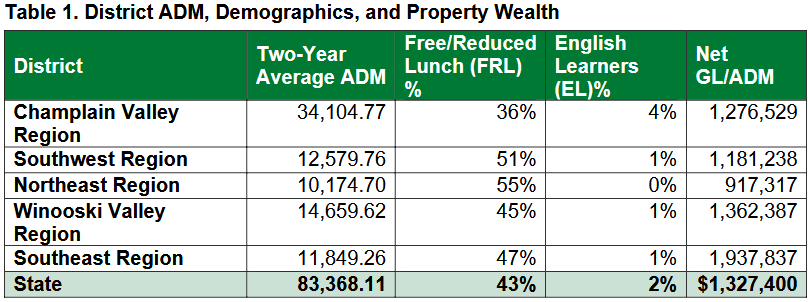
*Two interstate districts, Rivendell and SAU70, cannot be made members of Southeast Vermont School District without withdrawing from their current configuration, which does not appear to be possible without further study and possibly Congressional action.
Champlain Valley School District
Addison Central SD, the Addison Northwest SD, Burlington SD, Champlain Valley SD, Colchester SD, Essex Westford ECUUSD, Franklin Northeast SU, Franklin West SU, Grand Isle SU, Lincoln School District, Maple Run SD, Milton SD, Franklin Northwest SU, Mount Mansfield SD, South Burlington SD, Winooski SD
Northeast Kingdom School District
Caledonia Central SU, Essex North SU, Kingdom East UUSD, North Country SU, Orange East SU, Orleans Central UUSD, St. Johnsbury SD.
Winooski Valley School District
Barre SD, Central Vermont SU, Harwood UUSD, Lamoille North MUUSD, Lamoille South UUSD, Montpelier Roxbury School District, Orange Southwest SU, Orleans Southwest SU, Washington Central School District, White River Valley School District
Southeast Vermont School District
Hartford SD, Mountain Views UUSD, Rivendell Interstate School District*, SAU70*, Springfield SD, Two Rivers SD, Windham Central SU, Windham Northeast SU, Windham Southeast SU, Windham Southwest SU, Windsor Southeast Vermont UUSD
Southwest Vermont School District
Bennington-Rutland SU, Greater Rutland County SU, Mill River UUSD, Rutland City SD, Rutland Northeast UUSD, Slate Valley UUSD, and Southwest Vermont UUSD
The five new districts will each have five school board members. Given the size of the Champlain Valley District there may be reason to add two additional board members, elected by voting district. Voting districts or wards will be balanced for purposes of proportional representation and will be drawn with the assistance of the Vermont Center for Geographic Information. The proposal recommends that the initial election of board members will occur on General Election Day 2026 with school board members serving a four-year term. Petitions for candidates for school district board membership will be submitted by candidates on the same timeline and in the same manner as candidates for the General Assembly.
The roles and responsibilities of school board members will be similar to the current duties of school boards – to adopt district-wide policies, to employ a superintendent, who is the sole employee supervised directly by the board, to adopt a district-wide budget, and to adopt a strategic plan based on goals for student achievement. School boards will take on new responsibilities to reflect the larger scale of the governance system, such as adoption of an equity-based budget policy, a policy for the operation of school advisory committees, and a policy delineating school attendance zones. School boards will also be engaged in the evaluation of their performance under the District Quality Standards.
District Central Office Support
Each school district would be operated by a robust central office, led by the superintendent who reports to the school board. Shifting the composition of the central office reduces administrative burden on the schools and gives superintendents more resources and expertise to draw from to support their schools, educators, and students. Specifically, the central offices would expand access to specialized services by ensuring that every district can hire experts in key areas, such as curriculum, early childhood education, professional development, facilities management and other services needed.
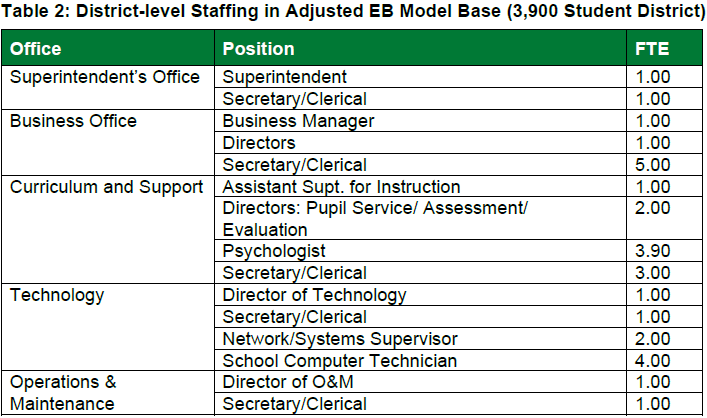
At the base level, no adjustments were made to the district-level staffing identified in the Evidence Based (EB) model. This is because all districts under the proposed governance structure would be over the identified efficient district size of 3,900 students. Larger districts would have more staff and likely be staffed differently but are assumed to cost a similar amount per student. For example, in a district of 15,000 students, instead of the 29 central office staff members identified above, the district could have 111 central office staff members at the same cost per student, while a district of 34,000 students would be resourced for over 200 district-level staff. However, this model is not prescriptive and still allows for decisions to be made at the school and district level to tailor staffing needs to the priorities of a given district and the needs of its school communities.
Districts would likely make choices that would utilize these resources to provide more contracted school-level staffing and direct supports for students, potentially through an Education Support Agency. The reduction of the number of districts also yields economies of scale in information technology and infrastructure systems that require fewer staff to manage the same tasks, freeing up district resources to support teaching and learning.
School Advisory Committees
Each school district will be responsible for establishing local school advisory committees. These committees will have membership from parents, community members and students to represent the gender, racial, and socioeconomic diversity of the school community. Building level principals will administer the application and membership process for the school advisory committees. School advisory committees will have statutory responsibility for providing input to the school board on equitable budgeting parameters and feedback on the proposed school budget each year. They will also be responsible for the development of the School Improvement Plan, required by state and federal law, and will submit this plan to the District School Board annually. School advisory committees will also have direction over a discretionary amount within the budget that the school board will be required to set aside for that purpose. School advisory committees may choose to create regional advisory councils to explore education matters within the attendance zones or feeding patterns for a group of PreK – 12 schools within the district.
Education Service Agencies
The Governor’s proposal lays out a multi-year path to educational transformation. It will be important to identify areas where an additional structure, whether regional or statewide, could improve the capacity, coherence and quality of delivery for key services and supports to districts and schools. In this more simplified governance framework, the role of the Education Service Agency (ESA) (or as they have been called in Vermont, Boards of Cooperative Education Services (BOCES)) could play an important role. The creation of these entities should be guided by some key principles to avoid duplication of effort. It is also important to maintain clarity on the roles and responsibilities of each level of education governance and to ensure that responsibility and accountability remain aligned. Any ESA should:
1. Build capacity in the education system to deliver key services and support that cannot otherwise be met by the districts or the AOE;
2. Increase coherence across the system and should include close collaboration and alignment between the ESA and the AOE to limit mixed messaging or the creation of competing priorities;
3. Increase equity through the consistent delivery of high-quality services and support in a small, rural state; and
4. Support key areas of strategic importance where a statewide or cross-district approach yields specific, measurable benefits.
Under the new proposed governance structure, the existing language in Act 168 will need to be amended to align with the new governance structure as the policy was developed in 2024 with different assumptions about scale. The key principles outlined above should be incorporated in the amendment with a stronger focus on statewide strategies for education and coherence-building across the state and between levels of governance.
There is already a strong consensus that the delivery of support and services in Special Education is a potential area where regional or a statewide ESA would be an area of strategic focus to achieve the requirements of Act 173 and the groundwork that has been laid by regionally organized collaboratives should be leveraged and accelerated as part of the timeline for educational transformation.
In addition, the Governor’s proposal includes the creation of a statewide ESA for CTE, to ensure greater access to CTE programs, improve the quality of program delivery across the state, simplify the current complex funding system and build capacity for the delivery of professional development and other supports for educators in CTE centers and middle and high schools.
Education Ecosystem
The proposal aims to improve the state’s capacity to ensure a substantially equal education by strengthening public schools and building upon Vermont’s long tradition of school choice. The plan is designed to ensure that every student in Vermont can access a strong public school for their grade band, which is a well-rounded, high-quality local option that will work best for most students. To promote flexibility and personalization, this plan also fosters school choice, providing options for specialized educational programs based on students’ interests. In order to have a strong system of educational choices, the plan includes shared accountability for quality, no matter where a student exercises choice.
In this plan, school districts must articulate attendance zones (sometimes called feeding patterns) for each district-operated school in the district, resulting in every child being assigned to a public elementary, middle, and high school. Each school district will also be required to designate at least one School Choice School (SCS) based on state-articulated criteria. There would be no limit on the number of SCSs a district could approve. Once designated, a SCS will be given additional flexibility from generally applicable state laws relative to school operations, while still being accountable to educational and financial standards. A private school or a public school can have the designation of school choice school (SCS). A SCS does not have a defined attendance zone for the grade band it offers.
Special consideration should be given to ensure that all students can exercise the same choices, regardless of their identified need for special education and other entitlement supports such as 504 accommodations and McKinney Vento (unhoused youth) status. Safeguards to ensure equal access to educational choice should be operationalized through shared accountability mechanisms.
Current vulnerabilities related to non-operation and IDEA child find obligations will be addressed by this framework. While the law currently gives each district the decision to either operate a school or pay tuition on a grade-by-grade basis, IDEA nevertheless imposes the crucial duty to offer a free and appropriate public education (FAPE) to each student residing in the district’s borders. This duty applies to non-operating districts who must provide FAPE to students through tuition payment to an out of district public or independent school. The proposed framework supports improved district coordination of contracts, while allowing private schools to retain their independence.
School Choice School Policy Proposal
This plan eliminates non-operating districts and instead creates attendance zones wherein each child is assigned to a public school from Kindergarten through 12th grade. All students within each school district can also choose to attend a SCS. For grades 9 – 12, a SCS can be an independent school. The ability for a student to attend will be based on the outcome of a lottery of all interested students, conducted well in advance of the following school year. For districts that designate more than one SCS, students can rank their preferences in the lottery. To honor historical tuitioning patterns, at the high school level, the lottery may give admission preference based on the town in which a student resides. Other preferences, such as sibling preferences, could be considered as part of the SCS application process.
When a student in grades 9 – 12 enrolls in a SCS that is an independent school, their weighted base funding is paid by the State directly to the SCS. Each district must establish an administrative office that is responsible for coordinating the needs of students attending SCSs within the district. This includes special education documentation, special programs eligibility, and the operation of the lottery. The district can also request specific flexibility from academic or operational requirements due to special circumstances by submitting a waiver to AOE.
For elementary grades, the requirements and parameters for designating one or more SCS will be delegated to the district. The requirements to be designated a SCS for grades 9 – 12 will be consistent with the statement of principles and will replace the current State Board Rules for approval of independent schools (Rule 2200). In this framework, there will be two categories of independent school – SCS and schools recognized for the purpose of tracking truancy, which would not receive public tuition funds. Examples of standards to drive student outcomes may include: use of state standardized assessments, implementation of minimum state graduation requirements and robust special education services.
Examples of standards to ensure operational and financial accountability may include: completion of an annual single-audit, minimum reserves, or comparable proof of fiscal solvency, etc. To support shared accountability, standards may also include a minimum number of choice students in order for a SCS to receive public funding. Select state academic and operational requirements would not apply to SCS, although school safety requirements, nondiscrimination requirements and school climate (HHB) requirements would remain. These considerations should be addressed as part of education quality policy decisions.
A district may choose to designate an existing public high school as a SCS, and might additionally create a focus on any number of specializations: STEM, aeronautics, creative and performing arts, etc. A currently approved independent school can seek designation as a SCS. The decision of which school(s) to give SCS designation will be the responsibility of the school board in alignment with criteria developed by the Agency of Education and driven by community input and student interest. The State Board of Education must certify that any school considered by SCS designation meets shared accountability requirements and would oversee the application appeal process. A review conducted by the State Board of Education on a five-year cycle will determine ongoing compliance with shared accountability requirements. Shared accountability requirements should be articulated as objective, easily evaluated criteria.
The plan is designed to ensure that choices most valued by the community will be elevated and included, with fair and predictable funding and oversight. Future considerations should contemplate special exceptions for school choice in very remote areas.
Statewide Governance
Vermont’s current statewide accountability and responsibility for education is shared between the Agency of Education and the State Board of Education. Most federal compliance activities fall within the Agency’s authority to oversee as the designated State Education Agency (SEA), meaning that for purposes of federal regulation, AOE is the governmental unit primarily responsible for the supervision of elementary and secondary education in the state. 20 U.S. Code § 1401(32), 16 V.S.A. § 43. However, the authority of the Agency over certain federally mandated activities is limited by the terms of administrative rules adopted by the State Board of Education (SBE) relating to special education, student achievement standards and assessment through the Education Quality Standards (EQS), and career and technical education. The Agency is also generally responsible for ensuring compliance with education laws. 16 V.S.A. § 212(5). Despite this shared responsibility with the SBE through its rulemaking authority, the Agency is the single state-level entity that is accountable to the federal government for federal programs and requirements.
In terms of activities and programs mandated in state law, some are delegated by the General Assembly to the SBE and some are delegated to the Agency. Some areas of responsibility arguably overlap. For example, the SBE is charged to “establish and regularly update a long-term strategic vision for the delivery of educational services in Vermont.” 16 V.S.A. § 164. Similarly, the Secretary of Education is charged to “identify the educational goals of the public schools, provide alternative methods of attaining those goals, and promote education in the State.” 16 V.S.A. § 212(2). Another example appears in the subsequent section, stating that the Secretary must “evaluate the program of instruction in the public schools.” 16 V.S.A. § 212(3). Likewise, the SBE must “report annually on the condition of education statewide and on a supervisory-union and school district basis. The report shall include information on attainment of standards for student performance adopted [by SBE].” 16 V.S.A. § 164(17).
The statutory assignment of duties to the SBE or to the Agency is not the product of an organized plan for statewide education governance, but rather is the result of an incomplete division of statutory functions at the time when the General Assembly created the Agency out of the former Department of Education and made it independent of SBE oversight (See, Act 92 of 2012, Section 8, Act 92 of 2014). The General Assembly made very few substantive changes to the statutes in terms of the SBE and Agency’s respective roles. Three former responsibilities of the SBE were transferred to the Secretary of Education: the maintenance of academic data, the provision of sample ballot language for school districts, and the creation of an Agency budget to submit to the Governor. All other duties remained status quo, with the 2014 legislation amending instances of “Commissioner” or “Department” to “Secretary” and “Agency.
To ensure effective oversight, reformed roles and responsibilities for statewide governance should be adopted in line with a careful plan that places the right expertise at the right level. As we contemplate these changes, it is important to identify the intended outcomes and plan from the perspective of providing the best and most effective oversight, responsibility and accountability for the system, to benefit students and improve the overall support for schools and districts.
Framework for Duties of the State Board of Education
In the reformed education system, the State Board of Education (SBE) will have a defined role that is geared toward the places in the system where SBE-driven support and oversight will be most effective.
The SBE will have a responsibility, similar to its current role, to certify that any school considered for SCS designation meets shared accountability requirements. The SBE will also serve as the appeals body for school district selection of schools of choice.
A new way that the SBE can support the system that is aligned to its strengths as a public board is to be the entity that provides accountability for certain school board responsibilities. In the five-district model, it is even more important that the duties of school boards are supported at the state level. While it is not appropriate for an appointed entity to govern the conduct of locally elected officials, the State does have an interest in ensuring accountability for key school board activities. The SBE would add value as a venue to review and give feedback on strengths and weaknesses of district policies on the following topics:
Annual Review of District Quality Standards Proficiency in Board Governance
AOE Rule Series 100, District Quality Standards, provides standards of quality for school boards in board priorities, protocols, and processes. Annually, all boards will be evaluated based on their proficiency in defined criteria under each of these categories. The SBE will receive the outcome of the evaluation from the Agency, and the results of each evaluation will be published by the AOE. The SBE will convene public discussions with the districts to identify areas for improvement, and to define the role(s) of the school board in improving districtwide practices. Examples of specific criteria upon which each board will be evaluated under District Quality Standards include:
• Board approves an equity budget model for each district
• Board develops and maintains model policies as required
• Board establishes measurable goals for the district that are informed by an analysis of financial and academic progress.
• Board identifies and monitors key indicators of student academic progress and wellness that aligned with established district goals.
• Board ensures an inclusive community engagement process designed to engage all community members.
• Board establishes performance expectations for the board and the Superintendent, and reviews performance based on operating protocols, completion of required training or professional development, key milestones or achievement toward district goals.
Equity-Centered Budget Policy
In the same manner, the SBE will also receive each district’s adopted equity budget policy, which is the mechanism through which the State and school boards will ensure that all schools within the district are allocated appropriate and equitable funding. The SBE will also develop and maintain statewide model policies that are required by law, and coordinate with districts on the content and implementation considerations for those policies.
Contract for and Ensure Delivery of School Board Annual Training
The role of school board members in the five-district model is even more important than in our current system. School boards will need annual training on roles and responsibilities, understanding student assessment, superintendent evaluation, and other topics. The SBE will administer a statewide contract to provide this training to all school board members. The SBE will select an appropriate training vendor to speak to the Vermont context and to be informed by research-based best practices.
Oversight of Model Policy Development
Where required by the legislature, or by other State or Federal regulation, the SBE will oversee the development of model policies for adoption and use by district school boards. SBE will facilitate collaborative policy development across school boards and will provide final approval on model policies which are consistent with regulation and achievable by all boards. Where necessary, the SBE will seek input from Agency of Education or other State experts to support model policy development.
Framework for Duties of Agency of Education
The Agency will accentuate its continuous improvement efforts to elevate educational opportunities for all students in support of the state’s reinvigorated focus on educational quality, equity, and sustainability. Revised practices and new responsibilities will enable the Agency to fulfill its responsibility of ensuring access for all students to a substantially equal education.
The Agency will retain its current responsibilities, including increased supports to the field. It will be given new responsibilities through rulemaking that are intended to ensure strong implementation of the new finance, governance and education quality systems, and to improve district implementation of current education quality standards and district quality standards.
By transferring rulemaking responsibility to the Agency, the State can remedy several institutional difficulties. First, the Agency can bring its capacity in both expertise and time to the project of updating current education rules that have gone ten years or more without amendment. Second, the Agency can accomplish the tasks associated with rulemaking within existing staffing and budget constraints. With a full time staff who have expertise in content areas, the Agency is better positioned to write education rules.
Through the development of the District Quality Standards, the Agency has demonstrated its commitment and success in partnering with subject matter experts to develop measures of quality that are descriptive of specific activities, are measurable and are achievable. Our engagement with the field has also served as an opportunity to identify key areas of support that are needed for districts and school boards to reach proficiency and that is also reflected in the elements of this governance proposal. Finally, the Agency has demonstrated through the Listen and Learn Tour that it can gather public input through a variety of methods, which ensure that all stakeholders, parents and community members have a voice. Public engagement will include publicly warned and open comment opportunities, but will go far beyond these opportunities to ensure detailed and in-depth feedback on proposed rules.
The Agency sees the need for several specific tasks related to improving education quality. The Agency will, through rule, strengthen the existing Education Quality Standards, to include statewide school improvement planning and differentiated support from the Agency to districts. Also through the rulemaking process, the Agency will establish statewide graduation standards and establish an evidence-based review process for high quality instructional materials within EQS. These tasks will be accomplished only after and as a result of deep engagement with educators in the field.
Conclusion
The proposed governance changes aim to strengthen the Vermont system by simplifying the structure and achieving greater operational scale. By consolidating the number of school districts, the plan seeks to enhance efficiency and resource sharing, thereby reducing redundancies and administrative burden. This streamlined approach ensures that expertise and support are strategically positioned at the right levels, allowing for more effective decision-making and resource allocation.
The emphasis on aligning responsibility and accountability across the system is crucial for fostering a culture of shared responsibility and collaboration. By clearly defining roles and expectations, the proposal aims to create a more cohesive and responsive educational environment that can adapt to the evolving needs of students and communities. This alignment will drive improvements in educational outcomes and ensure that all stakeholders are working towards the same goal.
At the heart of this initiative are the three foundational pillars of education quality, equity, and sustainability. By focusing on these core principles, the plan centers student access to high-quality educational opportunities, regardless of their geographic or socioeconomic background. Through these comprehensive changes, Vermont aims to build a more sustainable system that not only meets the diverse needs of its students but also empowers educators and engages communities.
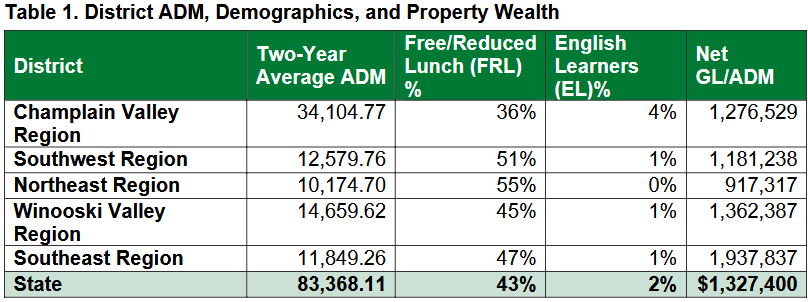
Net grand list values per student using average daily membership (Net GL/ADM)
Resources and References
Governor Scott’s Transformative Education Plan
Governor Scott’s Education Transformation Policy Brief
Governor Scott's Education Transformation Funding Proposal
Education Governance Presentation
Listen and Learn Summary Report
Vermont Agency of Education Rules Series 100 – District Quality Standards
To support vital journalism, access our archives and get unique features like our award-winning profiles, Book of Lists & Business-to-Business Directory, subscribe HERE!