by Timothy McQuiston, Vermont Business Magazine Vermont’s General Fund and Transportation Fund exceeded their respective monthly consensus cash flow target, as adopted by the Emergency Board at its July 2024 meeting, while the Education Fund missed its target. While the personal income tax had another robust month, the rooms and meals tax was again soft against expectations. The R&M is an indicator of tourism activity, which has lagged since the beginning of the summer. Lottery revenues were also down in October.
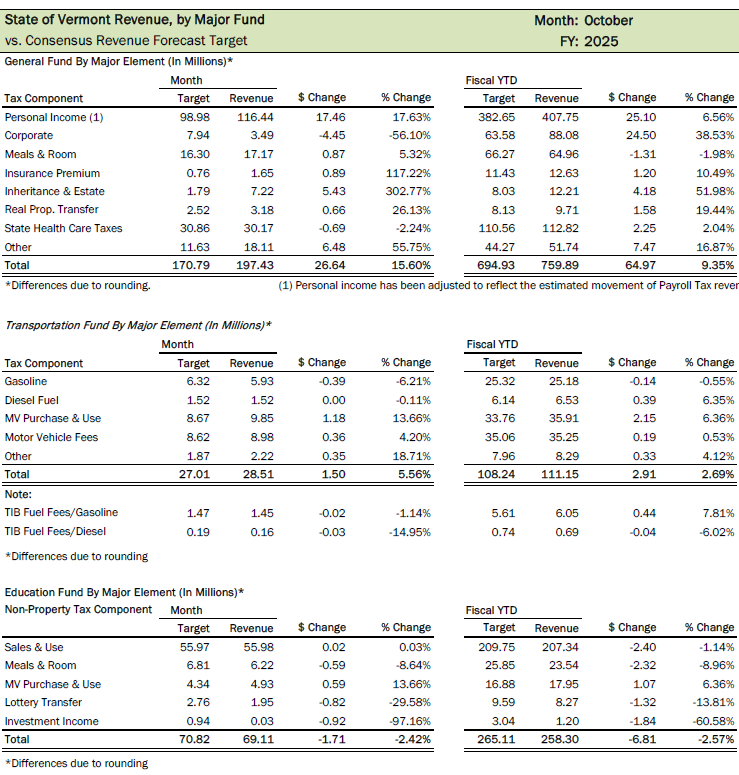
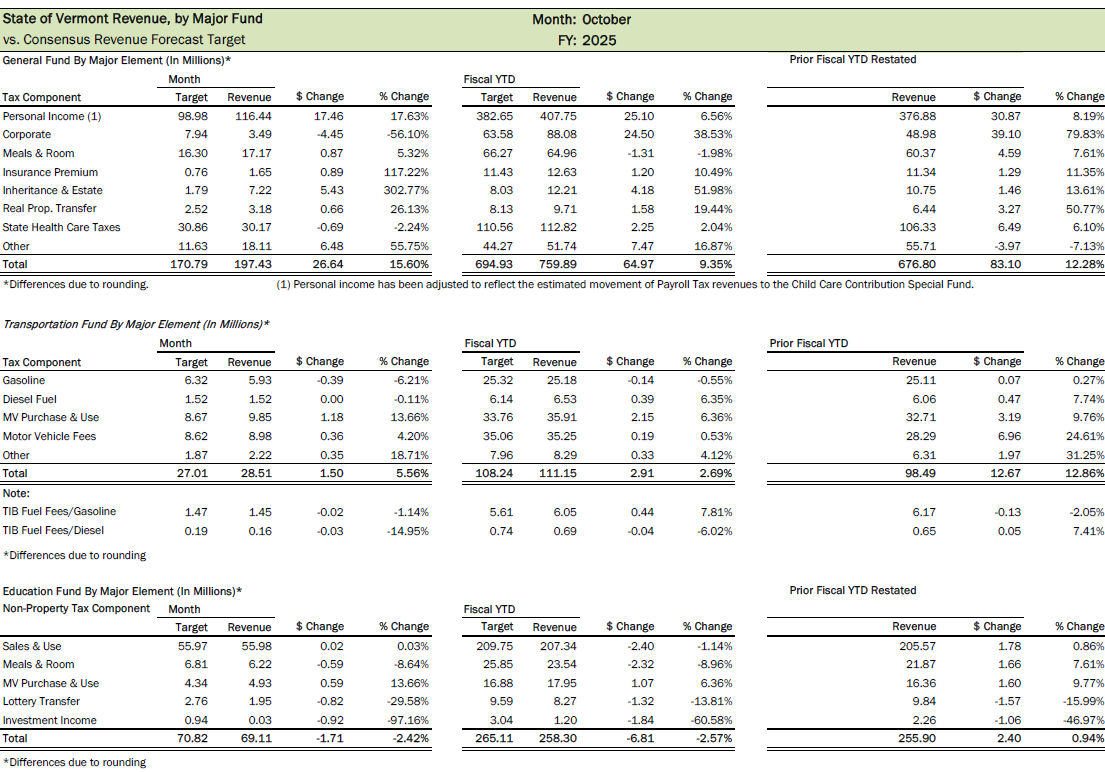
For the month of October 2024 the General Fund, Transportation Fund, and Education Fund receipts were a combined $295.0 million, exceeding the $268.6 million monthly consensus tax revenue target by $26.4 million, or 9.8%.
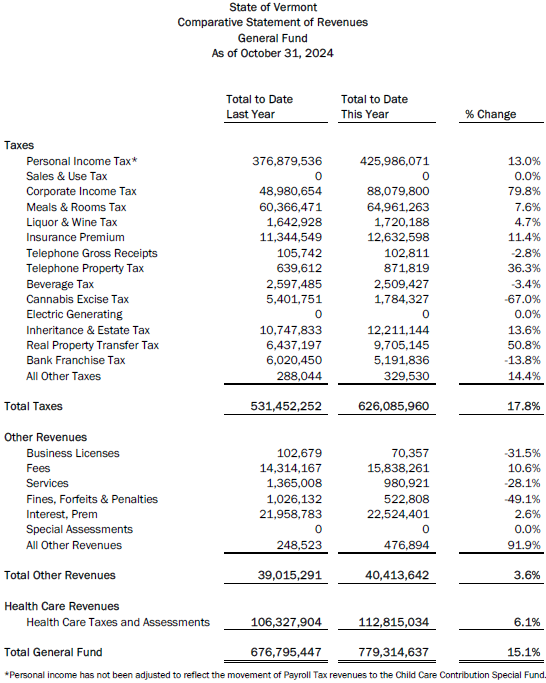
Total General Fund revenues for October were $197.4 million, $26.6 million, or 15.6%, above the $170.8 million monthly consensus cash flow target. A -$5.1 million combined miss by the Corporate Income Tax and Health Care Taxes offset the $31.7 million of combined gains made by all other revenues relative to their respective targets.
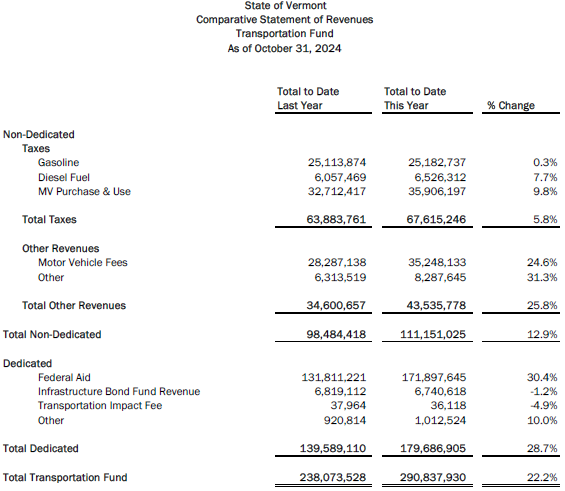
Revenues in the Transportation Fund exceeded their $27.0 million October consensus target by $1.5 million, or 5.6%, yielding $28.5 million in total. A -$0.4 million combined miss by the Gasoline Tax and Diesel Tax offset the $1.9 million gains made by all other revenues relative to their respective targets.
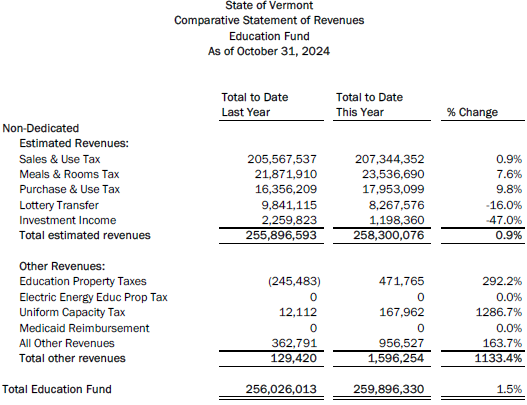
Monthly Education Fund revenues of $69.1 million were -$1.7 million, or -2.4%, below their October $70.8 million cash flow target. The $0.6 million of combined above target performance by the Motor Vehicle Purchase and Use Tax, and the Sales and Use Tax was offset by -$2.3 million of combined target misses by the Meals and Rooms Tax, Lottery Transfers and Interest Receipts.
According to Secretary of Administration Sarah Clark: “The General Fund and Transportation Fund continue to exceed expectations, assuring healthy fund balances to carry us into the second half of the state fiscal year. The Education Fund is behind expectations but still has two months to mitigate any underperformance prior to the next consensus forecast.”
To support vital journalism, access our archives and get unique features like our award-winning profiles, Book of Lists & Business-to-Business Directory, subscribe HERE!