

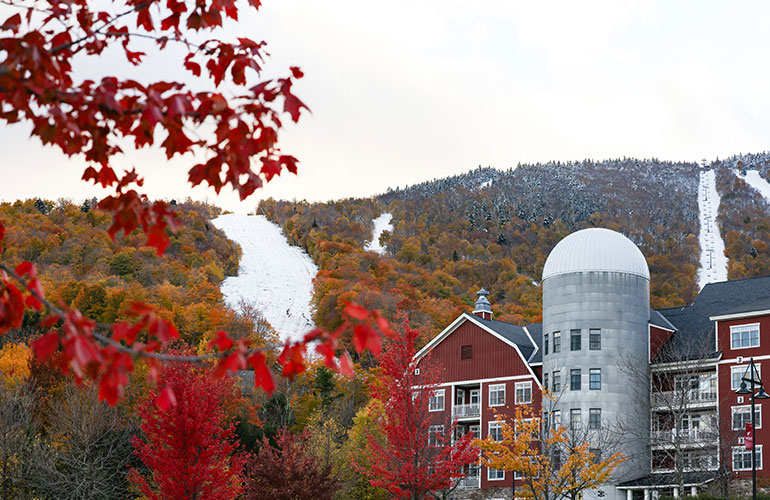
Photo: Sugarbush received a welcome blanket of snow in mid-October. Courtesy photo.
by Timothy McQuiston, Vermont Business Magazine
Vermont offers many stunning sights, from the predawn spectacle of snow guns blasting white trails across slopes still tinged with autumn color, to the après-ski bliss of a cold beer under the warm March sun on a slopeside deck.
While these idyllic scenes are virtually guaranteed at Sugarbush, Mad River Glen and other Vermont ski resorts, consistent snowfall between these moments has become less certain.
Recent weather patterns have presented significant challenges for central Vermont and the nation as a whole. Washington County and nearby regions experienced destructive summer storms in consecutive years, while recent winters have been unseasonably warm and rainy during the crucial holiday season.
This variability, compounded by the disruptions of the COVID-19 pandemic, has shifted the prime snow season later into the year. March 2024, for example, brought two major snowstorms that provided a much-needed boost to the ski industry. Ski Vermont reported that the state broke 4 million skier days during the 2023-24 season, a solid and remarkable number given the weather conditions.
While the ski industry has adapted to some of these challenges by utilizing high-tech, high-efficiency snow guns that can capitalize on any cold snap, it’s the allure of natural snow that ultimately draws skiers and snowboarders from across the Northeast and Mid-Atlantic to Vermont’s slopes.
In Vermont, we cherish the cold for its transformative magic: the pristine slopes perfect for skiing, the hushed beauty of a snowbound night, and the vibrant cobalt skies that follow. But as we all know, a winter without cold brings only dreary gray days.
“Looking forward to a solid ski season. All we need to do is ... THINK SNOW, Eric Friedman, executive director of the Mad River Valley Chamber of Commerce, wrote in an email to VermontBiz.
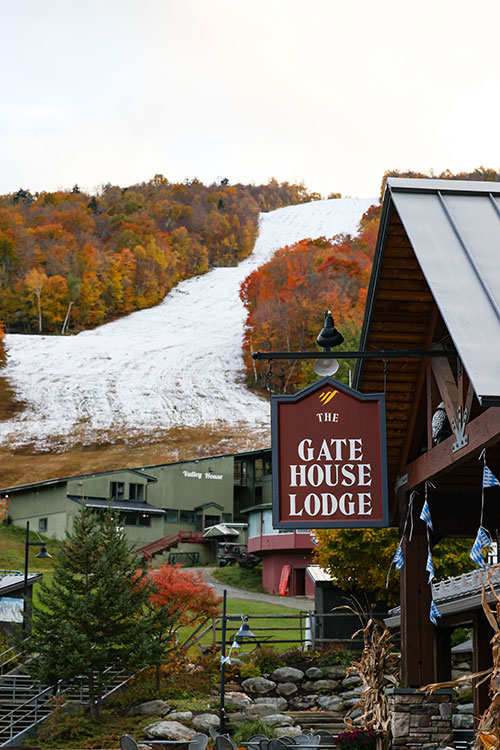
Photo: Sugarbush received a welcome blanket of snow in mid-October. Courtesy photo.
A brief cold snap in early October brought a surprising 10 inches of snow to Sugarbush, offering a fleeting glimpse of winter. However, warmer temperatures quickly returned, climbing back above 70 degrees after Indigenous Peoples Day. Another short burst of cold weather and snow arrived later in the month, further highlighting the unpredictable nature of fall weather.
“Business has been solid for the fall after a weak summer season,“ Friedman wrote. “Fortunately, flooding didn’t impact us too much this time around.“
Statewide tourism appeared to be down, a trend supported by slightly weaker Meals and Rooms tax revenue, which has fallen short of economic targets since last June.
Regarding the broader economic picture, Friedman observed, “The Mad River Valley’s strength lies in its authenticity and relaxed atmosphere. However, our lack of a cohesive brand, spread across three to five towns, presents a challenge.“
But he noted that the towns were generally performing well despite facing numerous challenges, most notably housing and labor shortages.
Washington County boasts relative wealth for Vermont, with a diversified economy encompassing population centers, tourist destinations and rural areas. According to the Vermont Department of Labor, it ranks as the third most populous county and the seventh largest in size, with a 2022 population of 59,768. Furthermore, the county’s 2022 per capita income was 109.8% of the statewide average 66,932, while its 2023 average annual wages were 104.7% of the statewide average 59,348, positioning it as the second highest in the state.
The largest employment sectors in Washington County are education and health services, comprising 17.3% of covered employment, and trade, transportation, and utilities, at 15.8%. Compared to the rest of Vermont, the county has a notably higher concentration of jobs in financial activities, exceeding the state share by 3.9 percentage points. In 2023, Washington County had the second-largest labor force in the state, with 34,615 workers.
While the not-seasonally-adjusted unemployment rate in September 2024 was 2.1% for both the Barre-Montpelier and Northfield-Waitsfield Labor Market Areas (compared to 2.2% statewide), the data reveals a nuanced picture.
Since 2010, Washington County’s labor force has decreased by 1.5%. The county’s annual average unemployment rate for 2023 was 2.0%, matching the statewide average. However, the poverty rate among all Washington County residents was 9.9% in 2022, and 13.4% among children under 18, compared to the statewide averages of 10.4% and 11.3%, respectively.
These figures suggest a continued tight labor market in Washington County, as Friedman noted, but also highlight potential economic challenges for certain segments of the population.
As the data also indicate, the county is the second wealthiest in the state next to Chittenden County, and boasts entrepreneurship and innovation, hospitality, professional and government services and hard industries. Historically, the Barre area has produced more granite than the entire Granite State.
In 2023, U.S. dimension stone producers sold or used approximately 2.3 million tons of stone, valued at $410 million, according to the U.S. Geological Survey. This production came from 224 quarries operated by 176 companies across 33 states. Texas, Wisconsin, Indiana, Vermont, and Georgia led the nation in dimension stone production, collectively accounting for roughly 70% of the total quantity and 60% of the total value.
The Floods
Although the summer of 2024 flooding was less severe than the previous year’s devastation, Barre, still reeling from the 2023 floods, faced renewed hardship. The village of Plainfield, which had largely been spared in 2023, was unexpectedly hit hard by these increasingly frequent deluges.
“We’re seeing summer storms that we didn’t use to see,“ said Union Mutual CEO Lisa Keysar. “Obviously, there was that polar vortex last year with 30 hours of subzero temperatures. We saw a ton of freeze-up losses from that. That was a major event for us.“
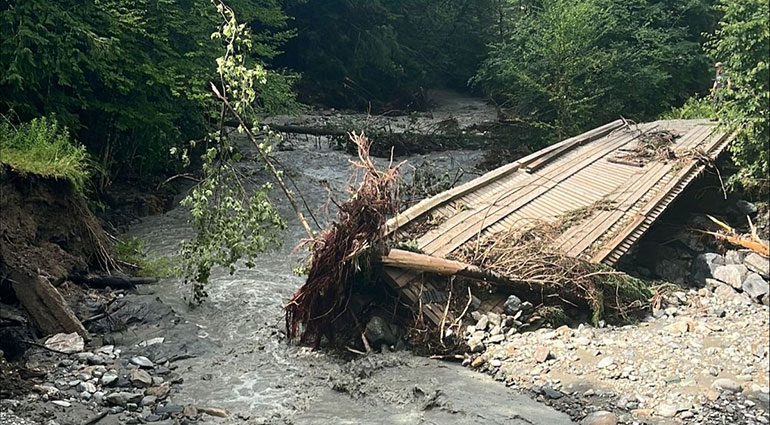
Photo: Summer 2024 flooding. Courtesy photo
Across the United States, and notably in the Carolinas, severe convective storms — local, short-lived events characterized by intense updrafts and downdrafts — are becoming increasingly common. Melissa Bounty, executive director of the Central Vermont Economic Development Corp., remarked on this trend, noting that during her 18 months in the role, she has witnessed two “1,000-year floods,“ highlighting the heightened impact of these weather events.
“Flood recovery has eclipsed everything else at times for us in central Vermont,“ Bounty said. “The region is all villages nestled among striking landforms, and that means we are particularly vulnerable to dangers from extreme weather. Julia Simon, for NPR, said over the weekend that the biggest asset in a climate response is neighborliness. That’s probably what has kept us going through it all.“
Bounty continued, “People are working together throughout the region to build back smarter, stronger and more flood-resilient, but also linked on new levels to the other businesses of the community. Flood recovery meant businesses moved, merged and radically changed.“
As of Oct. 23, the Federal Emergency Management Agency has approved over $10.2 million in federal assistance for survivors of the July 2024 storms. This includes $2 million in U.S. Small Business Administration disaster loans. Both individuals and businesses are eligible to apply for these low-interest loans, which are designed to support long-term recovery and help those affected return to their pre-disaster condition. This FEMA assistance includes Washington County.
Karl A. Rinker, interim executive director of Barre Area Development, a nonprofit organization that promotes economic development in Barre Town and Barre City, underscored the resilience of Barre’s business community. He described how business owners, even before floodwaters fully recede, begin mobilizing their employees, friends and community members to start the cleanup process.
“The city also pitches in almost immediately with necessary dumpsters and clean-up machines,“ Rinker said. “But the houses are a different story. It is much more difficult for homeowners to assemble a gang of helpers to dig out, and usually their homes have far more damage.“
Rinker added that Barre Up, a local organization, has been providing volunteer support to both businesses and homeowners as they clean up after the floods, demonstrating the community’s commitment to mutual aid.
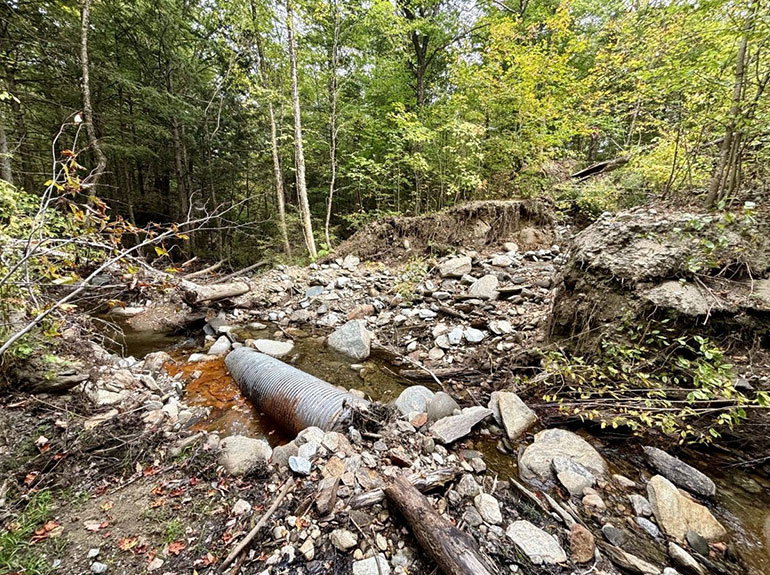
Photo: Summer 2024 flooding. Courtesy photo
Rinker reported that Barre City Manager Nicolas Storellicastro has advised that the city is actively pursuing flood mitigation efforts. They are currently prioritizing a list of 10 projects out of an initial 60, some of which involve drastic measures such as the removal of the Berlin Street bridge, in order to secure hazard mitigation funding.
He emphasized that the initial priority in the recovery effort is clearing debris from critical points along the waterways, a task the city has recently begun. Rinker also stressed the importance of engaging professionals to analyze the waterways and provide expert guidance on how to proceed with further recovery and mitigation efforts.
Bounty, of the Central Vermont Economic Development Corp., conveyed that the most effective message to send is that the region is ready and open for business.
“Yes, we had two shocking floods. But what we’ve always had going for us is that we are good neighbors who look out for each other, and we have great people running amazing businesses,“ she said. “We’re just a little tougher now than we were before!“
Housing Is on the Rebound
County officials noted a resurgence in housing development, citing growth on higher ground in Berlin as a catalyst for attracting businesses and creating new opportunities for outdoor recreation, housing and green spaces. They specifically mentioned the recent groundbreaking ceremony at Fox Run Apartments, celebrating the development of 30 new affordable-housing units.
Housing development is also gaining momentum in the City of Barre. Construction of 32 new flood-resistant, mixed-income units on Seminary Street is slated to begin next year, and plans for nine units of affordable housing at the former Ward 5 School are moving forward in collaboration with Downstreet Housing and Community Development.
Bounty described Prospect Heights, a top regional priority project focused on housing development in Barre, which was recently awarded a $2.8 million Catalyst grant from the Northern Border Regional Commission.
She also mentioned that Northfield Village Development secured $1.5 million in state grant funding to revitalize a brownfield site — a property previously abandoned due to pollution or contamination. Plans call for constructing a 30- to 35-unit apartment complex on this site, located at 11 N. Main St., just outside the town’s village center. The land was formerly occupied by a gas station and later a granite cutting shed.
Company co-founder Hugh McLaughlin said the development will comprise a mix of single, two-bedroom and studio units, along with amenities such as laundry services, a weight room, parking and updated security and appliance features. He intends to present concept drawings to town officials in mid-November, with hopes of breaking ground on the yearlong construction project next spring, pending approval.
Meanwhile, the Berlin community celebrated the groundbreaking of Fox Run Apartments on Aug. 1. This project, a partnership between co-owners and co-developers Downstreet and Evernorth, will provide essential housing for 30 low- and moderate-income households in Berlin.
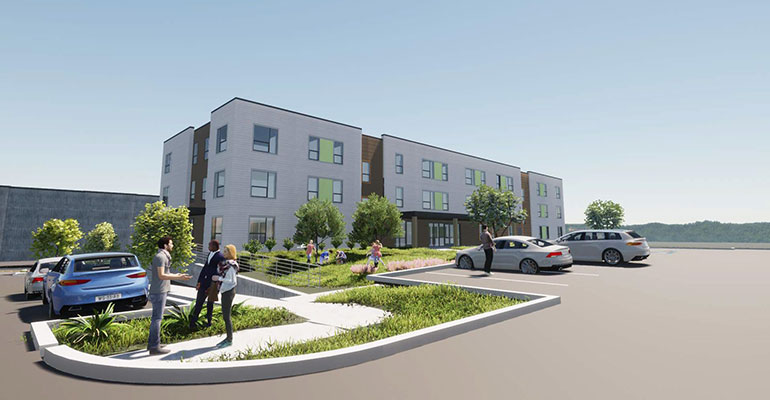
Photo: Fox Run Apartments in Berlin will bring 30 low- to moderate-income homes to the region. Courtesy photo
“The communities of central Vermont are in desperate need of more housing,“ said Downstreet Executive Director Angie Harbin. “Fox Run Apartments is a critical part of the solution that will provide safe, stable homes for families, workers for local employers, kids for local schools and people for the local community. Downstreet is grateful to be part of the collective effort that made this project possible.“
Kathy Beyer, senior vice president for real estate development at Evernorth, echoed Harbin’s sentiments, calling Fox Run “a shining example of what is possible in our communities through successful collaboration between nonprofit and private developers, towns and strong state and federal partners.
“Fox Run is also addressing climate change,“ Beyer added. By installing cold climate heat pumps, our building will prevent the emission of over 83 tons of CO2 annually.“
Designed as a single three-story building, Fox Run Apartments will offer a mix of 10 project-based housing subsidy units, affordable apartments and market-rate apartments. Its prime location in the heart of the Berlin Commons New Town Center provides easy access to businesses, schools and services. Residents will also enjoy amenities such as green space, community gardens, an on-site office for resident services and property management, and a community room.
To cover the total development costs of $15.1 million, a combination of public and private sources was utilized. Housing New England funds provided a $5.8 million tax credit equity investment for the project, which is administered by the Vermont Housing Finance Agency. The VHFA also contributed $175,000 from the Vermont Housing Investment Fund. The Vermont Housing and Conservation Board provided over $3.1 million, including more than $2.5 million in American Rescue Plan Act funding and $1.4 million in HOME federal block grant funds. Citizens Bank financed the construction with a loan.
The town of Berlin contributed $500,000 through the Vermont Community Development Program. Other sources of funds include NeighborWorks, Efficiency Vermont and Green Mountain Power. The Vermont State Housing Authority awarded 10 critically needed, project-based housing subsidies to Fox Run Apartments.
Rinker, of Barre Area Development, pointed to the importance of the region’s skilled workforce, noting the abundance of businesses providing services such as machine shops, plumbing, electrical work, surveying, manufacturing and civil engineering. He emphasized that this workforce, composed of both skilled tradespeople and professionals, needs access to housing.
Rinker, who called the lack of sufficient employee housing as the region’s most significant challenge, said his organization is currently involved in a development on Prospect Street that has the potential to create up to 100 units of housing. BADC would develop the infrastructure and then sell individual lots to developers.
College Property Comebacks
Bounty described the revitalization of two former college campuses.
The first, Vermont College of Fine Arts, now provides a home for the expanding Greenway Institute, a project-based university specializing in sustainable engineering. The campus also houses The New School, a K-12 institution unique in Vermont for its support of students with learning differences, as well as the Montpelier Performing Arts Hub, a burgeoning performing arts space located in the historic library building.
The second, Goddard College in Plainfield, was recently sold to New Hampshire-based developer Mike Davis of Execusuite. While still in its early stages, Bounty expressed optimism about Davis’ attentiveness to the town’s aspirations for the campus.
“While it is sad to see two colleges retire, there are new ways these important properties will serve their communities now,“ she said.
Will Thorn of Community News Service provided information on the Northfield housing project for this article.