VermontBiz by Olga Peters The revitalization of Rutland County’s economy may hinge on its infrastructure, but not just in the traditional sense of roads, bridges and utilities. It also encompasses the rewriting of the regional plan, the entrepreneurial spirit nurtured at co-working spaces, the welcoming efforts of volunteers and the cultural institutions that enrich the community.
These diverse elements of infrastructure are vital to creating a vibrant community that attracts new residents and businesses.
Lyle Jepson, executive director of the Chamber & Economic Development of the Rutland Region, acknowledges the challenge of reversing population declines but emphasizes the importance of marketing and having appealing infrastructure in place.
In other words, Rutland’s economic success depends on a combination of promoting its strengths and building a community that people want to be a part of.
Jepson believes that the county’s diverse amenities and committed community members contribute to its economic resilience.
“I think it’s because we do have a diversification of our economy, that we’re not solely reliant on one large company,“ he said. “I think that we’re a bit like the family farm where we have revenue streams coming from different places that helped sustain us during what might be a difficult time.“
Jepson stressed Rutland’s unique collaborative spirit, noting the constant cooperation between organizations and municipalities. This collaborative approach fosters a deep understanding of community needs and a shared commitment to progress.
Workforce development, affordable housing and flexible child care options are among the top priorities in Rutland County. The needs of shift workers, who require child care beyond traditional hours, are a particular concern. Additionally, companies face challenges expanding due to a shortage of workers, especially with many tradespeople nearing retirement.
To address these issues, Jepson stresses the importance of creating opportunities for people to connect and build relationships, fostering a sense of belonging that encourages them to stay in Rutland.
“It’s, again, back to infrastructure,“ he explained, pointing to the need for investments that go beyond physical structures to create a supportive and welcoming community.
According to the Vermont Department of Labor’s recent unemployment report, the Rutland labor market’s civilian workforce was 20,312, with a 2.1 percent unemployment rate.
Devon Neary executive director of the Rutland Regional Planning Commission, describes the region’s economy as “ripe for new opportunity.“ He points out that while the top eight employers account for a quarter of the county’s workforce, the remaining 75% are employed by nearly 2,000 small businesses, with 1,500 of those employing fewer than five people.
“So really, we are a region made up of entrepreneurs and small businesses that really create a very rich and diverse economic landscape,“ Neary said.
However, he acknowledges the significant challenges facing the region, including inflation, population decline, globalization and modernization.
Danielle Monroe, executive director of Wonderfeet Kids’ Museum, shares a different perspective. Having moved to the area after college, she intended to stay for a few months but found herself captivated by the region’s sense of community, can-do attitude and natural beauty. Twenty years later, she remains deeply connected to Rutland County.
“I just fell in love with the region,“ Monroe said. It’s beautiful — and don’t let anyone tell you any different.“
Learning About the County, One Data Point at a Time
The Rutland Regional Planning Commission, which assists the county’s 27 communities with creating and maintaining plans, studies and bylaws, is undertaking a comprehensive rewrite of its regional plan. The commission’s process involves collecting economic data, conducting focus groups with employers and surveying the public to gain a thorough understanding of the regions needs and aspirations
Neary said the goal is to understand gaps in the county’s economy and identify potential solutions.
According to the U.S. Census Bureau, Rutland County’s median household income of $62,641, falling below the state median income of $73,991. Additionally, 11.4% of the county’s 25,334 households live in poverty.
“We can’t solve all the region’s problems with this plan,“ Neary said. “But if we’re able to make it relatable and have very clearly defined goals, policies and actions that can chart a roadmap for coordinated and efficient community economic development, then we will have achieved our goal.“
In states like Vermont, which lack regional or county-level leadership, regional plans are crucial. They serve as unifying documents, guiding multimunicipal efforts and providing a shared vision for the future.
“While preparing this comprehensive rewrite of the regional plan, we’ve really struggled to answer the questions, Why does this matter to the average citizen, how does this impact your life and what things are a priority for you and your family and friends?“ Neary said.
The commission has divided the three-year regional plan rewrite process into phases. Overall plan development began last fall, and the initial phase, which focused on public engagement, occurred during the first three months of 2024. In this phase, the commission held 75 public events and gathered nearly 1,200 responses through a public survey.
Currently, the commission is developing the first draft of the regional plan. The second phase, scheduled for fall 2024, will involve reporting initial findings and conducting another round of public engagement. This will be followed by a second draft and a third phase of public input, focusing on refining goals, policies and actions that reflect the region’s priorities. Neary anticipates that the final plan will be adopted in 2026.
While still in the early stages, Neary described the information gathered so far as rich and diverse, revealing a range of perspectives. Among the key themes that emerged are concerns about the lack of economic diversity, low wages and a desire for higher-paying jobs in the region. People expressed interest in attracting more manufacturing jobs, developing the workforce and creating opportunities for internships, externships and job shadowing.
In response to these concerns, the commission revived the Rutland Region Workforce Investment Board, which had been inactive for several years due to funding and capacity constraints. Now operating under the commission’s umbrella, the board will focus on developing school-based programs and postsecondary adult workforce training opportunities.
“We’re hoping that resurrection will really fill a critical gap in workforce development across a spectrum, from middle school to adults,“ Neary said.
A critical workforce concern note in the data is the aging population of tradespeople in Rutland County, with an average age of nearly 60. Neary believes this shortage is directly linked to the limited amount of new or rehabilitated housing.
Despite these challenges, several priorities have emerged as areas of consensus across the region. These include developing new housing, diversifying the economy, promoting development in downtown areas, preserving natural resources and attracting new businesses and employees, particularly in the tech sector.
Notably, the arts and recreation sector experienced the most significant growth (56%) in the past five years. While still relatively small compared to other sectors, Neary believes this growth indicates a shift in the overall regional economy.
Feedback regarding the region’s strengths and assets focused on two main categories: people and place.
“The people in the communities are really supportive and strong and resilient,“ Neary noted, while the natural landscape, with its mountains, lakes and recreational resources, was identified as a top asset.
Conversely, concerns about transportation, safety, affordability, volunteer fatigue, government capacity, drug issues, homelessness, youth retention and the workforce were cited as weaknesses and threats.
To address some of these challenges, the commission’s Brownfields redevelopment program remains active, with approximately a dozen contaminated sites undergoing cleanup for repurposing.
The commission is also engaged in several large-scale downtown revitalization and transportation projects in Fair Haven and Castleton Village. These projects prioritize traffic calming measures, pedestrian safety and support for local businesses.
“We’re hopeful that these projects are opportunities to really reshape these historic downtown and village centers to be more focused on people than cars and, as a result, support local businesses,“ Neary said.
Building Social Infrastructure
A top priority of the Chamber & Economic Development of the Rutland Region is reversing the county’s declining population. The organization hosts a regional marketing initiative through its Real Rutland website (https://realrutland.com), specifically targeting areas in the U.S. that have suffered environmental disasters such as wildfires.
“We know there are particular pockets around the United States where people are looking for a place that’s safe and doesn’t have some of the issues that they currently have where they live,“ Jepson said.
According to the U.S. Census Bureau’s 2022 American Community Survey 5-Year Estimates, 2.4% of Rutland residents moved there from another state within the past year. For Vermont, the percentage was 4.1%.
Jepson emphasized that a community cannot succeed on marketing alone; it must also provide the social and cultural infrastructure that caters to residents’ desires.
Examples of this infrastructure in the region include Poultney’s Slate Valley Trails, Wonderfeet Kids’ Museum, the train service connecting New York City and Burlington and the Paramount Theatre’s substantial expansion project.
CEDRR, recognizing the importance of fostering innovation, has partnered with gener8tor, a venture capital firm and accelerator program, to establish a business incubator specifically for tech-enabled businesses. Gener8tor, with a proven track record of sponsoring 261 accelerators in 41 communities, will provide valuable support to startups in the area.
Jepson clarified that “tech-enabled“ encompasses any business using computers, spanning software development, cybersecurity, coding and related fields.
Beyond infrastructure and business development, Jepson emphasized the significance of community events in attracting and engaging people. Rutland’s Whoopie Pie Festival, drawing an average of 6,000 attendees downtown in September, exemplifies the power of such events in fostering community spirit and economic activity.
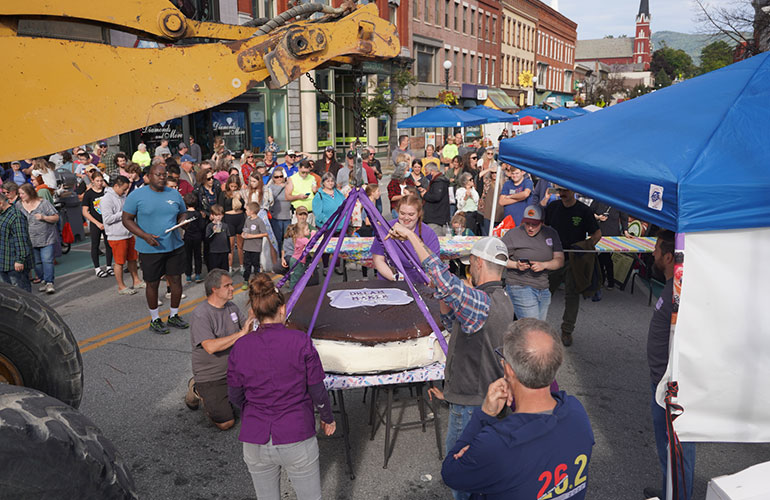
Photo: Left: Employees of Dream Maker Bakers in Killington unveil their 770-pound entry at the Rutland Whoopie Pie Fest. Courtesy photo.

Photo: A child enjoys a tasty treat. Courtesy photo.
“Then there are the less exciting things, like putting a water line across the road at the Airport Industrial Park so that we can expand that area and bring more commercial properties online,“ Jepson added.
In its initial development phase, CEDRR has established approximately a dozen wholesale and manufacturing facilities at Rutland-Southern Vermont Regional Airport. These facilities encompass diverse industries, including a Vermont County Store distribution plant, a wood pellet plant, a book publishing company, a kitchen cabinet manufacturer and a FedEx center.
Cape Air, the airport’s operator, is currently revamping one of the runways and maintaining three daily flights to Boston. Discussions are also underway to potentially add service to New York.
CEDRR is also instrumental in advancing the Killington Forward Initiative This project involves the town of Killington using a tax increment financing district, known as a TIF, to implement a new municipal water system and carry out extensive road repairs.
As part of a public-private partnership, housing developers Great Gulf will construct a mix of luxury and workforce housing within the project. Killington Resort has contributed $700,000 to support the workforce housing component.
Two Different Housing Markets
Rutland County faces a severe housing shortage, with a deficit of 11 units for every unit built, according to Neary. While Vermont as a whole grapples with a housing crisis, the underlying causes vary across counties. In Rutland County, aging housing stock and a scarcity of tradespeople and developers with access to capital contribute significantly to the local shortage.
Rutland’s housing stock is among the oldest in the nation, with numerous units becoming uninhabitable due to deterioration. Neary views this as an opportunity for rehabilitation and conversion of larger homes into multiunit housing. However, the lack of funding sources for these endeavors poses a major challenge. The majority of local developers are small-scale, focusing on projects of 12 or fewer units, further limiting the potential for large-scale housing development.
According to Neary, Rutland County’s population has stagnated for the past 10 to 13 years. While some areas like Rutland City have experienced significant population loss, recent growth has occurred in rural communities near recreational and tourist areas, such as Killington, Mount Holly, Shrewsbury and Castleton
Recent data on migration patterns within Rutland County has revealed a concerning trend. According to Neary, the outmigration of individuals with below-average incomes, coupled with the influx of households with well above-average incomes, has created a gentrification effect. This has driven housing prices beyond the reach of the average new homebuyer in the county.
Neary also remarked on the growing issue of short-term rentals. Several towns have either adopted or are considering ordinances to address this trend. These ordinances typically establish a registry to monitor the local STR landscape and ensure compliance with building and fire safety codes.
The 2020 Vermont Housing Needs Assessment, according to HousingData.org, found that 17% of the state’s housing stock was classified as seasonal, recreational or occasional use. In Rutland County, this figure rises to 20%, with homeowners accounting for 57% of the market and long-term rentals comprising 23%.
Nathan Mastroeni, an associate broker with Four Seasons Sotheby’s International Realty’s Killington office, primarily focuses on the resort market. He describes the current housing market as “healthier“ compared to the frantic COVID market during and immediately after the pandemic.
During that period, buyers often purchased properties sight unseen, without inspections, and waived financing contingencies, all of which Mastroeni advises against. Sellers, on the other hand, received offers above asking but then faced difficulties finding new homes.
The market has since stabilized, with buyers conducting inspections and including financing contingencies in their offers. First-time homebuyers are also finding more success in having their offers accepted.
Mastroeni concluded, “Today, we’re seeing buyers doing inspections on a regular basis, which is very healthy. And we’re seeing buyers be able to have a financing contingency and be able to see the house — sometimes seeing it twice.“
Residential prices have plateaued and are stabilizing in some areas of the county. While inventory has improved since the pandemic, it remains lower than demand, maintaining a seller’s market.
According to HousingData.org, the median sale price for a house in the county rose from $156,000 in 2019 to $240,000 in 2023.
A quick search on Zillow.com for Rutland County reveals a wide range of listings, from mobile homes priced under $69,000 to properties in Killington valued at $4.5 million.
Mastroeni notes that higher interest rates for mortgages, combined with increased house prices, are slowing the residential market. This dual cost increase has deterred some potential movers due to affordability concerns.
However, the vacation home market operates differently, driven by desire and proximity to resort areas. Sellers in this market are less concerned about finding a replacement property, as they can simply sell and retain the profits.
The local resort market remains healthy, with a steady flow of buyers and sellers. Mastroeni predicts that the Killington Forward and Great Gulf Village projects will significantly impact housing prices in the coming years. Based on current projections, these developments are expected to drive up prices in Killington and potentially surrounding areas.
“That village, with the pricing that they’re talking about right now, is going to be considerably higher than anything we’ve seen for pricing,“ Mastroeni said.
“And that new construction aspect will bring in buyers that wouldn’t have looked at a condo from the ’80s, and so we will have new buyers looking at the area, and buyers that have significantly higher budgets than anything that we’ve been doing in Killington.“
Preparing Students for Their Future at Castleton and VTSU
Vermont State University President David Bergh sees great potential and positive energy in Rutland County. Formed in July 2023, VTSU encompasses three institutions and five campuses: Castleton, Vermont Tech (with campuses in Randolph and Williston), and Northern Vermont University (a previous unification of Johnson and Lyndon State Colleges).
Despite the challenges posed by the pandemic, both VTSU and Castleton met their enrollment projections for the 2023-24 academic year, a positive sign of recovery. VTSU employs 1,384 people with a payroll of $70.5 million, and within Rutland County alone, it employs 222 individuals with a personal budget of $8.9 million.
The pandemic significantly impacted higher education, causing enrollment declines and transforming learning methods. The rapid shift to online learning highlighted the adaptability of educational institutions but also exposed challenges in maintaining quality and addressing learning gaps.

Photo: Students enjoy the springtime weather at VTSU’s Castleton campus. Courtesy photo.
Bergh acknowledges the benefits of technology in education but emphasizes the need to address pandemic-related learning deficits. Standardized tests have revealed declines in core competencies like math, communication and writing among high school students.
“We’ve seen significant learning deficits, particularly among traditional-age students,“ Bergh said. “While we quickly adapted to online learning, we didn’t immediately grasp the best practices.“
In response to the changing educational landscape, Bergh said that colleges have enhanced both in-person and online teaching methods, offering students greater flexibility in pursuing higher education.
Castleton and Community College of Vermont now represent the sole remaining higher education institutions in Rutland County following the closures of Green Mountain College and the College of St. Joseph.
Bergh emphasized the strong connection between Castleton and its surrounding communities. Alumni have established businesses locally, faculty and staff actively participate in community organizations, and the college maintains a gallery and hockey arena in Rutland.
Castleton also caters to nontraditional students seeking to complete degrees, advance their careers through certificate programs or change career paths. The school has experienced notable growth in its apprenticeship program.
Recognizing the shortage of skilled workers in Vermont’s trades, VTSU is developing programs to address this critical need. Additionally, the university is committed to providing flexible learning options, including traditional on-campus learning, hybrid formats and online programs.
“We strive to maximize flexibility, helping students achieve their goals within the constraints of their current lives and schedules,“ Bergh said.
The Cannabis Studies Certificate program at Castleton exemplifies VTSU’s commitment to meeting evolving workforce needs. This 12-credit interdisciplinary course covers the historical, economic, legal, medical and spiritual aspects of cannabis, as well as cultivation and commercial requirements. Students also receive state-mandated Cannabis Employee ID Card compliance training.
Significantly, half of the students enrolled in the program are already working in the cannabis industry, demonstrating the program’s relevance and practicality.
Bergh emphasizes that education must constantly anticipate emerging needs, technological advancements and cultural shifts. This proactive approach ensures that educational institutions like VTSU remain at the forefront of preparing students for the future.
“The jobs our high school students may be doing in 20 years probably don’t exist yet,“ Bergh said. “So we need to position ourselves to be able to pivot, be flexible and grow as society around us does.“
Vermont State University is actively monitoring the evolving field of artificial intelligence. This summer, the university will host a symposium for faculty and staff to explore the use of AI in classrooms and develop related programs.
Additionally, the school is engaging in master planning and evaluation of its five campuses to adapt to the changing needs of students and educational practices. Recognizing that these campuses were designed for different demographics and learning styles, the university is taking a thoughtful approach to investment, considering which spaces are essential and how existing ones could be repurposed.
This is envisioned as a 10- to 15-year project, but Bergh acknowledges the importance of incorporating shorter-term goals and flexibility, citing the pandemic as a reminder that even the best-laid plans can be disrupted.
Ultimately, VTSU remains committed to supporting Vermont by providing accessible educational opportunities and aligning programs with the state’s workforce needs. Bergh emphasizes the importance of adapting to evolving needs, stating, “We need to be prepared to evolve as those needs evolve.“
Protecting the Environment So Future Generations Can Play
Killington Resort’s marketing specialist, Brooke Geery, is encouraged by the growth and emergence of new businesses in the area. She noted the revitalization of hotels on Killington Road and in Mendon, as well as the rise of new restaurants and shops in downtown Rutland. Geery observed that younger generations are seizing opportunities to take over legacy businesses as their owners retire.
Killington Resort itself continues to experience growth, particularly in its summer mountain biking business. Despite last summer’s rainy weather, visitation remained strong, and Geery anticipates further growth this summer. This benefits not only the resort but also other businesses in town, many of which are now operating year-round instead of shutting down during the summer months.
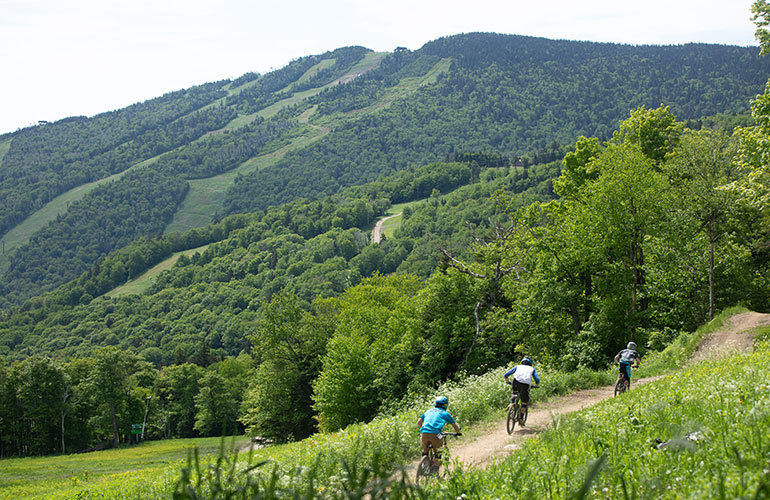
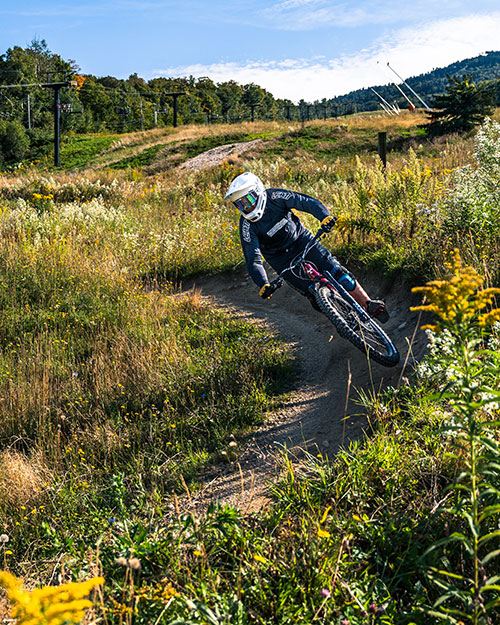
Photo: Mountain biking at Killington. Photos courtesy of Killington.
In response to climate change and environmental concerns, several ski areas have launched environmental initiatives. Vail Resorts, owner of Vermont’s Mount Snow and Okemo Resorts, has committed to a zero net operating footprint by 2030.
Killington’s parent company, POWDR, has its own initiative called Play Forever, which aims to protect the environment and surrounding mountain communities. According to Killington’s website, Play Forever represents the resort’s dedication to ensuring future generations have access to the same adventurous lifestyle enjoyed today.“
Killington Resort is deeply committed to sustainability, implementing various initiatives such as composting, installing the most electric car chargers of any ski resort, and partnering with companies like Casella Waste Systems to minimize environmental impact. The resort is also actively involved in numerous charities and community organizations. Geery emphasized the importance of POWDR’s company-wide Play Forever initiative, aligning with the values held dear in Vermont.
Addressing the concern of longer, warmer summers impacting the ski industry, Killington is focusing on expanding its year-round offerings. Visitor numbers have grown for the mountain bike park, golf course, scenic gondola rides, hiking, Adventure Center and events like the Cooler in the Mountains summer concert series.
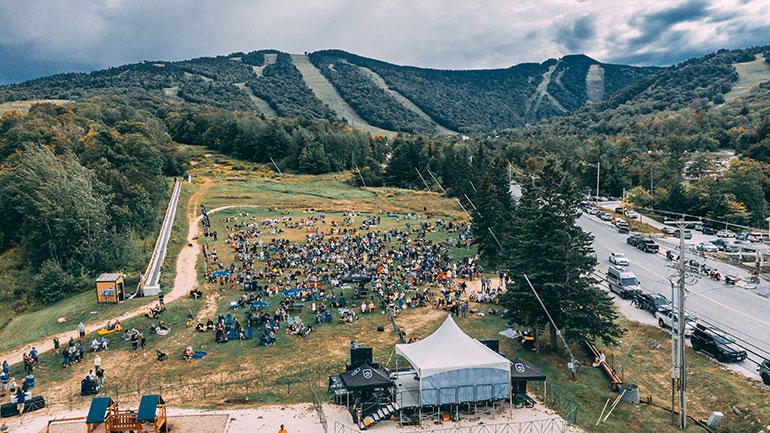
Photo: Summer concerts at Killington. Photo courtesy of Killington.
Killington boasts one of the industry’s most robust snowmaking systems, ensuring the longest ski season in the East. The resort continually strives to improve and reduce energy consumption in snowmaking, with significant progress in lowering diesel use and increasing the use of high-efficiency snow guns.
Staffing levels have returned to pre-COVID levels, with the resort fully staffed last season. While finding qualified staff remains a challenge, Killington offers competitive pay, comprehensive benefits and the most employee housing in Vermont, making it an attractive workplace.
Last year, Killington demonstrated its commitment to the local community by donating $700,000 to the town of Killington for workforce housing development
Poultney Sees New Owners of Legacy Businesses
The Poultney Chamber of Commerce faced potential closure in February due to difficulties replacing board members whose terms had expired, as reported by the Rutland Herald. However, the local business community rallied at a mixer on Feb. 15, successfully electing a new executive board to lead the chamber.
Board President Elizabeth Ayers shared via email that circumstances in Poultney have since improved. Notably, two crucial long-standing businesses, Williams Hardware and Hermit Hill Books, have successfully transitioned to new ownership following the retirement of their former owners. Williams Hardware is now Noble Ace, while Hermit Hill Books has become Laureate Fine Books.
Noble Ace Hardware celebrated its grand reopening on April 27. Laureate Fine Books specializes in second-hand, rare and collectible books, but is currently closed for renovations.
“Both are making upgrades and expanding their offerings,“ Ayer said. “We’ve had new restaurants open — Toads Burger Bar and the Rail Trail Eatery on Main Street, and the Cluckin’ Cafe at Cones Point Country Store near Lake St. Catherine. They are busy every time I stop in, and we have many new chamber members this year who are interested in getting involved in the area.“
Similar to other Vermont communities, businesses in the Poultney area are struggling to find workers, and housing remains a pressing issue. However, there are positive developments as well. Ayers expressed excitement about the numerous Green Mountain College graduates who have stayed in Poultney and are establishing businesses there.
Poultney also benefits from its collaboration with Slate Valley Trails, promoting recreational activities in the area, ranging from mountain biking and hiking to biking, golfing and lake activities. Stone Valley Arts and the Poultney Historical Society contribute to the community’s cultural richness through diverse events, galleries, concerts, classes and symposiums.
Slate Valley Trails, a nonprofit volunteer community group founded in 2015 and a Vermont Mountain Biking Association chapter, maintains over 50 miles of public trails in Poultney, Castleton and Wells, open to both pedestrians and cyclists.
Jepson reflected on the lessons learned from the COVID-19 pandemic, emphasizing two key takeaways for Rutland County. First, the pandemic revealed the potential of technology to expand businesses and relationships. And second, it reinforced the importance of human connection and the desire to gather in person.
“I think what we’re trying to do is create opportunities for people to be together,“ Jepson said. “It goes back to that relationship building.“
Neary echoed this sentiment, describing Rutland County as poised at a precipice, with communities actively reimagining themselves in this new era. He emphasized the focus on rallying around new ideas and opportunities that enhance the existing strengths and assets of these towns without compromising their history, culture and character.
Olga Peters is a freelance writer from Southern Vermont.
To support great journalism, access our archives and get unique features like our award-winning profiles, Book of Lists & Business-to-Business Directory, subscribe HERE!