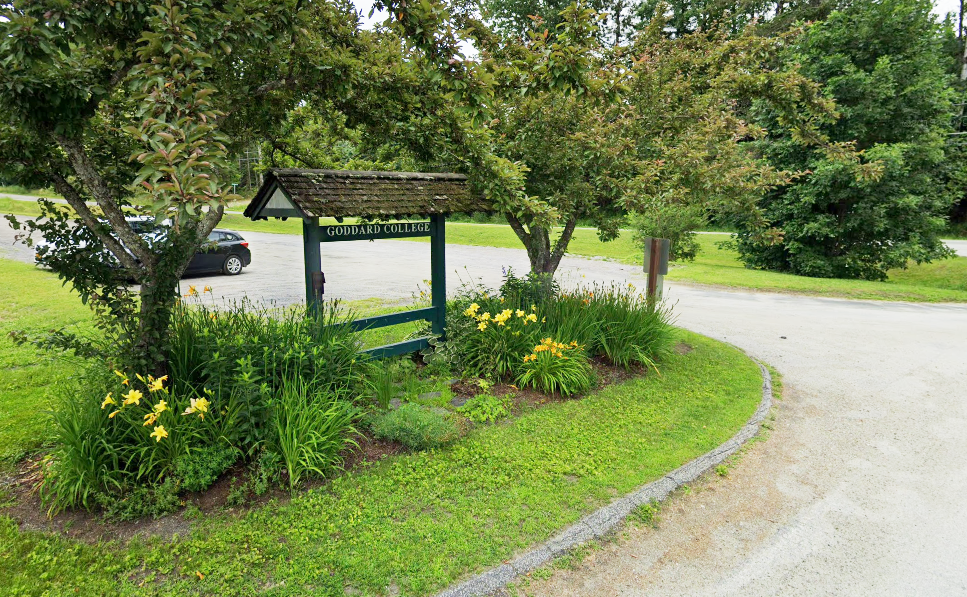
Goddard College, Plainfield, Vermont. Google Maps screen shot.
Vermont Business Magazine The recent announcement by Goddard College administrators that the campus would be shutting down for at least a year has alarmed many in the Goddard community. In response, a group of stakeholders–including leadership from the faculty union, staff union, alumni, and student body–have joined forces to transform the college into a cooperatively run institution.
“[Our] initial conversations and organizing are deeply encouraging,” said alumna Alisha Raby, current Staff Union co-chair and constituent member of the Board of Trustees, about the effort.
“[We’re] reawakening and invigorating what feels to be the true soul of transformative, progressive education.”
The decision to close the campus was not the sole impetus for the groups to join forces as a collaborative, explained alumna Kailina Mills, a Maine school director.
“The root of the problem,” she said, “is the dissonance between the college’s pedagogy and its governance structure, which has created rifts in the community over time.”
Goddard College was founded in 1938 by Royce “Tim” Pitkin and is renowned for its trailblazing “radical democracy” approach, in which students are full partners in planning and guiding their learning process based on their passions, not on prescriptive curricula.
Yet, said Mills, “In recent years there has been an alarming departure from the College’s values and mission. The college has often been governed by a small handful of people who neither are versed in its radical traditions nor bother to seek counsel or input from the students, faculty, alumni and staff who make up the college community.”
In opposition to changes prior to the abrupt closing of campus, the faculty union voted to authorize a strike during tense contract negotiations, the staff union went on strike for more than a month, and the student council and alumni association both separately voted no confidence in the college’s president, Dan Hocoy, and board of trustees.
However, explained H. Sharif Williams, PhD, chair of faculty council, “This is not about the personalities or failings of the president or any specific trustee. The issue is larger and more fundamental. If Goddard is going to continue to be relevant, given the rise of fascism and white nationalism around the world, it has to have an organizational culture, governance structure and decision making processes that are as liberatory, engaged and values-based as the educational model we use. This is how we can best empower students to deal with the challenges of our world.”
Raby agreed. “Clearly it’s time to take action together,” she said. “We’re excited about this collaborative effort by people who love and want to revitalize the college.” Among the coalition’s immediate hopes are to attract partners from like-minded organizations, fundraise to transition the storied college to a cooperatively governed institution, and reinvigorate Goddard College’s radical pedagogy for the 21st century.
For more information on the Cooperative College Collaborative and its efforts, visit to www.cooperativecollegecollaborative.org.