


by Timothy McQuiston, Vermont Business Magazine The Vermont Department of Health reported May 31, 2023, that COVID-19 hospitalizations increased. COVID-19 activity remains in the "Low" range, according to the VDH. There were 5 COVID-related deaths in the last week for a pandemic total of 974 as of May 27 (this is the most recent update). VDH reported 15 COVID-related deaths in March, the fewest since the summer of 2021, 19 in April and 9 so far in May.
Of the total deaths to date, 773 have been of Vermonters 70 or older. There have been 3 deaths of Vermonters under 30 since the beginning of the pandemic. There were 28 COVID-related deaths in February and 25 in January, as data was adjusted based on more information. Deaths did not spike this past winter as they had the previous two. (see data below)
Following an analysis of COVID-19 data, the VDH reported in early January a cumulative 86 additional COVID-associated deaths that occurred over the course of the pandemic but had not been previously reported. Most of those deaths occurred in 2022.
Vermont has the second lowest fatality rate in the US (112.6 per 100K; Hawaii 94.1/100K).
The Delta variant took off in August 2021, which resulted in the heaviest number of deaths before vaccines and their boosters helped alleviate serious COVID cases. Multiple Omicron variants are now circulating and appear more virulent than previous variants, but perhaps not more dangerous, according to the CDC.
AP April 5, 2023: WHO downgrades COVID pandemic, says it's no longer a global health emergency
As of this report, there were no outbreaks last week, and only one last week. Outbreaks have fallen significantly since early fall.
Walk-in vaccination clinics run by the state closed on January 31. Learn more
Vermonters are reminded that all state COVID testing sites were closed as of June 25, 2022. PCR and take-home tests are available through doctors' offices, pharmacies and via mail from the federal government. The federal government officially ended its pandemic response as of May 11, 2023. See more information BELOW or here: https://www.healthvermont.gov/covid-19/testing
Report Timeframe: May 21 to May 27, 2023
Statewide hospitalization levels: Low. New COVID-19 admissions are below 10 per 100,000 Vermonters per day.
- New hospital admissions of patients with COVID-19, last 7 days: 2.08 per 100K (0.96 per 100K last week)
- 13 total new admissions with COVID-19 (increase from previous week, 6)
- Reported cases increased to 72, from 58, last week. There were 86 reported cases two weeks ago
The number of reportable COVID-19 cases is still available in this report, below. Laboratory-confirmed and diagnosed COVID-19 cases and COVID-19 outbreaks must still be reported to the Vermont Department of Health
Vermont Department of Health recommendations: Preventing COVID-19 (healthvermont.gov)
CDC recommendations: COVID-19 by County | CDC
Current Surveillance Report Summary:
Vermont's COVID-19 Hospitalization Level is Low.
The volume of people going to emergency departments due to COVID-like symptoms is lower than the same time of year in years 2020-2022.
Outbreaks and situations of concern in long-term care, corrections, and health facilities remains significantly lower than in May 2022.

Starting May 11, 2023, the CDC and Vermont Department of Health will no longer use the COVID-19 Community Level to measure COVID-19 activity in the U.S. and Vermont.
Instead, Vermont's statewide COVID-19 level will be measured by the rate of COVID-19 in people being admitted to the hospital, per 100,000 residents.
Focusing on hospitalization data is a better estimate of how COVID-19 is impacting the community now that reported COVID-19 cases represent a smaller proportion of actual infections. This also allows us to compare Vermont’s hospitalization levels with other parts of the country.
Pandemic officially over? US Covid deaths hit record new record low
Vermont has the second lowest fatality rate in the US (112.6 per 100K), behind Hawaii (94.1/100K). Mississippi (423/100K) and Arkansas (422/100K) have the highest rates (CDC data). The US average is 282.9/100K. There has been a total of 1,130,593 COVID-related deaths to date in the US (CDC) and 6,938,353 globally (WHO).
VDH reports 86 previously unidentified COVID deaths
The Delta variant caused a surge in COVID-related fatalities last fall and into the winter.
The highest concentration of deaths was from September 2021 through February 2022. Overall, December 2020 and January 2022 were the worst months with 72 fatalities each.
Health Commissioner Mark Levine, MD, has said the Omicron variants are highly transmissible and have caused an uptick in cases and hospitalizations across the nation; the Northeast has seen the smallest increase.
The CDC gave approval to the new Omicron vaccines on August 31. The highly infectious, though less dangerous, BA.4 and BA.5 variants have become dominant this year, though new subvariants of those variants are beginning to appear.
Dr Levine and the FDA believe that vaccines for the COVID virus would likely be an annual event, similar to how there is an annual flu shot that is configured for the particular active strains. He is also expecting an active flu season.
The US confirmed its first case of COVID-19 on January 20, 2020.
The updated booster is for people 12 and older who have completed their primary COVID-19 vaccine series and received their last booster or additional dose at least two months ago. Look for Pfizer Bivalent Booster 12+ and Moderna Bivalent Booster 18+. Bivalent boosters are available at some pharmacies across the state. Contact pharmacies directly for details on available products and scheduling.
On October 12, 2022, the FDA authorized updated COVID-19 booster shots for children as young as 5.


COVID-19 Vaccine
- NEW: Starting in January, walk-in clinics will transition to more limited hours and close by Jan. 31. Before clinics begin to wind down, they will have new hours (including more weekends and evenings) through December. Learn more
- NEW: As of December 19th, 2022, updated vaccines for children ages 6 months- 5 years are now available in Vermont. Contact your health care provider directly for details on available vaccines and scheduling or visit our list of free walk-in clinics or more information, see COVID-19 Vaccines for Children
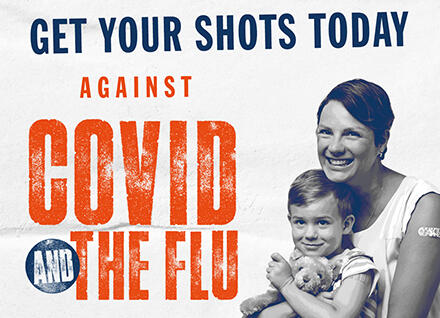
- Both the flu and COVID-19 vaccines can be given at the same visit. More on flu shots and prevention tips
- State-run walk-in clinics offer both updated boosters and flu vaccines (for those under 65 years), with more locations being added. State-run walk-in clinics are not able to offer flu vaccines to adults 65 and older. Contact your pharmacy or doctor's office directly for details on available vaccines and scheduling.
Find COVID-19 Vaccine Information for Health Care Professionals
Find translated videos and factsheets in: American Sign Language | العربية (Arabic) | မြန်မာစာ (Burmese) | Chinese Traditional | Chinese Simplified | دری (Dari) | Français (French) | Kirundi | Maay Maay | Mandarin Chinese | नेपाली (Nepali) |پښتو (Pashto) | Soomaali (Somali) | Español (Spanish) | Swahili | Tiếng Việt (Vietnamese)
Vermonters ages 6 months and older are eligible for COVID-19 vaccines. Getting vaccinated against COVID-19 is the safer way to build protection from serious illness–even for those who have already had COVID-19. Learn more about COVID-19 vaccines (CDC)
COVID-19 vaccines are free and widely available. Anyone can get vaccinated in Vermont, including those who live in another state, are non-U.S. citizens, or who have no insurance. See Vermont's current vaccine rates
You can get free COVID-19 vaccines at:
- Your health care provider’s office
- A pharmacy
- Walk-in clinics
- Other locations where you get your vaccines
TESTING
How to get tested in Vermont
At-home antigen tests (also called rapid tests or self-tests) meet many testing needs and are widely available at pharmacies around the state and at online retailers.
- Buy online or in pharmacies and retail stores: Some health insurance plans can cover the cost of at-home tests. You may be able to show your insurance card at the pharmacy and get test kits at no cost to you. Some health plans may require you to pay for the tests and then be reimbursed. Learn more about insurance coverage
- Order free tests through COVID.gov: Every home in the U.S. can order a third round of FREE at-home tests mailed directly to them. Order free tests at COVID.gov
- Contact your health care provider: Medical practices may offer other COVID-19 testing options.
HELP Getting Tests
If you cannot get at-home antigen tests from the options above, you can call the Health Department at 802-863-7200, or check with your local health office.
Non-profit community organizations may qualify for free at-home tests by mail if they work with Vermonters who may have difficulty getting tests due to overall systemic inequities. This includes Vermonters who are Black, Indigenous or people of color (BIPOC), speak languages other than English, are experiencing homelessness, have a disability or other groups. Please email [email protected].
Food shelves, libraries, and municipal offices who are interested in distributing COVID-19 at-home tests in their community can also email [email protected].
If you are homebound, you can get a PCR test in your home. Homebound means you are not able to leave your home for scheduled medical care or non-medical appointments. Call 802-863-7200 (toll-free 800-464-4343), Monday through Friday, 8:00 a.m. to 4:30 p.m.
Translated videos on where to get tests from the Vermont Language Justice Project: ASL | العربية (Arabic) | မြန်မာစာ (Burmese) | دری (Dari) | English | Français (French) | Kirundi | Maay Maay | Mandarin | नेपाली (Nepali) | پښتو (Pashto) | Soomaai (Somali) | Español (Spanish) | Kiswahili (Swahili) | Tiếng Việt (Vietnamese)
TEST KIT EXPIRATION DATES
Many test expiration dates have been extended. Check information below for new dates by brand:
FDA information on tests.
Check Intrivo on/go tests.
Check iHealth tests.
Check FlowFlex tests.
When to get Tested
- If you have symptoms of COVID-19 ─ even if the symptoms are mild, and even if you previously had COVID-19. Test as soon as possible.
- If you are a close contact of someone who tested positive for COVID-19 and you are not vaccinated or not up to date on your vaccines. Learn more about when close contacts should get tested.
If you test positive and you are age 65 or older or have a medical condition that may put you at risk, reach out to your health care provider to ask about treatment — as soon as you get a positive test result. Learn more about treatment.
Find tips and learn more from the CDC about self-testing
Learn about Test Types
At-home antigen test
- Is approved for ages 2 and older.
- Best when two tests are taken at least 24 hours apart.
- Should be used if you tested positive for COVID-19 in the past 90 days. Other test types, such as PCR, could continue to give a positive result because of your previous infection.
PCR test
- Is approved for all ages, including under 2 years.
- May be available through your physician's office.
Test instructions and translations
Report Your Results
If there is no option to automatically report your self-test result, please report results (positive or negative) to the Health Department using our online form. Your response is confidential, and reporting your test result helps the Health Department understand how many Vermonters are being tested for COVID-19 and how the virus is spreading in our communities.
Report your COVID-19 test results