

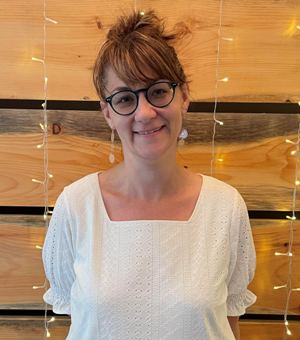
Green Mountain United Way, in collaboration with the Working Communities Challenge – Greater Barre Area leadership team, is pleased to announce that Elaine (Eli) Toohey has joined the organization’s work as Project Director for the Working Communities Challenge – Greater Barre Area. She will lead the collaborative work of partners in Central Vermont as they “work to increase the economic mobility and overall well-being for Greater Barre Area head-of-household women experiencing financial instability, through aligned coordination of employment support. The project has the ultimate goal of 15% fewer single moms living below the federal poverty level in 2030 as opposed to their 2020 counterparts”. The Working Communities Challenge – Greater Barre Area is a grant-funded project that came out of a collaborative process led by the Federal Reserve Bank of Boston and local philanthropic partners including the Vermont Community Foundation, National Life Group Foundation, and others. Organizational partners leading the Working Communities Challenge - Greater Barre Area include:
Green Mountain United Way (lead agency)
City of Barre
Capstone Community Action
Family Center of Washington County
Central VT Home Health and Hospice
Central VT Medical Center
Central Vermont Adult Basic Education
Central VT Regional Planning
Vermont Agency of Transportation
Community College of Vermont
Eli has held several roles in Central Vermont including her work as Executive Director of Another Way, a peer-led mental health center serving individuals in Central Vermont, and comes to this role directly from work with Capstone Community Action doing financial coaching and economic stability work with women receiving Reach Up benefits in Central Vermont. Eli is currently seeking a certificate in Community Resilience and Planning at UVM and intends to use that knowledge to further the work with this project.
Eli was born in Barre and grew up in Central Vermont. She sees her experience growing up in this community as integral to her success in this role. “Growing up in the area, I experienced Barre when it was thriving, and have watched the community go through a lot of change over the years. This change in the physical, economic and social infrastructures has given way to struggles for many of our community members, particularly single women. I have shared experiences with many of the core participants we serve through the WCC project. Whether it is those day-to-day struggles with childcare or the larger struggles as a woman in the workforce, I have lived experience of what these women are experiencing and welcome the opportunity to make changes that will benefit them and our community. Regardless of their struggles, employment and economic stability offer the potential to create opportunities for these participants,” offered Toohey, who lives in Montpelier with her family.
“What also drives me is the opportunity to work with this unique group of community partners, workers, and employers to change the systems and systematic barriers that make it difficult for women, and mothers in particular, to get and keep good, steady jobs with opportunities for advancement. This project makes so much lasting change possible because we are not just focusing on individuals. We are focusing on how to change systems, policies, and cultures that have traditionally put women at a disadvantage,” Toohey continued.
The Working Communities Challenge – Greater Barre Area uses the United Way’s Working Bridges program as the framework with Green Mountain United Way serving as the backbone organization. . Working Bridges is a well established program bringing human services support to workers at their workplace and includes interventions like one-on-one resource coordination and financial coaching, income-advance loans, educational opportunities, and volunteer income tax assistance (VITA). The WCC-Greater Barre Area will add other elements and advance the Working Bridges model in order to meet the specific needs of the clients they work with. Employer partners for the WCC-Greater Barre Area project include Central Vermont Medical Center, Central Vermont Home Health and Hospice, and other Working Bridges sites. Additional employers will be included throughout the development of the program.
“Eli’s unique life and work experience makes her a wonderful fit for this role. We are excited to have her leadership at the helm of this initiative and to have someone who knows the Barre community and is ready to work toward lasting changes for women in our workforce. This project builds on the foundation that has already been established by the Working Bridges program and our employer partners. I am personally excited to see how Eli’s leadership on this project can transform the Working Bridges foundation and bring it to the next level by offering opportunities specific to women and generations that follow, ” said Tawnya Kristen, Executive Director at Green Mountain United Way.
About Green Mountain United Way: Green Mountain United Way is a Vermont not-for-profit organization in operation since 1976. They work to improve the health, education and financial stability of every person in every community in Caledonia, Essex, Orange, Orleans and Washington Counties by mobilizing the caring power of communities around our region to advance the common good. No other single organization has the scope and influence to bring together human service agencies, government, businesses, private foundations and dedicated volunteers around a common vision of creating maximum impact and achieving long-lasting results.
Contact Green Mountain United Way, 652 Granger Road, Barre, Vermont, 802-613-3989 or [email protected]
About Working Communities Challenge:
The Working Communities Challenge advances local collaborative efforts that build strong, healthy economies and communities in Vermont’s rural towns, regions, and smaller cities.
Launched in 2019, the initiative supports diverse, local teams as they tackle complex challenges facing their communities. With a focus on economic opportunity for communities and residents with low incomes, this unique three-year grant competition is supported by the Federal Reserve Bank of Boston, the State of Vermont, national and local philanthropy, and private sector employers. www.bostonfed.org/workingplaces/communities-challenge/vermont.aspx