

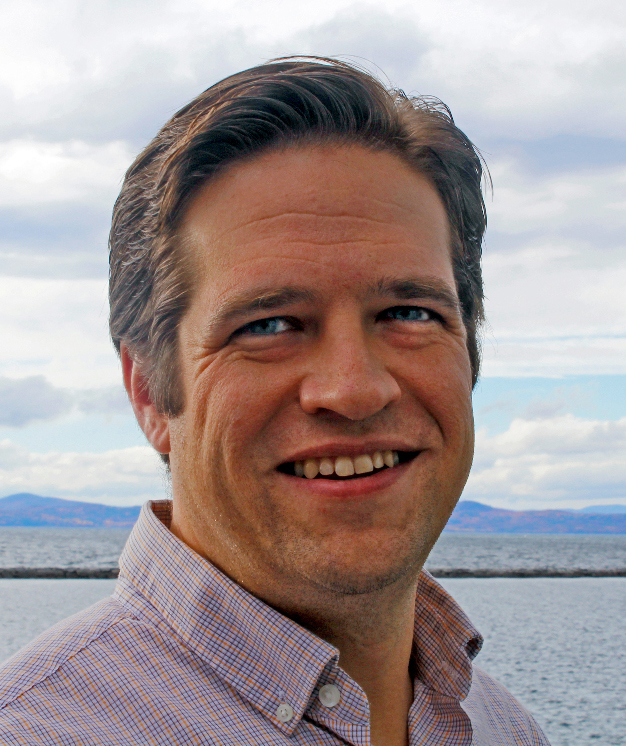
Vermont Historical Society Board of Trustees has named Stephen Perkins as the new Executive Director, effective December 1, 2015.
“We look forward to the expertise that Stephen will bring to the Vermont Historical Society. His passion for our state’s heritage makes him an ideal candidate for this role as we continue our mission of preserving Vermont’s treasured history,” VHS President Richard Marek said. “We would also like to thank former governor, Jim Douglas, for so capably filling the interim directorship during the search for our permanent executive director.”
A lifelong Vermonter, Perkins’ professional career has led him on a path of preserving and celebrating Vermont’s unique history and iconic landscape. Perkins comes to the Society from ECHO, Leahy Center for Lake Champlain in Burlington, where he has served as Director of Development and Communications—raising over $5 million for the organization. During his tenure there, he also envisioned and managed the Leahy Center Environmental Summit program. At the Bennington Museum, first as curator then as executive director, Stephen brought the organization into the digital age, instituted proper museum practices, led the staff and board through strategic planning and rigorous accreditation processes, balanced budgets, and engaged the community in innovative and exciting ways.
Perkins stated, “Vermont holds a special place in my heart―the people, the landscape, the history, and an exciting future. I look forward to furthering the mission of the Vermont Historical Society and relish making our cultural heritage part of the public discourse and relevant to all sectors of our state’s diversifying society.”
The Vermont Historical Society is a nonprofit organization that operates the Vermont History Museum in Montpelier, the Leahy Library and Vermont Heritage Galleries in Barre, and programming throughout the state. Established in 1838, its purpose is to reach a broad audience through outstanding collections and statewide outreach. The Vermont Historical Society believes that an understanding of the past changes lives and builds better communities.