

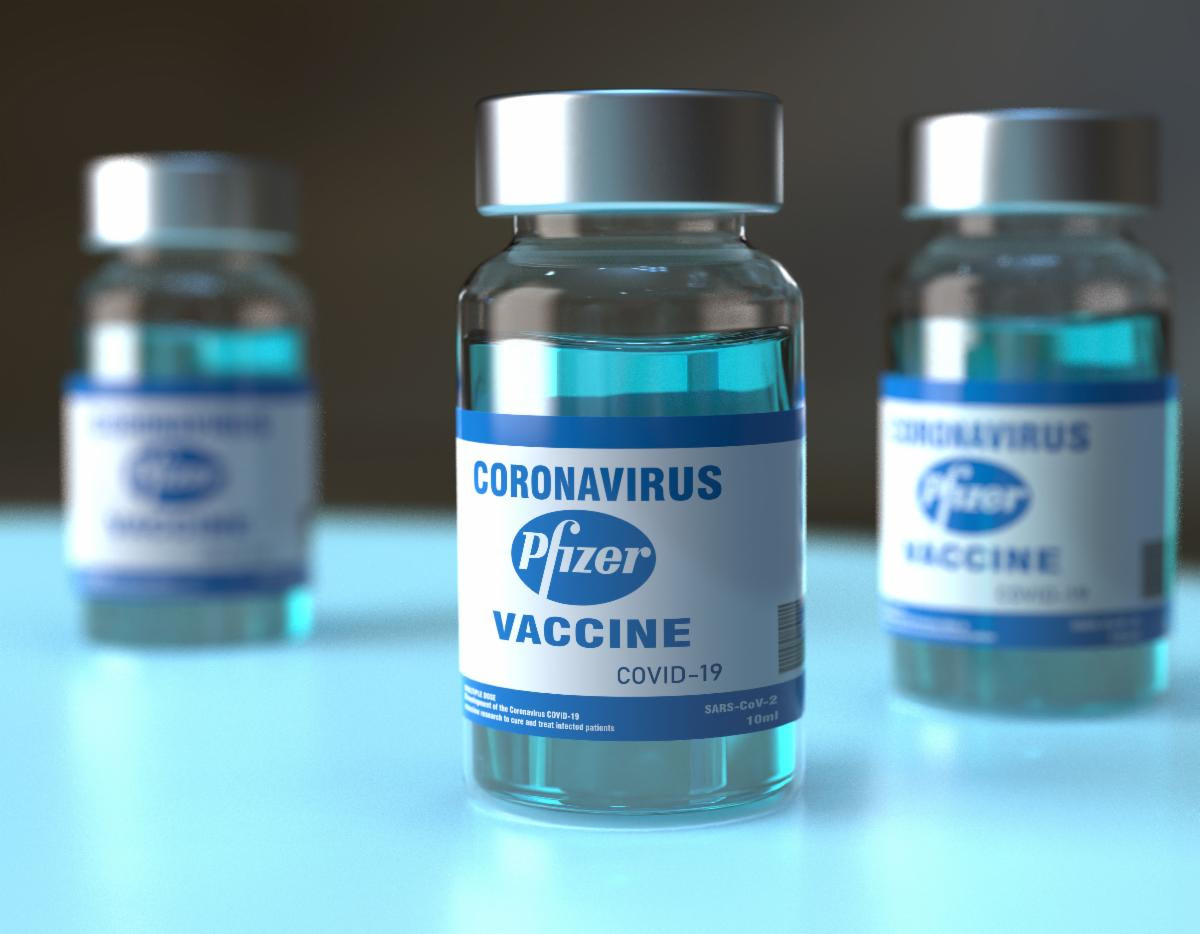
COVID-19 vaccine from Pfizer. Courtesy photo
by Jeff Tieman, VAHHS President and CEO A post-pandemic world is closer than it was even a week ago. Several highly effective COVID-19 vaccines are on their way – the first, from Pfizer, is slated to arrive in Vermont in a day or so. Initial doses will be administered by hospitals and pharmacies as part of federal and state plans that prioritize front-line health care workers and residents of long-term care facilities.
This week’s VAHHS Update provides more details about vaccine distribution, effectiveness and possible side effects. Our goal is to share new information as rapidly as possible to help health care workers – and Vermonters in general – stay informed and confident about getting the vaccine as soon as it’s available to them. Of course, such information changes quickly.
We must be careful not to let the vaccines lull us into a sense of false security. It will be many months before most of the American public is vaccinated. Until then, we have to remain vigilant and on guard. As tired as we are of wearing masks and social distancing, these practices must continue. As much as we want to gather with friends and family, we are better off staying apart to prevent virus spread and an overwhelmed hospital system.
Health experts suggest it could take many months into 2021 to reach a vaccination rate high enough for more normal life to resume. That makes what we do right now so important. Unfortunately, the number of COVID-19 cases in Vermont is currently at an all-time high with hospitalization and death rates growing.
The light is at last flickering at the end of this dark tunnel. To see more of that light later, we need to be even more careful now. To find ourselves in a state where COVID is once again rare, we need to make wise, if difficult, decisions today, like keeping holiday celebrations to our immediate family or household.
I have faith in Vermonters’ ability to continue following guidelines from the governor and Dr. Levine to keep each other safe—“masks on faces, six-foot spaces, uncrowded places”—and to cooperate with the state’s rigorous testing and contact-tracing efforts.
So far, we are fortunate not to have seen the same post-Thanksgiving bump in case volume other states are experiencing. That is no accident. It is the direct result of our teamwork, and Vermonters’ willingness to be patient and take the right steps to manage through the pandemic until it is a thing of the past.
I believe we can change our seasonal celebration habits once again. Observing holidays differently this year is the best way to ensure we can be back together next year.