

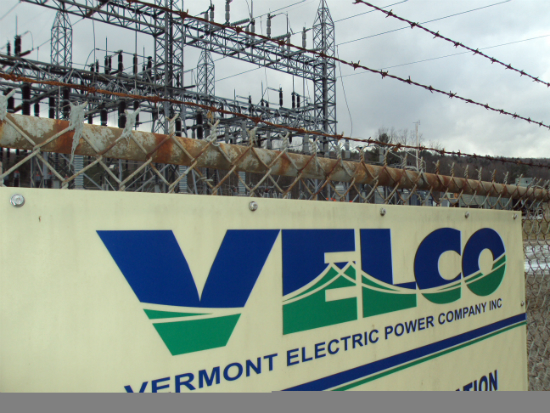
by Kate DuffyVermont Business MagazineFor 50 years after it was founded in 1956, the Vermont Electric Power Company, or VELCO, considered itself a maintenance company. Created by local utilities as the nation’s first statewide transmission-only company, it was charged with maintaining the grid that delivered electricity across Vermont.
In the past five years, that has changed. As the company expanded and upgraded what had been an ‘antiquated’ system, it evolved into a construction company as well. And that evolution is continuing.
‘We’ve really grown exponentially,’ VELCO spokeswoman Shana Duval said. ‘Our primary mission is still to maintain Vermont’s transmission system in a reliable and cost-effective manner, but in the past decade VELCO has made significant investments in transmission infrastructure.’
Much of that investment can be traced to the blackout that darkened much of the Northeast in August 2003. While demand had increased, there hadn’t been any real reliability upgrades.
‘I think that blackout was a huge moment for the utility industry nationwide,’ Duval said. ‘The government imposed really strict reliability performance standards, and we had to evolve with them.’
In 2006, VELCO launched the Northwest Reliability Project to bring more reliable power to Chittenden County, where population growth was coupled with an increased demand for electricity. But Duval says growing pains were evident.
‘The Northwest Reliability Project had a funky start,’ she said. ‘The rules had entirely changed since the last major transmission upgrade. Neither VELCO, nor any transmission company for that matter, had engaged in a substantial or meaningful expansion. What was acceptable 25 years ago was no longer acceptable. A lot of stakeholders were upset. We didn’t have internal cost controls that we have now or the methodology we have now; we didn’t engage the regulatory process the same way; and overall, the lines of communication were not running through that project.’
It was an important learning experience, though. Two years later, the Southern Connector Project linking Vernon and Cavendish corrected those earlier mistakes and made sure communication and public outreach were part of the process from the beginning. It was considered a turning point in the company’s growth.
‘That was really the biggest project we had undertaken, so this type of expansion really transformed the company,’ Duval said. ‘Where we were once just a maintenance company, we had become both a construction and a maintenance company and were quintupling our asset base. Employment has grown, and I think in that process, VELCO has transformed not only physically but in a cultural manner, too.’
The company now manages 650 miles of transmission lines, nearly triple the initial 224-mile system that began operating in 1958. And it is undergoing another transition as it deploys ‘Smart Grid’ technology on a new fiber optic network. A federal stimulus grant of about $69 million is accelerating the adoption of specialized meters that will help consumers better manage their energy use, improve communication between consumers and utilities, and resolve outages more quickly. It is one of the first such system-wide projects in the country, and Duval says VELCO’s goal for the next 25 years is to serve as a national leader in advancing the Smart Grid.
‘It’s a huge investment in our energy future and it’s going to play a very big role in Vermont,’ she said. ‘The utility industry is constantly changing, so we’re going to continue to grow and evolve with it.’