

by Andrew Stein vtdigger.org Washington Electric Co-op is the latest utility to weigh in on large-scale wind development. The co-op supports wind generation and opposes a recent legislative proposal for a moratorium on turbines.
Two weeks ago, members the Vermont Electric Co-op board made the opposite pronouncement: They passed a resolution asking the Legislature to put a halt to new developments in the Northeast Kingdom.
Two weeks ago, special interest groups on both sides of the moratorium debate also came out of the woodwork when legislators announced their intent to impose a three-year ban on the development of wind generation projects with a capacity greater than 500 kilowatts. A bipartisan group of nine senators introduced the moratorium bill last week. The legislation has since been referred to the Senate Committee on Natural Resources and Energy, which is chaired by one of the bills key sponsors and architects: Sen. Robert Hartwell, D-Manchester Center.
Joining the long line of opposition to the moratorium including, but not limited to, the Vermont Public Interest Research Group, the Conservation Law Foundation, 350Vermont and the Vermont Natural Resources Council is the Washington Electric CO-OP, a Vermont utility that serves about 10,500 homes and businesses in Orange, Washington and Caledonia counties.
The utilitys General Manager, Avram Patt, and its board of directors issued a public statement this week that said such a moratorium would be counterintuitive to the states goal to expand renewable energy generation over the next four decades.
It would be a serious, regressive and damaging mistake to enact an arbitrary moratorium, or to set conditions whose apparent intent is to make sure no wind projects can get built, wrote the utilitys leadership. Climate change is already affecting us, as Vermonters, and as utilities responsible for reliable delivery of power.
Patt and the board acknowledged some of the concerns voiced by moratorium proponents.
We recognize that the siting of large scale wind projects on Vermont ridgelines has environmental and aesthetic impact, as does the siting of any power plant, major construction or development, the board wrote. Vermont should not and has not rolled over for developers of wind projects, and the projects that have been approved have been subjected to tough rigorous review.
A bipartisan group of seven senators introduced another piece of legislationthat would prohibit most commercial construction, including electric generation facilities, in state parks and forests, in designated natural areas, on conserved lands, and on lands managed by the Agency of Natural Resources.
The bill would also amend the quasi-judicial Public Service Boards criteria for issuing a permit, or certificate of public good, in a way that would require wind developers to gain municipality approval. Towers or turbines over 1,500 feet would require approval by the municipality where they are located, by adjoining municipalities that can see the structures and by other affected municipalities.
Senate President Pro Tempore John Campbell, D-Quechee, and Sen. Peter Galbraith, D-Townshend, sponsored this draft bill.
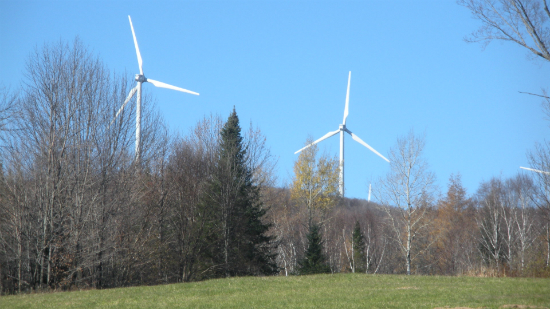
January 16, 2013 vtdigger.org Photo: Wind Turbine in Sheffield. Vermont Business Magazine.