

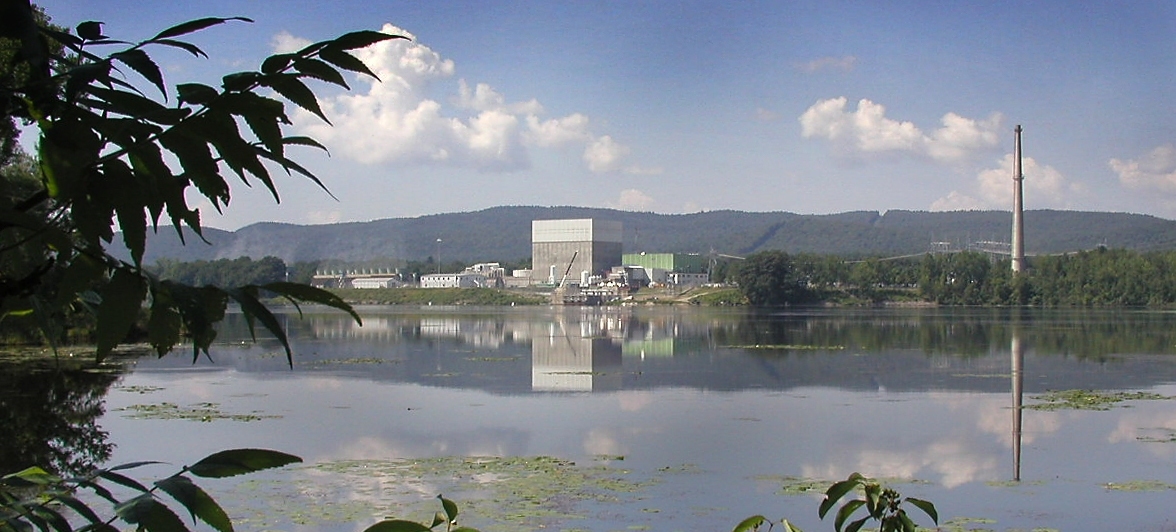
Vermont Business Magazine The Vermont Yankee Nuclear Power Station'sfinal shutdown occurred at 1:03 pmMonday, December 29, 2014, after 42 years of operation. An NRCResident Inspectorassigned to the Vernon plant was in the control room to observe the permanent cessation of reactor operations. Shereported that the shutdown went smoothly and was not unlike the start of a typical outage for refueling and maintenance activities.
Although Vermont Yankee’s operating license was valid until March 21, 2032, its owner, Entergy, decided last year to close the Vernonplant. Entergy said that despite investments itmade in theplant to maintain its economic viability in the wholesale electricity market – a 20 percent power uprate, operating license renewal and dry fuel storage capability – this permanent shutdown, announced in August 2013, was necessitated by regional wholesale electricity market economics, driven by current low prices and increased natural gas use by electric utilities.
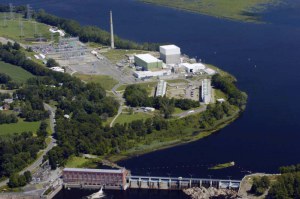 Planning is already well under way by the company on what lays ahead, namely a decommissioning process expected to take place over several years. Many of the details are outlined in a roadmap document known as aPost-Shutdown Decommissioning Activities Report(PSDAR).
Entergy filed the report for Vermont Yankee with the NRC on Dec. 19. Before the decommissioning process kicks into gear – an undertaking some have likened to construction in reverse – the NRC will review the report and determine if the approaches meet the applicable federal criteria.
In conjunction with that review, the NRC plans to hold a public meeting in early 2015 to receive comments on the PSDAR. More details will be provided in the near future.
There is a significant amount of review and additional planning work to be accomplished in the months and years ahead. The NRC is prepared to keep close watch on those activities for every step of what promises to be a lengthy journey. State officials and a Vermont-formed decommissioning oversight panel will also play key roles in this process.
Throughout the journey, the NRC will continue to carry out its oversight responsibilities through on-site inspections and reviews of regulatory filings by Entergy. These NRC programs have a common goal: To protect public health and safety and the environment as the site moves through the various stages of decommissioning.
More information about the NRC’s decommissioning activities is available on the agency’swebsite.
According to Vermont Yankee ownner Entergy Corp, VYcompleted its 30th and final operating cycle at12:12 pmMonday when operators discontinued the flow of power to the electric grid. By inserting control rods into the reactor core, operators stopped energy production from the splitting of uranium atoms and ended four decades of nuclear electricity generation on the Connecticut River in Vernon.
Entergy said in a statement that throughout Vermont Yankee’s operating life, New England’s electricity consumers have benefited from stable fuel costs of nuclear power generation and from environmental benefits of non-emitting nuclear generation.
In its 42 years, the plantproduced over 171 billion kilowatt-hours of electricity.The plant provided 71.8 percent of all electricity generated within Vermont during that period, which amounted to 35 percent of electricity consumed in the state, according to the Energy Information Agency.
Vermont Yankee’s lifetime capacity factor – a measure of the plant’s reliability – exceeded 80 percent. Under Entergy’s ownership since 2002, plant reliability steadily improved. The final operating cycle, which ended December 29, caps a continuous run of 633 days and nights of operation. Three recent 18-month operating cycles also involved continuous operation without a shutdown. The plant’s high reliability was a direct result of Entergy’s conservative operating philosophy, with a constant focus on safety.
For much of its life, the plant’s electrical output was sold back to a consortium of New England utilities, Vermont Yankee Nuclear Power Corporation, which funded the plant’s construction. In 2002, the plant became a merchant generator when it joined the fleet of Entergy Nuclear, which made investments necessary to increase plant output and renew its operating license. In 2012, Entergy’s long-term power purchase contract with the Vermont Yankee Nuclear Power Corporation expired, and the bulk of the plant’s output has since been sold on the open wholesale electricity market through ISO-New England.
Bill Mohl, president, Entergy Wholesale Commodities, said, “Economic factors, especially related to the natural gas market in the Northeast, are the primary reason for the shutdown. The Northeast has undergone a shift in supply because of shale gas, resulting in sustained low natural gas prices and low wholesale energy prices. Wholesale market design flaws result in artificially low energy and capacity prices in the region, and do not provide adequate compensation to merchant nuclear plants for the fuel diversity benefits they provide.
“Vermont Yankee also bears a high cost structure, partly because of regulation at the federal, local and state levels. In addition to higher costs, this increased regulation has created an atmosphere of unpredictability that is not optimal for long-term infrastructure like a power plant,” Mohl said.
Mohl added, “When we first announced the shutdown, we asked Vermont Yankee employees to ‘Step Up and Finish Strong.’ With their dedication to providing safe, clean and reliable energy, they indeed ‘Finished Strong.’”
With the plant’s shutdown, staff will now focus on transferring fuel from the reactor to the spent fuel pool then eventually to dry cask storage and transitioning plant systems to long-term safe and secure storage. These steps will allow for growth of a decommissioning trust fund as well as natural reduction of radioactivity in plant systems before major decommissioning work begins.
ENVY has launched a web site featuring additional information about the nuclear plant’s decommissioning plan –vydecommissioning.com.
REACTION TO THE CLOSING OF VERMONT YANKEE
GovernorPeter Shumlinissued the following statement on the closure of Vermont Yankee:
“The closure of Vermont Yankee marks the end of years of controversy over operation of a nuclear plant in our state. I have long advocated for the closing of this plant at the end of its original license, and I believe the ceasing of operations today after nearly 43 years represents a positive step for our state and our energy future. Today, thanks to investments in renewable energy such as solar, Vermont's energy future is on a different, more sustainable path that is creating jobs, reducing energy costs for Vermonters and slowing climate change.
“I know this is hard news for the many Vermonters who have relied on the Vermont Yankee plant for employment and economic opportunity in Windham County and beyond. I want to thank the employees of the plant for their hard work over the years. My administration will continue working with local communities to ensure that the Windham County region grows jobs and economic opportunity as operations wind down at Vermont Yankee. We will also continue to work with Entergy and community partners to ensure that decommissioning happens as promptly and smoothly as possible.
"In Dec. 2013, the Governor, Attorney General Bill Sorrell, and Bill Mohl, President of Entergy Wholesale Commodities, announced a settlement agreement between the State and Entergy Nuclear Vermont Yankee thatresolves all ongoing litigation between the State and Entergy VY and provided a path to resolve proceedings at the Public Service Board.
"Under the terms of that agreement, Entergy VY will provide $10 million in economic development for Windham County over five years and $5.2 million in clean energy development support for Windham County and elsewhere, as well as a transitional $5 million payment to the State for calendar year 2015. Entergy VY also agreed to set aside a new $25 million fund to ensure the site is restored after decommissioning."
Vermont Energy Partnership salutes Vermont Yankee on final day of operation
“Today marks the final day of electricity production for Vermont Yankee. Since its first day of operations in 1972, Vermont Yankee has generated low-cost and low-carbon electricity totaling about three-quarters of the electricity produced in Vermont. For 42 years, it has provided approximately 650 high-paying jobs and hundreds of millions of dollars of local and state tax revenue. The generous employees of Vermont Yankee have donated millions of dollars’ worth of time and treasure to area schools and social services. Today, the final day of power operations, the Vermont Energy Partnership salutes Vermont Yankee for its many economic, environmental, and societal contributions to Vermont’s quality of life. We wish Vermont Yankee management and workers a smooth decommissioning.”
The Vermont Energy Partnership (www.vtep.org) is a diverse group of more than 90 business, labor, and community leaders committed to finding clean, affordable and reliable electricity solutions. Its mission is to educate policy makers, the media, businesses, and the general public about why electricity is imperative for prosperity, and about the optimal solutions to preserve and expand our electricity network. Entergy, owner of Vermont Yankee, is a member of the Vermont Energy Partnership.
Nuclear Matters Statement
Nuclear Matters co-chair, former Senator Judd Gregg (R-NH), issued the following statement on the closure of the Vermont Yankee Nuclear Power Plant, owned by Entergy Corporation, which took effect today:
“The premature retirement of Vermont Yankee is representative of a problem that the entire country faces. Too many well-functioning nuclear energy facilities – most of which have decades of useful operating life remaining – are at risk of closure or have announced their early retirement. These conditions, including those surrounding Vermont Yankee’s, are caused by the unintended consequences of poorly designed market structure and government policies, not by the economic fundamentals of nuclear energy. This also signifies the importance of fuel diversity for power generation in the United States. Now is the time for all stakeholders to consider what can be done to prevent additional closures for the sake of electricity consumers, the environment, employees, communities, and the reliability of the electric grid.
“Vermont Yankee’s closure is especially concerning as we head into the Northeast winter, given that nuclear performed at a much higher capacity factor than any other fuel source during last year’s Polar Vortex. In addition, the plant contributes more than $60 million to the local economy each year through financial contributions, taxes paid, and employee involvement. Since 2002, having the facility on-line has saved New England customers approximately $330 million in electricity rate savings compared to the price of purchasing that same power from the spot market. Over the years, Vermont Yankee has prevented more than 50 million tons of carbon dioxide and other pollutants from being released into the environment. This is especially noteworthy as officials from New England’s grid operator have noted that the energy from Vermont Yankee will likely be replaced by other, carbon-emitting fuels. Finally, this closure means that hundreds of jobs will be lost, with company officials announcing that in January 2015, the plant’s staff will be reduced from about 550employees to 316, with subsequent cuts planned after that.
“Signs of stress in our country’s reliable electricity grid cannot be ignored. It is simply unsustainable for the United States to continue down the path of allowing nuclear energy plants to close. Regulators, policymakers and industry must work together to ensure that nuclear energy is properly valued as a reliable, affordable and carbon-free electricity resource that is essential to America’s energy future and diverse fuel mix, and to ensure that existing nuclear plants are properly recognized in electricity markets for the value that they provide. Nuclear energy is safe, reliable, secure, and 100 percent carbon-free. This 24-7, 365 always-on source of electricity is key to our country’s success.”
The mission of Nuclear Matters is to inform the public about the clear benefits that nuclear energy provides to our nation, to raise awareness of the economic challenges to nuclear energy that threaten those benefits, and to work with stakeholders to explore possible policy solutions that properly value nuclear energy as a reliable, affordable and carbon-free electricity resource that is essential to America’s energy future.
Supporters of Nuclear Matters include a range of companies and organizations in the energy industry, including Ameren Missouri, American Nuclear Insurers, Arizona Public Service Company, AREVA, Black & Veatch, Burns and Roe Enterprises Inc., Centrus Energy Corp. Dominion, Duke Energy, Energy Future Holdings Corporation, Energy Northwest, Entergy Corporation, Exelon Corporation, FirstEnergy Corporation, GE Hitachi Nuclear Energy, Lightbridge Corporation, Nebraska Public Power District, NextEra Energy Inc., Omaha Public Power District, Pacific Gas and Electric Company, South Texas Project Nuclear Operating Company, Southern Company, Tennessee Valley Authority, and Westinghouse Electric Corporation.
Sources: NRC; Entergy; Governor Shumlin 12.29.2014