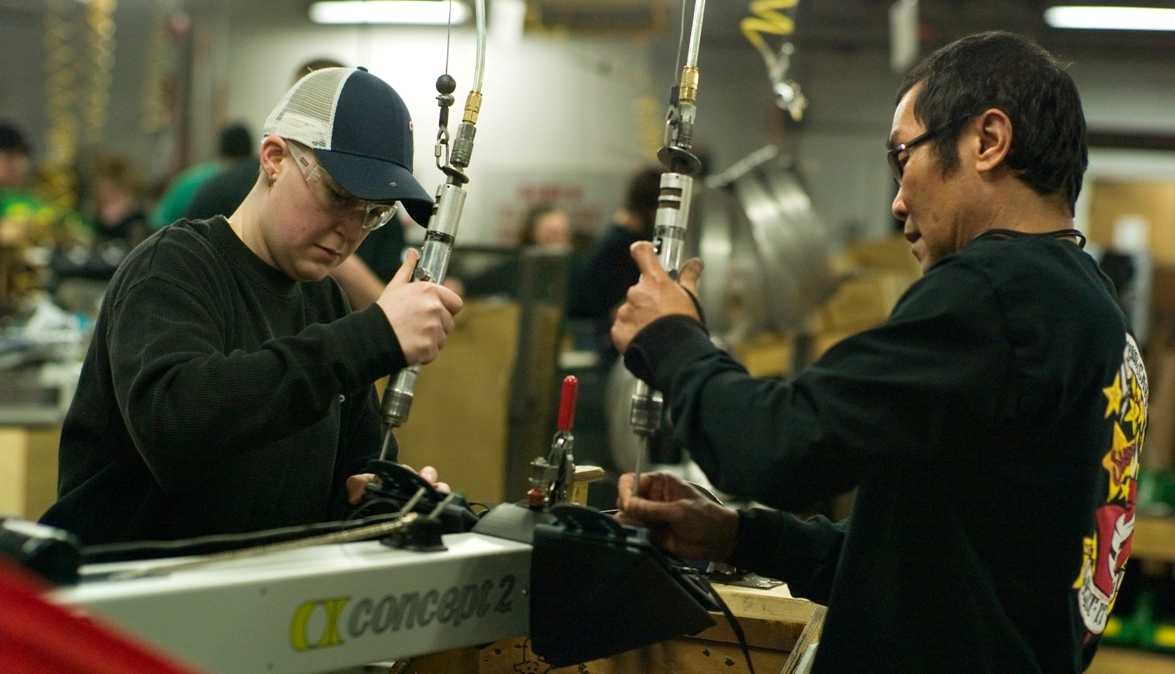
by Amanda Kuhnert Over the past two decades, Manufacturing Solutions, Inc. in Morrisville, Vermont has grown from a niche manufacturing business into a multifaceted company with 250,000 square feet of commercial building space and 180 employees. Company owner and CEO Garret Hirchak and his wife Beth Salvas have stood at the helm as revenues have steadily increased over the years — 135 percent since 2009, while other manufacturers across the country have laid off employees and shut their doors.
Although no two successful business stories are the same, companies like MSI provide clues about what it takes to grow and maintain a successful business. Here are 10 business practices that have worked for MSI, and can be applied to any growing company:
1. Build your business on opportunity
MSI was founded on a good opportunity. In 1996 Hirchak was working for Concept 2, and knew the rapidly-growing company needed to outsource some of its assembly work but didn’t have a local manufacturer for the job. So Hirchak stepped in to fill the void. Concept 2 became his first customer, marking the beginning of MSI’s 18-year history of providing contract assembly services to companies that lack the space, equipment, or employees for the task.
But that’s not all MSI would do. As time went on, MSI expanded its business model to fill other voids. Today the company provides lean manufacturing and third-party logistics solutions to companies around the world, along with other related services. Hirchak and Salvas always have an eye out for growth opportunities. “Being able to say yes to the good ones is important,” Hirchak said.
2. Be nimble
The MSI team stays on their toes, from both an external perspective — taking advantage of changes in the business environment, to internal adjustments that increase productivity and product quality. Thanks to MSI’s scalability and ability to quickly shift resources, customers receive cost-effective services without having to absorb the costs of “downtime.” Being flexible also means not having to say no to your customer, Hirchak said. “Yes” takes a variety of forms, from a needed service or material to faster turnaround time.
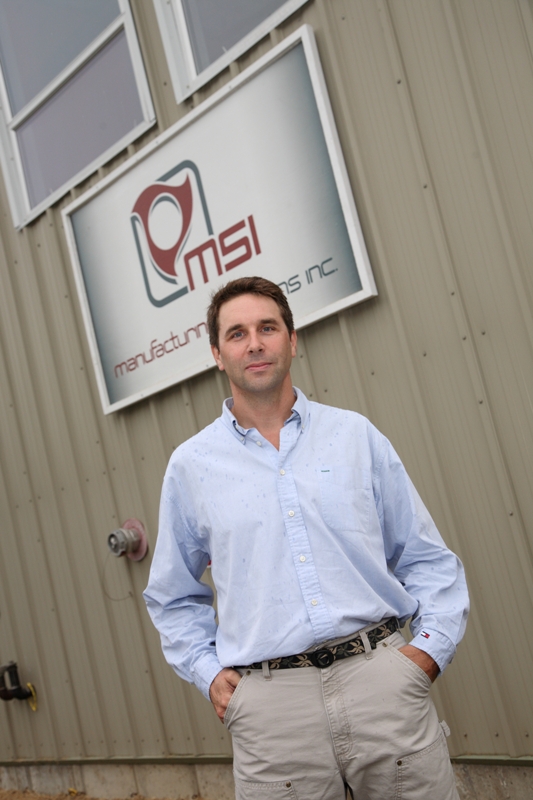 CEO Garret Hirchak
3. Diversify
“You need to be able to diversify without sacrificing the core of your business,” Hirchak said. Although Concept 2 remains the company’s biggest client, MSI has been very intentional about growing its client base so as not to be dependent upon any one customer. They’ve also increased their service offerings, which allows them to do more for the same customers. Along with contract manufacturing, they offer inventory and warehousing services. “We keep close communication with our customers, which enables us to anticipate their needs and the services we might be able to offer to accommodate those needs,” Hirchak said.
4. Grow organically
Today MSI, Inc. comprises five separate companies. As MSI’s manufacturing business took off, the company needed additional space to accommodate expanding operations. They decided to buy instead of rent, which led to the formation of MSI’s development company, Sunrise Development. “As these properties accumulated, we started to develop skills in property management and take on tenants,” Hirchak said. Over time MSI Demolition and MSI Aggregates evolved from the commercial development and property management business.
5. Hire well
“Get good people and help them do their job,” Hirchak advised. One of the biggest challenges MSI has faced from a human resources standpoint is hiring people with previous manufacturing experience. They’re hard to find. So, instead, they hire to the values of the company. “We sell people hours, so we need a staff who’s really invested and wants to grow with the company,” Hirchak said. Through group interviews and a 30-day new-hire evaluation period, MSI’s human resource department screens for values and skills that are aligned with the company’s mission. The company invests in benefits like a wellness program and incentive plans to help retain good employees.
6. Keep an eye on the details
Hirchak credits much of MSI’s success to the company’s ability to track productivity and quality. “You have to understand where you’re spending money and whether it’s improving value for your customers,” he said. Instead of buying off-the-shelf software, the company developed its own Web-based data solution that keeps both MSI and the client informed about every detail of the production process, from the moment raw material gets dropped at the plant to the instant the finished product ships out. The reports not only provide valuable information for future jobs, but they also make an immediate impact on the production line. “What we’re building today, we’re shipping tomorrow,” Hirchak said. “When there’s a problem, we can adjust to it right here.”
7. Invest in customer relationships
“We’re not afraid to invest in the process,” Hirchak said. We believe in transparent relationships with our customers, he said. This transparency begins with the data reports and extends to regular discussions with customers to discuss process, tooling, and training changes that increase productivity and product quality. “We do more than just put stuff together,” Hirchak said. “We help our customers manage complexities and solve problems based on real time test reports. We’re thinking with them, solving problems, and coming up with ideas to improve their products.”
8. Focus on what you do best
MSI practices the same values it encourages in its customers: Focus on your core competencies, and outsource the rest. “We call on professionals to help us on all levels,” Hirchak said. When MSI was still in its infancy, the owners met monthly with Peer to Peer Vermont Collaborative, a CEO advisory program under the Vermont Sustainable Jobs Fund. The program matches experienced executive-level peers with CEOs of growing businesses, helping them make important decisions about the future of their company. Since then MSI’s management team has turned to specialists for help with other business strategies, including job costing, human resources development, and value-stream mapping. “We’re trying to build a business that runs well,” Hirchak said.
9. Spread out the responsibility
“We’re making sure we can go on even if one person goes away,” Hirchak said. “The business should be able to run without any specific person, and that includes me. I can’t know everything about everything.” Today Hirchak spends more time working on the business than in the business. “I’m trying to make myself obsolete, which is a constant battle.” By this, he means delegating more and spreading out the responsibility. Roles have grown and changed as the company has evolved, so employees need to know who to go to with a particular issue so that problems get addressed in a timely matter, Hirchak said.
10. Re-invest in your company
MSI continually reinvests in its operations and technology to provide its customers with the best possible service. “Whether its tools, equipment, or people, we’re willing to invest in order to solve the problem,” Hirchak said. This requires ongoing internal research to determine both needs and opportunities, and the ability to respond quickly when an issue suddenly comes into focus.
Long-range plans and mission statements help companies stay focused on the ultimate end game, but on a day-to-day basis the challenge of any business owner is to be able “to juggle and constantly change priorities,” Hirchak said. “You don’t get a chance to catch your breath often.”