

by Laura Krantz vtdigger.org The Vermont Department for Children and Families was fined at least $139,000 by the federal government after failing an audit of its child welfare system, but avoided paying the penalty by improving its practices, according to the federal Administration for Children and Families. The ACF in 2007 audited Vermont and every other state as part of the Child and Family Services Review. That federal audit is the most recent; the next review is scheduled for next year.
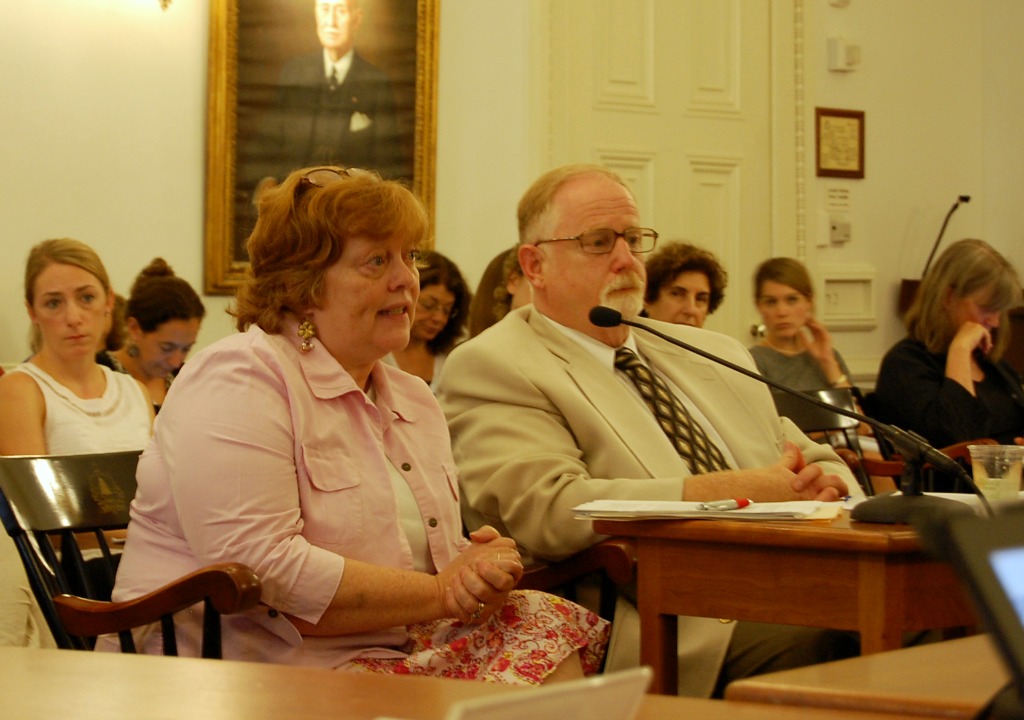
Lynne Klamm, interim director of the Department for Children and Families Rutland office, testifies alongside DCF Commissioner Dave Yacavone before a joint legislative committee investigating child protection in Vermont on July 23, at the Statehouse. Photo by Laura Krantz/VTDigger.org
Vermont did not meet federal standards in seven areas federal regulators examined. DCF was levied a $138,973 fine per year until it improved.
Since DCF completed the improvement plan in 2011, no fine was ever imposed, according to Laura Goulding, a spokeswoman at ACF. All states had to enter into an improvement plan related to some aspect of their systems during the review, she said.
One area of concern was Vermont’s lack of contact between caseworkers and the children and families they serve. DCF worked hard to improve the rate at which social workers visit children each month. Visits increased from 20 percent of the caseload in fiscal year 2008 to about 91 percent in fiscal year 2012, according to DCF.
The improvement plan targeted other areas such as improving the timeliness of investigations, safety and risk assessments, family engagement and establishing timely goals for finding permanent, stable homes for children. The review found that DCF established appropriate permanency goals in 58 percent of cases.
DCF also ranked poorly with regard to the state’s criteria for accepting and substantiating reports of abuse and neglect.
The department’s performance was strong in certain areas, including placing children in foster care with their siblings and placing them in close proximity to their parents.
David Yacovone, the commissioner of DCF, said Monday a financial penalty always puts pressure on a department to improve. But no best practices were compromised in the department’s efforts to meet the goals of the plan, he said.
Yacovone became commissioner in 2011 and said wasn’t sure if the threat of a fine was made public at that time.
DCF has struggled with fines for another program it manages: food stamps. The state in 2012 was charged roughly $341,000 by the federal government for having a higher-than-acceptable error rate when processing applications.
The federal Child and Family Services Review is not pass/fail. The government’s assessment determines the extent to which states comply with federal requirements. A penalty represents a portion of the money that would have been paid to the state for the period it was under review. The penalty accrues over time until the state conforms with the requirements or completes a program improvement plan.
The period reviewed was fiscal year 2007. If DCF had not successfully completed the improvement plan in any areas, it would have faced a much larger penalty at the end of the plan, Goulding said.