by Hilary Niles vtdigger.org
Lawmakers are considering letting Vermonters keep more money they earn from part-time work while they collect unemployment insurance benefits.
House Commerce Chair Bill Botzow, D-Bennington, said Wednesday afternoon that his committee has “great interest” in increasing the “earnings disregard” — the amount of earnings kept out of calculations that set a worker’s unemployment benefits.
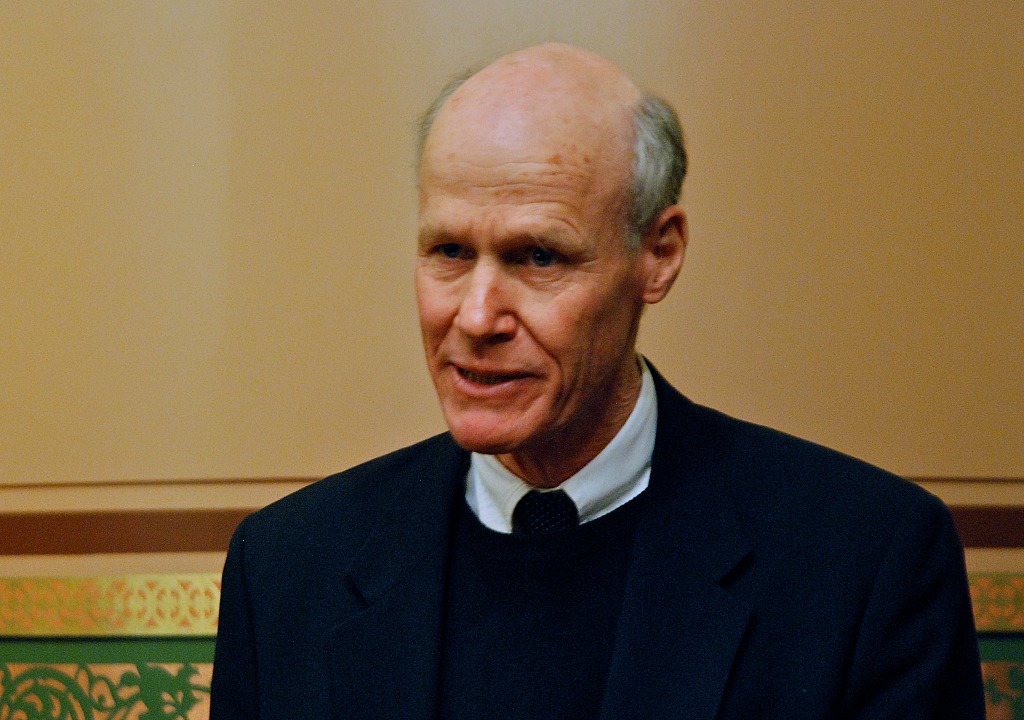
Bill Botzow, D-Bennington, chair of the House Committee on Commerce and Economic Development, at a news conference at the Statehouse in January. Photo by John Herrick/VTDigger
The goal is to encourage unemployed people to find work. Currently, some people experience a steep cut in benefits when they start earning their own money, sometimes even ending up in worse financial shape.
A neighbor’s story to that effect prompted Rep. Dave Sharpe, D-Bristol, to sponsor H.711 this year.
Right now, benefits are reduced dollar-for-dollar for earnings beyond 30 percent of the weekly benefits. Sharpe proposed reducing the threshold to 20 percent, then only docking benefits by 60 cents for every dollar.
“I think we ought to have a slope in every program we do to help people. This is just one,” Sharpe told the House Committee on Commerce and Community Development in early February.
The calculations prove complicated, and the committee is now working with Department of Labor staff to figure out the optimal threshold and percentage for disregarded earnings.
Whatever the final formula, he said, he wants to fix what he says is a structure that discourages people from working an extra shift or earning an extra dollar.
The language from Sharpe’s bill was moved into H.646, which originally contained a raft of other provisions related to unemployment: broader penalties for improper quarterly wage reporting, changes to the state’s short-term compensation program in lieu of layoffs, and a self-employment assistance program. Some of those items are cropping up in other legislation.
The earnings disregard related to unemployment insurance stands a healthy chance, Botzow said, in part because of pressure that was not put on the fund in 2013.
The Legislature had approved up to $8.67 million in financial relief for employers whose UI bills spiked after layoffs stemming from Tropical Storm Irene. In the end, less than $300,000 was tapped.
“What that tells to me is, it’s not like we’re stretching into new territory,” Botzow said.
The financial impact of a higher earnings disregard are not yet known, because the committee has not yet settled on the size of the change they’d like to see. But if they can agree on the changes and stay well within the amount the Legislature was willing to leverage two years ago, he thinks it will be a solid proposal.
“But I don’t want to over-promise anything and I don’t want to under-promise,” Botzow cautioned.
David Mickenburg, representing the group Working Vermont, testified Wednesday that his organization believes the current system is effectively self-defeating.
“We do think the current disregard system does work as a barrier to folks to go out and seek employment,” Mickenburg said.
He said he appreciates the committee’s work to rectify that situation, and he disputed the notion that people collecting unemployment would rather stay on the dole than get back to work. He said there might be rare such cases, but called the overall impression a “myth.”
While Botzow and many committee members support the goal of fixing the formula to better encourage re-employment, he summarized the tricky spot they’re in as they manage the Unemployment Insurance Trust Fund from which benefits are paid.
“The UI Trust Fund has to be able to withstand the blows of economic change,” Botzow said.
It’s recovered well from the 2008 economic collapse, even repaying a federal loan early after borrowing $77.7 million for a bail-out. “Right now, we’re positive, around $75 million. But we know the desirable number is more than $200 million,” Botzow said.
In rebuilding some of the benefits that workers gave up when the state took the federal money, he wants to take “right-sized bites.” And boosting the earnings disregard, he thinks, feels right.
‘Disregarded earnings’ for unemployment insurance may rise
Submitted by og
on