

by Mike Smith Scott versus Welch? It would be a loss for Vermont if one were elected at the expense of the other. Lieutenant Governor Phil Scott, a moderate Republican, and Congressman Peter Welch, a liberal-leaning Democrat, are widely respected, trusted and, most importantly, liked by most Vermonters. They both would likely clear the field of credible opponents in their respective party primary. Both would attract voters from all political perspectives: Democrats, Republicans, independents and even Progressives.
What distinguishes these two potential gubernatorial candidates from many others is a personable style that connects with Vermonters. And yet, if these two run against each other for governor in 2016, the loser will likely fade from Vermont politics and that would be a disappointment to many.
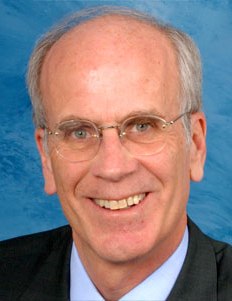 Congressman Welch in particular, at 68 years old, would be hard pressed to resurrect a political career after a loss. After his loss in the 1990 gubernatorial race against Richard Snelling, he had time to practice law, run again for state senate, serve as senate president and then run for the state’s lone congressional seat in 2006. And Scott, although younger than Welch at 56, would likely return to a full-time focus on his construction business after a number of years as a state senator and lieutenant governor.
Scott may have the advantage of tradition. Since the early 1960s, voters have selected the state’s chief executive from alternating parties. Gov. Shumlin is, of course, a Democrat so following that tradition a qualified, well-liked Republican could be the next governor. Many believe, however, the shifting political persuasion of the state could end that tradition. Whether Vermonters have a continued appetite for more one-party rule remains to be seen. Clearly, the mood for a change of direction, particularly in fiscal and economic matters, is strong.
On the other hand, if Welch decided to run for governor he would be running in a presidential year. This is likely to be to his advantage given an expected voter turnout that in Vermont typically favors Democrats. Of course, a weak Democratic presidential candidate could limit this advantage.
As similar as the two men are, there are also significant differences. While they both appeal to a range of Vermonters, they attract somewhat different audiences and have very different styles of reaching voters. Welch can probably count on the political power elites for support and has the better and more sophisticated Democrat campaign machine. Scott has a strong populist appeal that includes working Vermonters, car racing fans and a network of blue-collar business owners. And his core network is built on his personal connections to a whole host of supporters rather than a single political party apparatus.
It could be a blue-collar versus white-collar showdown, where Scott appeals to working families — the people politicians like to refer to as “everyday Vermonters,” while Welch appeals more to the white collar, college-educated, upper crust in Vermont.
It’s an interesting and ironic twist to perceptions of the national political parties.
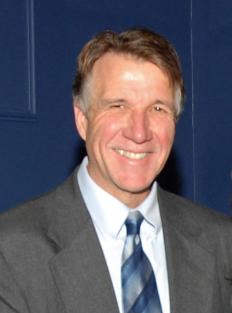 Scott is less partisan than Welch. But the congressman currently works in a very partisan town and has held Democrat leader positions where partisanship is expected. Both are known for their ability to work with all sides and both are regarded as the kind of people who are willing to roll up their sleeves to get things done.
If Welch is hoping to someday become a U.S. senator — should there be an opening — running for governor is not the best path. Governors are required to make decisions on a daily basis that upset one faction or another. That is not the case in Congress. As a result, a governor’s popularity declines over time. If Welch does decide to run for governor it will be his last political position.
Scott is at a point in his political career where it is probably necessary to move up or move out. Though, because of his popularity, he could remain lieutenant governor, opportunities and open seats are rare. Passing up this opportunity will signal that he is prepared to step aside and make way for the growing number of capable, moderate Republicans moving up the ranks.
So, each is probably thinking deeply about what to do. Run for re-election and win handily? Or, run for governor, perhaps against each other? That’s a political collision that they both know many Vermonters would like to see avoided.
Mike Smith was the secretary of administration under former Gov. Jim Douglas. He is a political analyst for WCAX-TV and WVMT radio and is a regular contributor to The Times Argus.