 "I'm really hopeful we are able to keep the initiatives intact, in their entirety, as the bill moves through the other committees," Scheuermann said in an email exchange. "I don't want the bill obliterated – frankly, I don't want any of the items removed – as I think they are important as a package. So, I'm trying to get the word out about the bill, so that pressure might be on other committees to support all of the provisions."
"In approaching our State's challenges and opportunities this year, my focus, and that of the committee as a whole, boiled down to four priorities: access to capital, tax policy, workforce development and job training, and housing. And, I am pleased to report that our version of S. 138 includes modest, but critically important, initiatives that address all of these."
Among other important provisions, she said there are six pieces of this bill that can make a real difference in our state's economy, but still need support from other House Committees, and the House as a whole:
-
Necessary changes to the Vermont Economic Growth Incentive (VEGI) to ensure more Vermont companies are able to take advantage of this program that has more than proved its worth in helping to create jobs;
-
The restoration of the Research and Development Tax Credit that has been a great tool for our advanced manufacturing and high-tech businesses;
-
The elimination of the sales tax on prewritten software accessed remotely (cloud tax);
-
A first-time homebuyer down payment assistance program to help young professionals around the state into home ownership through the creation of a revolving loan fund; and
-
An economic development branding and marketing initiative to complement and supplement our tourism marketing efforts - including a $500,000 appropriation to create and implement it.
-
An increase in our Licensed Lender limit from $75,000 to $250,000.
"These are all good, sound proposals,"Scheuermann said, "both in terms of public policy and fiscal policy. They are modest investments in proven economic growth strategies that will undoubtedly help our state's small businesses and entrepreneurs. And, it is critical that they remain in tact as the legislation progresses."
The bill is now being considered in theHouse Ways and Means Committeeand will then be considered by the House Appropriations Committee.
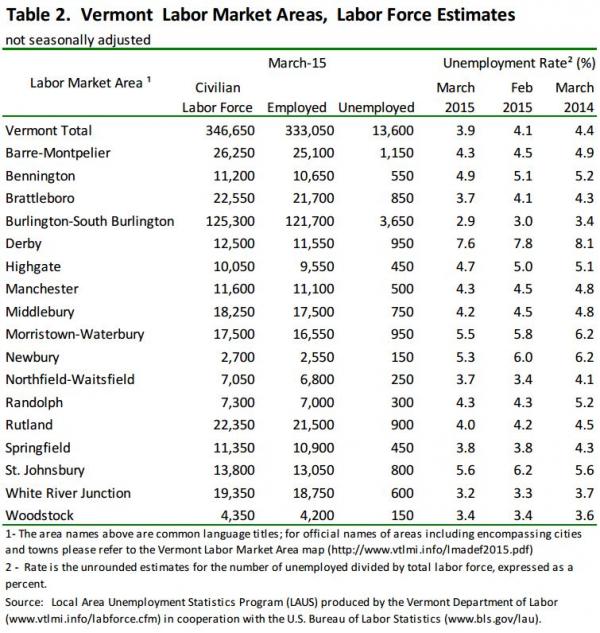
The changes to the VEGI program are likely the most controversial, as it lowers the wage threshold for a company to gain the state employment incentive. The new wage threshold in S138 would be lowered from $14.64 to $12.81 (from 160 percent of the minimum wage to 140 percent in labor market areas above the average state unemployment rate. The March rate was 3.9 percent, see LMA list with rates below).
The administration’s original plan called for a $13 per hour minimum. Proponents of the plan say the lowered wage threshold would entice more companies to take advantage of the incentive and therefore increase employment in the state, especially in those areas struggling to grow jobs. Opponents contend that the lowered wage would mean that those workers could still be able to claim some welfare benefits, therefore creating a de facto publicly assisted subsidy for the company.