

Hunters are gearing up for Vermont’s spring youth turkey hunting weekend later this month and getting ready for the regular spring turkey hunting season that starts May 1.Vermont offers some of the best turkey hunting in New England according to the Vermont Fish & Wildlife Department. In 2014, Hunters took 5,160 turkeys in both the youth weekend and regular seasons, and 1,232 turkeys in the fall season.
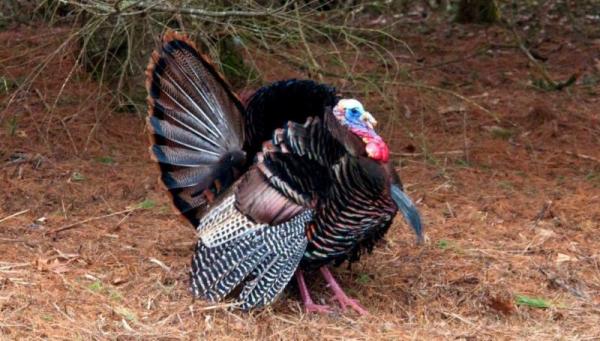 Photo by John Hall, VT Fish & Wildlife: Vermont’s highly successful wild turkey management program resulted in hunters taking 6,392 turkeys in spring and fall seasons last year. This year’s youth spring turkey hunting weekend is April 25-26. The regular spring season is May 1-31.
What makes Vermont’s spring gobbler season special? Vermont’s turkey hunting is statewide during the spring season. Vermont’s turkey population is one of the highest in New England. You can buy a turkey hunting license without having to go through a lottery. The turkey license comes with two spring tags for two bearded birds and one tag for a turkey of either sex in the fall season. Plus, you get to hunt the entire weekend, because hunting is allowed on Sundays.
Youth turkey hunting weekend is April 25-26 this year. Landowner permission is required to hunt on private land. To be eligible, a youth must be age 15 or under. The youth must have successfully completed a hunter education course and possess a hunting license, a turkey hunting license and a free youth turkey hunting tag.
Hunt Safely This Turkey SeasonMONTPELIER, Vt. – Hunting safely during turkey season is easy if you follow tips issued by the Vermont Fish & Wildlife Department. In Vermont, May first is the beginning of spring turkey season, a day almost as important as the opening of deer season. While Vermont’s spring turkey seasons are safe (Vermont has not had any incidents in the last five years) precautions are needed to ensure they stay that way. Camouflage or drab colored clothing is almost mandatory to outwit a keen-sighted gobbler. Unfortunately, camouflage often makes it just as hard for hunters to spot one another as it does for turkeys. “Almost all of the incidents during turkey season have been caused by hunters who didn’t positively identify the target before they pulled the trigger,” said Chris Saunders, hunter education manager. “And the person they mistake for a turkey is often a friend trying to stalk a turkey call.” With the opening of spring turkey hunting season near, the Vermont Fish & Wildlife Department urges hunters to consider these safety tips: •Never shoot unless you’re absolutely sure of your target. Look for a beard as only turkeys with beards are legal during the spring season. If you’re not sure, skip the shot. Lack of positive identification could result in shooting an illegal bird, or worse, another hunter. •Never stalk a gobbling turkey. Your chances of getting close are poor, and you may be sneaking up on another hunter. •Avoid red, white, blue and black in clothing and equipment. A tom turkey’s head has similar colors. •Stick with hen calls. A gobbler call might draw in other hunters. •Avoid unnecessary movement. This alerts turkeys and attracts hunters. •Don’t hide so well that you impair your field of vision •Wrap your turkey in blaze orange for the hike back to the car. •Always sit with your back against a tree trunk, big log or a boulder that is wider than your body. This protects you from being accidentally struck by pellets fired from behind you. •Place decoys on the far side of a tree trunk or a rock. This prevents you from being directly in the line of fire should another hunter mistakenly shoot at your decoy. •Wear hunter orange while moving from set-up to set-up. Take it off when you are in position. This year the department’s hunter education program is helping the local chapter of the National Wild Turkey Federation pair up new hunters of all ages with experienced NWTF hunters for turkey season. The NWTF is also offering new hunters a chance to meet experienced hunters interesting in taking on mentors for turkey season at their JAKES Day event at the Waterbury-Stowe Fish and Game Club on April 19. For more information, call Ron LaFreniere at 802-434-4274. “Turkey hunting in Vermont is rapidly becoming a beloved tradition and it not only helps us better manage wild populations but also brings fresh local food to our tables.” Saunders notes. “This spring we encourage all hunters to give it a try and to hunt safely.” Hunt smart. Hunt safe. Wear orange. |
The youth also must be accompanied by an unarmed adult who holds a hunting license and is over 18 years of age. Shooting hours are one half hour before sunrise to 12:00 Noon. The youth may take one bearded turkey during youth weekend and two bearded turkeys in the regular May hunting season. Last year, young hunters took 547 turkeys during Vermont’s two-day youth hunt.
The regular spring turkey hunting season is May 1-31. Shooting hours are one half hour before sunrise to 12:00 Noon. Two bearded turkeys may be taken, and all of Vermont is open to turkey hunting during the youth weekend and regular spring season.
A shotgun or bow and arrow may be used in the youth turkey or regular spring turkey hunting seasons. Shot size must be no larger than #2 and no smaller than #8.
"Last year's brood production was right around average,” said Vermont turkey project leader Amy Alfieri. “Even though turkey flocks are being seen across the state, the long winter with deep powder may result in a slightly lower than average harvest."
Vermont was the first New England state to re-establish wild turkeys when it released 31 wild birds from New York in 1969 and 1970. Today, the Green Mountain State has an estimated 45,000-60,000 turkeys.
Vermont’s wild turkey restoration program is a tremendous wildlife management success story funded entirely by hunters through the sale of hunting licenses and a federal tax on hunting equipment. Now, hunters are reaping the benefits by seeing excellent turkey hunting in Vermont. And, all Vermonters are enjoying watching the big birds as they roam hillsides they had been absent from for almost a century.
To find out more about wild turkey hunting in Vermont, contact the Vermont Fish & Wildlife Department by telephone at 802-828-1000 or check in at their website (www.vtfishandwildlife.com). The 2014 Turkey Harvest Report, available on the website, has details to help you plan your hunt, including the number of turkeys taken in each town.
Licenses are available on their website and from agents statewide.