


Vermont Auditor of Accounts Doug Hoffer released on Tuesday his office's report on the state of Vermont Health Connect. VHC has spent $126 million on the health insurance exchange. But from the moment it went live on October 1, 2013, until today it is still far from fully operational, the auditor states. He also is concerned if it ever will be and is urging the Legislature to keep a close eye on two new operational roll outs this year -- in May and in the fall -- that are intended to address the most critical issues facing VHC.
 While Hoffer is careful not to dismiss the chance that these new efforts will fix the system, he clearly is doubtful. The systems associated with IT vendor Optum are still far from settled and much of the work to get VHC up to speed has had to utilize manual workarounds, which are costly, time consuming and prone to error. Even given that, there is still a significant backlog in updating customer accounts. The automated processes have not worked sufficiently from the beginning and the automated payment system has never worked, the auditor states.
"The Vermont Health Connect (VHC) system has critical shortcomings and the extent to which the corrective actions, taken or planned, will resolve its deficiencies are uncertain,"Hoffer writes.
Governor Peter Shumlin, who has been the lead proponent of VHC, has vowed to support a dismantling of VHC and its move to the federal exchange if these latest fixes are unsuccessful.
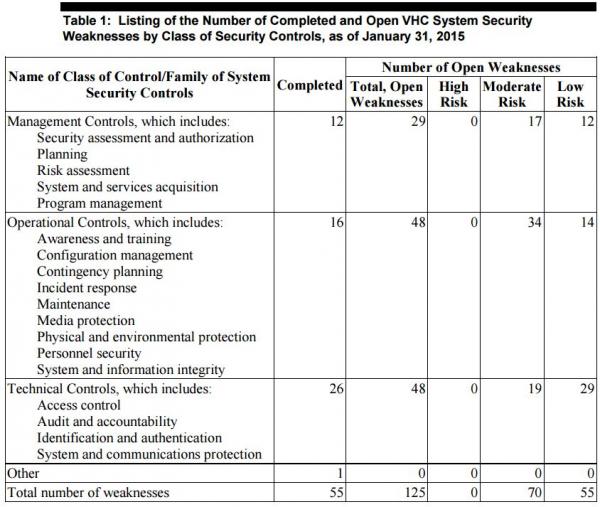
Hoffer also reports that while VHC has fully addresses high-level security risks in the system, there are still some 125 low to moderate security risks within the system.
SEE FULL REPORT:VERMONT HEALTH CONNECT Future Improvement Contingent on Successful System Development Project
Hoffer wrote in conclusion to the audit (dated April 14, 2015): "When the VHC system went live on October 1, 2013, it had significant shortcomings that caused the development of lengthy manual processes and data in the system that was error-prone. These shortcomings have produced hardship for customers as well as operational difficulties for the State and the insurance carriers. The State has spent millions of dollars (and is due to spend millions more) on corrective actions, such as fixes to the VHC system and manual workarounds, but serious problems remain at this time. Modifications to the VHC system are planned to occur in two major releases before the next open enrollment and renewal period in the Fall of 2015. If these modifications work as intended, they are expected to alleviate much of the operational burden with which the State has been struggling. However, the State must overcome significant uncertainties and obstacles in order to successfully implement these releases. The critical nature of these 2015 releases warrants close oversight by the Legislature to ensure that the schedule is being maintained and, if not, that corrective actions have been implemented."
 In his opening letter to Governor Shumlin, legislative leaders and key members of the administration, Hoffer writes: "Since the State launched Vermont Health Connect (VHC) on October 1, 2013, it has struggled to run the new health insurance exchange. While the State has taken steps to correct problems, gaps in VHC’s functionality have been patched by manual and time-consuming processes that have caused hardship for Vermonters. While the State has thrown substantial personnel and financial resources at the problems facing VHC, the ultimate effectiveness of those actions won’t be realized unless new versions of the exchange are successfully released in May and the fall of this year.
The State conducted and contracted for internal and external analyses of VHC that were aimed at pinpointing and troubleshooting problems. Rather than reinvent the wheel, my office drew from this extensive body of analysis. We decided to focus this audit of VHC on assessing the status of the State’s corrective actions to resolve the identified shortcomings of this state-run marketplace. The attached report is the product of that performance audit.
The audit report is organized into two main sections – information technology (IT) and operational areas. The IT section of the report focuses on IT system development, governance and project management, and security. The operational part focuses on enrollment, change of circumstances, renewals, and premium payment processing.
"Although the State has developed a high-level plan to correct IT shortcomings in 2015, significant obstacles and challenges remain to the successful implementation of the plan. The schedule for the first release is aggressive and the State does not yet have a defined scope of work or a contract with Optum, its current vendor, for a second major release in the fall.
"The State has improved its project management processes. However, Optum has not produced documentation deliverables in a timely fashion, and the State’s contract does not include provisions to measure vendor performance.
"In the fall of 2014, the State reported that it had corrected VHC’s highest priority security weaknesses. Despite this progress, 70 moderate risk weaknesses remained as of January 31, 2015, and the State has known about 91 percent of those weaknesses for at least 13 months. Moderate risk is defined as a threat that could have a serious adverse effect on organizational operations, organizational assets, individuals, other organizations, or the nation.
"On the operational side of the audit, we identified actions taken to improve the enrollment process. Nonetheless, there are still errors in the enrollment files sent to insurers. Moreover, the State had still not reconciled enrollment data between state, vendor, and insurer systems by the end of February.
"The absence of automatic functions that allow account information to be easily updated to reflect changes in Vermonters’ circumstances (e.g., address, income, etc.) has plagued the system since it went live. The change of circumstances backlog is substantial. Manual processes reduced the backlog from the fall of 2014, but, as of March 9, VHC reported 7,256 unprocessed change requests.
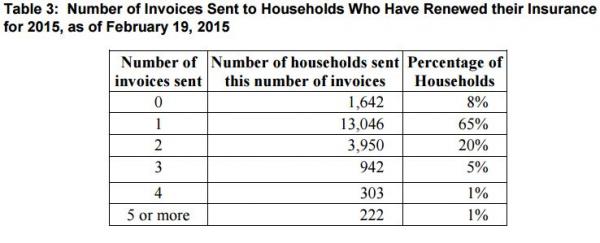
"The State has also developed a manual process and contracted for staff resources to renew customers in qualified health plans for 2015. Having to utilize a manual process has led to another substantial backlog. As of March 9, VHC reported there were 7,360 renewals that had not been completely processed. While Vermonters should not experience gaps in their coverage, some individuals will receive invoices for several months of premium payments at once.
"The State’s premium payment process is cause for concern, and the State has taken little action to improve its shortcomings. The financial controls of Vermont Health Connect’s premium payment process have serious deficiencies. The lack of financial reporting, account oversight, and a full reconciliation of customer account balances is troubling.
 "The report makes recommendations to the Legislature about the completion of planning activities and regular reporting on the status of the project’s cost, schedule, and scope. It also addresses the issue of transitioning away from VHC, should the state pursue that option.
"During the 2015 legislative session, the administration proposed migrating from VHC to the federal exchange if key elements of the state-run exchange are not functioning properly in the near-term. We agree that it is prudent to consider whether to continue with VHC or to move to an alternative model for running an exchange and to develop a plan for this scenario. We also believe that such a decision should be based on strong analytics. A cost-benefit analysis of alternatives to VHC that accounts for qualitative and quantitative factors would help inform such a critical decision."