

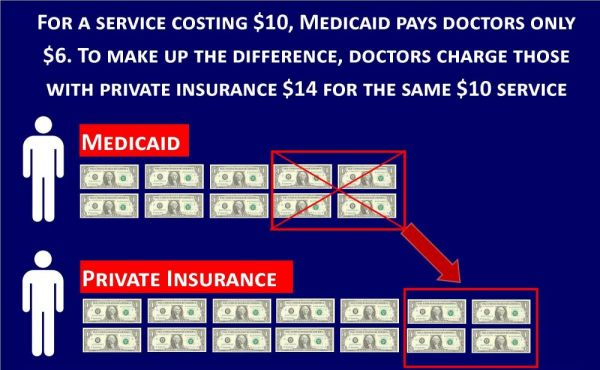
The State of Vermont has released an explanation of how the Medicaid cost shift impacts health care providers and how that in turn affects premiums. Governor Peter Shumlin in his Budget Address earlier this month said that a 0.7 percent payroll tax could raise $90 million a year to offset this cost shift. The governor said that all businesses would be required to pay the tax, which would thusreduce premiums for those businesses who currently offer health insurance to their employees.
Medicaid reimburses doctors and hospitals at only 40 to 60 cents for a dollar of cost. To make up for those losses, doctors and hospitals have to charge those with private insurance higher rates for the same services. That shift of costs from Medicaid to private insurance it what is referred to as the Medicaid Cost Shift.
WHY IS IT A PROBLEM?
Right now, according to the governor, Vermont’s primary care system is at risk.Hospitals are having trouble recruiting and retaining doctors, nurses, nurse practitioners and other critical health care providers.Vermonters sometimes have to travel long distances to find a doctor willing to treat them.The problem is worse in rural areas and in places with a high concentration of Medicaid patients because health care providers are not paid fairly by Medicaid.
Meanwhile, those with private insurance end up paying more than their fair share. Businesses and individuals who buy insurance are being overcharged to the tune of $150 million every year in their insurance premiums to help make up for the chronic underpayment for services by Medicaid.
Fixing this is critical for access to quality health care and for our economy. We cannot afford to let this problem continue.
RELATED:Governor Shumlin talks taxes, education reform and Medicaid
HOW DOES THE PLAN WORK?
The governor’s plan helps fix the Medicaid costs shift, lower private insurance costs, and strengthen our health care system for the long term.
To do this, the governor's plan would requirebusinesses to pay a seven tenths of one percent payroll tax, which will raise $90 million a year. That will be matched with another $100 million in federal funds for a total of $190 million. Itwill more than double the funds available to shore up the health care system by leveraging federal funds.
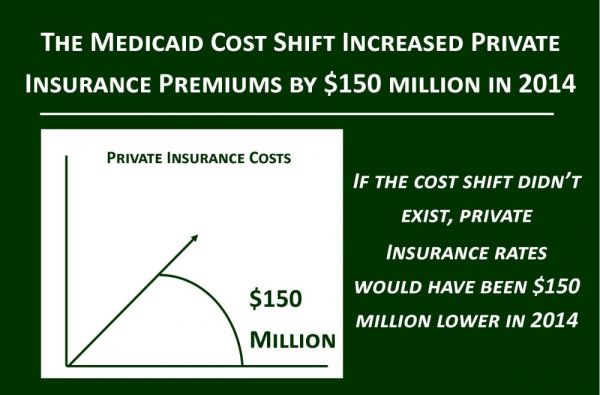
The state will then dedicate $140 million of the total to shore up Medicaid payments and drive down private insurance rates.This will result in a 5 percent reduction in private insurance costs.Stated simply, every dollar of state tax raised will be used to lower private insurance rates. The result will be a more balanced payment system for doctors and hospitals that will be more fair to those who accept Medicaid.
The state will then invest the other $50 million in strengthening the overall health care system to ensure better outcomes at a lower cost.
That means, according to the governor, that businesses providing insurance will benefit from lower health care costs.That is why the governor believes it is reasonable to use the payroll tax.Businesses pay the vast majority of private health care costs now; they are the ones being overcharged now;and they will be the ones that will get the greatest relief if the state lowers private insurance costs by shoring up Medicaid.
Shumlin said that if the state does notdo this, the problems in Vermont's health care system will get worse. An increasingnumber of Vermonters receiving Medicaid, to some extent because the program has expanded eligibility.The lower reimbursements for Medicaid are not sustainable, according to the governor.Those with private insurance, he said, will continue to overpay year after year if the cost shift is not addressed.
Meanwhile, Shumlin said, Vermont will continue to have trouble recruiting and retaining doctors, nurses, nurse practitioners and other health care providers, meaning Vermonters will have a harder time getting the health care they need.
Source: Governor's office. 1.29.2015