

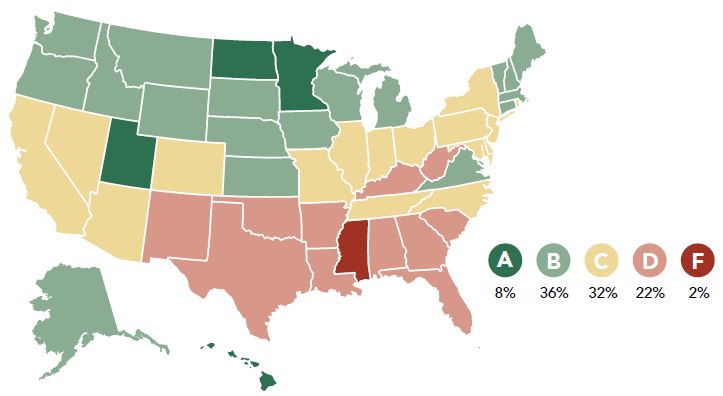
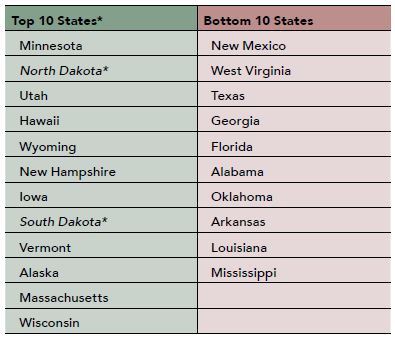
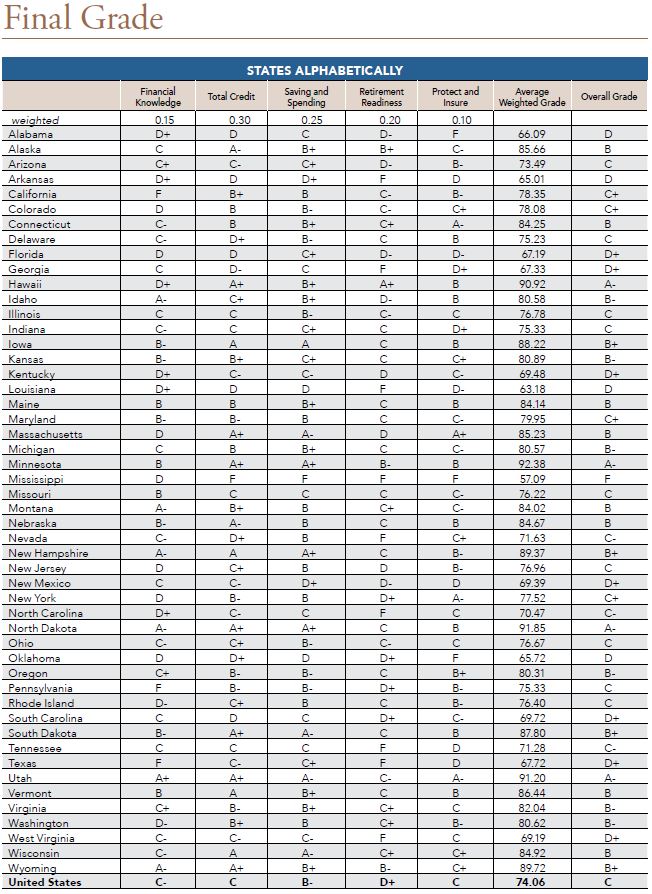
Champlain College Report Card: Are we financially illiterate? Was our lack of financial acumen a cause of the Great Recession of 2008 and does it continue to undermine our nation’s economic health? Unfortunately, the answer is yes to all of these questions, but until now, the extent of our financial ignorance had not been quantified. The 2016 National Report Card on Adult Financial Literacy, released Monday by the Center for Financial Literacy at Champlain College, shows that adults in America earned just a C grade. Vermont got a "B" and finished ninth best. More than three-quarters of adults live in states with poor grades. This means that too many adults are deficient in financial knowledge and skills, which leads them to make uninformed and often poor decisions about their money.
 John Pelletier, executive director of Champlain College’s Center for Financial Literacy, says the report card assesses the problem nationally, and gives grades to each state based on data gleaned from national organizations that track Americans’ financial knowledge, credit, saving and spending, retirement readiness, investing, and levels of insurance.
“The goal of this report is to inform,” says Pelletier. “We need to make adult personal finance education a priority among policymakers, financial institutions, the educational establishment and others, so that we can begin to build a financially savvy citizenry.”
Pelletier says the challenge is educating the millions of Americans who misuse credit, don’t save for a rainy day or for retirement, don’t pay their bills on time or have a budget, or know how to invest or plan for the future.
“The first step in addressing this challenge is to gauge our financial illiteracy, and that it what this report does,” he says. “Our hope is that the facts will motivate efforts to improve personal finance education for adults in this nation. It’s important to individuals, families and our nation.”
No state earned an A grade. The Center’s research team used a relative grading system, so even those states with A- or other high grades are merely the best among a group of low-performing states. “In other words,” Pelletier notes, “our report shows that our nation has dramatic room for improvement, so one should not be misled by grades.”
To arrive at the relative grades, 59 data points were drawn from 18 national organizations. To view the full report, click here. To view any state fact sheet, click the state on the map.
Source: December 12, 2016 BURLINGTON, Vt.--(BUSINESS WIRE)--Champlain College