

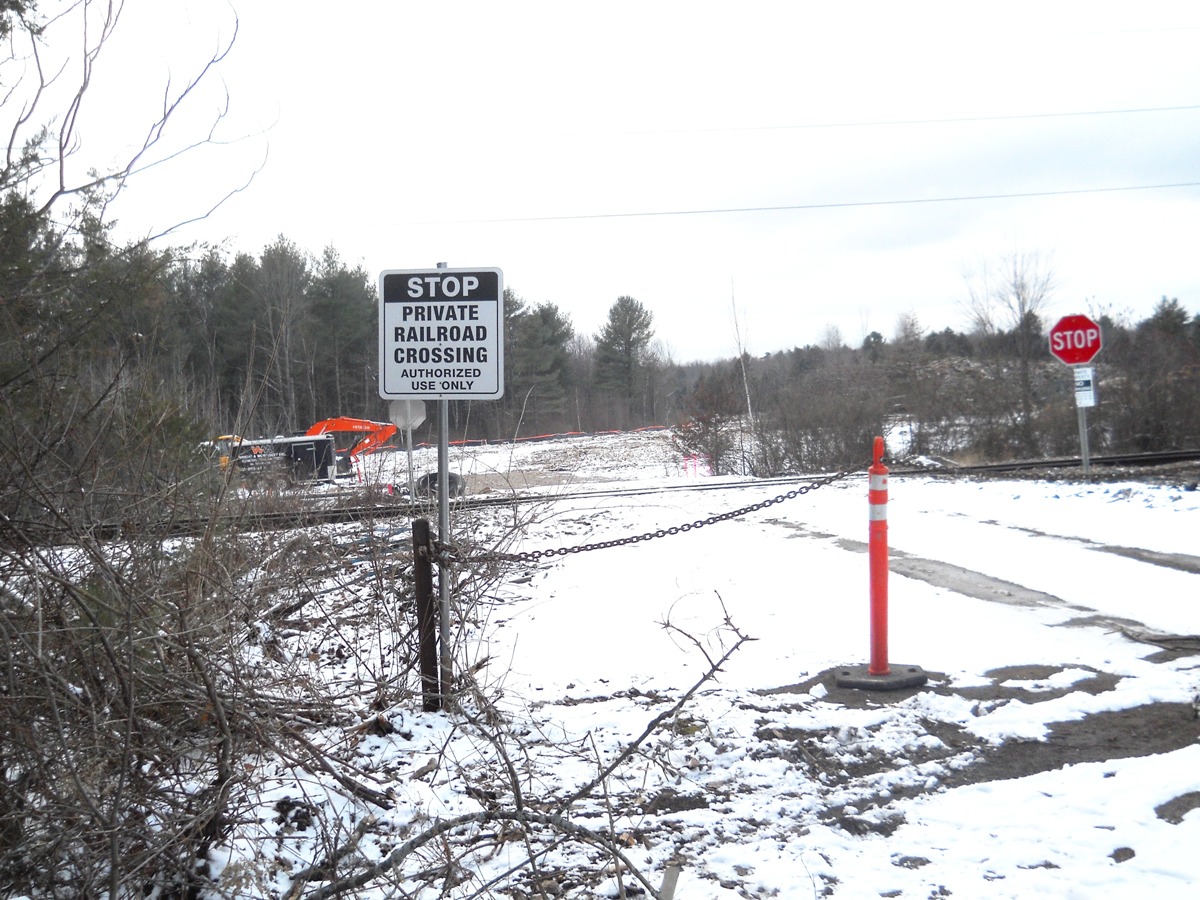
by C.B. Hall Vermont Business Magazine In a US District Court decision handed down June 29, Vermont Railway has won the primary points in its litigation against the town of Shelburne, allowing the railroad to proceed with plans to build a transloading facility for handling road salt on a 32-acre site just north of Shelburne village. In the decision, Judge William Sessions addressed suits filed by both parties in the case. On January 25 the town sued for a preliminary injunction to stop the project, and Vermont Railway fired back with a request for a declaratory court judgment that would deny the town a role in permitting the construction.
The town took the position that the project, which will replace a road salt transfer facility in Burlington, was subject to town zoning. The court concluded, however, that federal law on railroads “preempts the Town's pre-construction permit requirement” and enjoined “the Town from enforcing any regulation that prevents the Railway from constructing its proposed facility.”
Sessions' decision found that such a permitting requirement “unreasonably burdens rail carriage and is therefore preempted “ by a federal statute, the Interstate Commerce Commission Transition Act (ICCTA), which both regulates the railroad industry and grants its certain special rights.
Shelburne did not lose on all points, however. While the decision gave the construction a green light, the court reserved judgment on whether the ICCTA preempts the town's right to enforce zoning regulations related to the operation – as opposed to construction – of the facility. According to Sessions' judgment, the court would revisit that issue “when the Railway has finalized its plans for development and when the Town has indicated precisely which zoning regulations it intends to enforce.”
Asked to react to that wording, Shelburne town manager Joe Colangelo told VBM it would be impossible to determine those specific zoning issues immediately. “We still don't know what the final plans are,” he said. “The plans changed significantly during the litigation.”
However, Vermont Railway vice president Selden Houghton indicated in an interview for this article that, while the site engineering has undergone revisions, he expected no major changes in the plans as reviewed by the court. Work at the site continued as the litigation progressed, he said, with the rail spur's track to be laid in July and the salt shed itself to be erected in August.
Remaining tweaks to the plans, he said, would only involve “minor engineering changes.”
“If the town feels the finalized plans warrant zoning regulations. the judge will decide if that particular ordinance is preempted” by the federal statutes,” he said, emphasizing that the context would be the facility's operation, not its construction.
The town gained something of a victory when the railroad decided, while the court case was pending, to omit construction of an office and maintenance facility on the site for Burlington-based Barrett Trucking, which delivers the salt handled by the railway onward to towns around the state. The town has emphasized the role of Barrett Trucking in the project: In a court filing, the town found it “unclear” whether the facility would be “anything more than a Barrett Trucking project aspiring to be a diversified transload facility developed in such a way as to fall under the protections of the ICCTA.”
Trucking operations are not subject to the same preemption of local regulation that railroads enjoy as common carriers, whose activities are treated as transportation rather than an industry. The decision noted that both the construction and operation of the salt facility constitute 'transportation'” under the federal law – giving the town very little wiggle room in asserting its regulatory role.
Railroad activities are governed instead by the federal Surface Transportation Board. But the nature of the Shelburne facility – a small-scale development, by rail industry standards - does not call for any specific licensing from the STB, which has not been involved in the case.
Asked if the revision to the site plans reflected a legal strategy, Houghton said, “No - just [that] plans have changed as things moved along.” While there will still be a weighing station for Barrett's trucks, “what isn't going to be there is Barrett's offices,” he said.
In a June 30 press release from the town of Shelburne, selectboard chair Gary von Stange culled some sense of victory from the court's decision. “It was through litigation that the Town achieved an important goal, which was to reduce the scope, scale and impacts of the project,” he wrote, referring in particular to the shrinkage of Barrett Trucking's presence on the site.
In a release from Vermont Railway announcing the court decision, Houghton referred obliquely to the heated opposition that plans for the facility ignited in Shelburne last winter, shortly after the railroad acquired the tract of land, which abuts the LaPlatte River and lies just west of Route 7. The railroad, the release said, “would have preferred to work together with the Town to address questions about the rail facility design.”
"We look forward to completing construction and serving our Vermont community from this new facility this coming winter," the release quoted Houghton, “and to working with the Town to address remaining community concerns."
Asked about Shelburne's possible next steps - which could include an appeal to a higher court - Colangelo told VBM that the town's selectboard would meet in executive session at a special meeting July 5 to discuss the decision and consider possible further measures.