

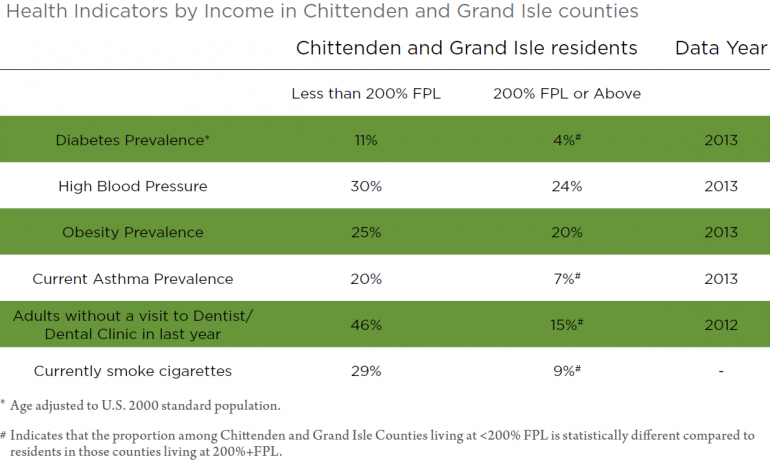
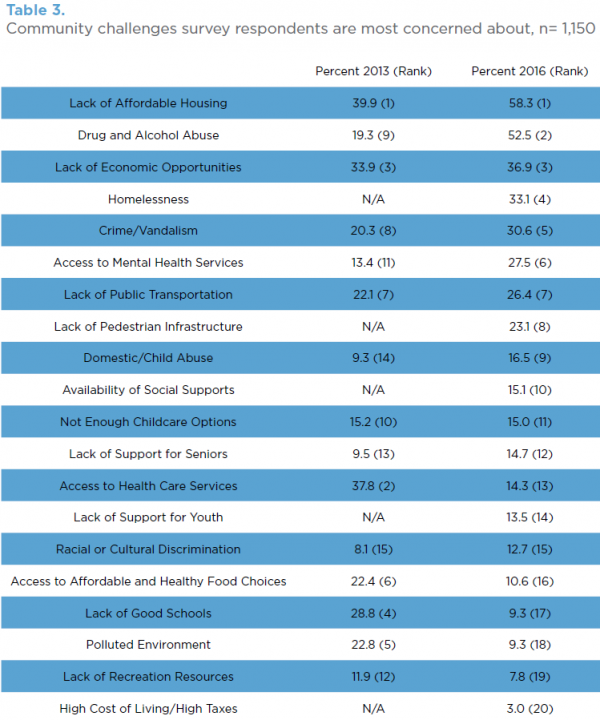
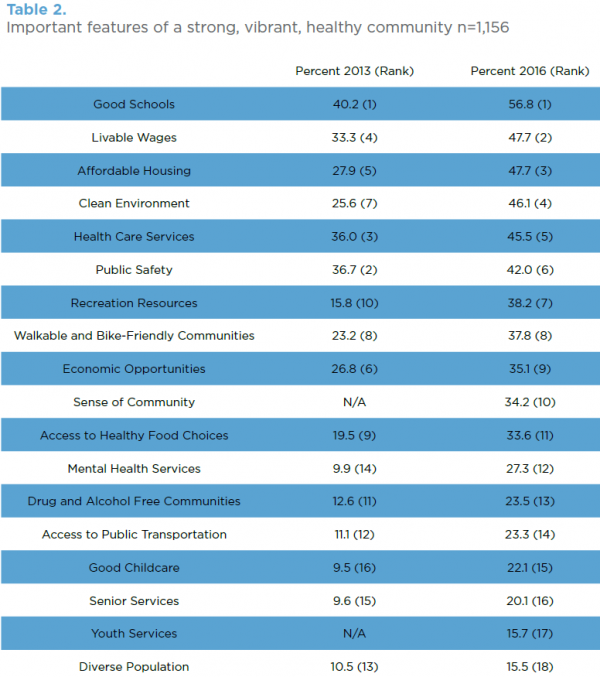
 Vermont Businesss Magazine The University of Vermont Medical Center released its 2016 Community Health Needs Assessment (CHNA) today, highlighting the issues that need special focus in order to improve people’s lives in Chittenden and Grand Isle counties. Socioeconomic factors are the most important indicators of general health, but also with the most elusive solutions. For instance, while high blood pressure and obesity are only somewhat higher among people living at less than 200 percent of the federal poverty level (versus those above), smoking (more than triple the rate), asthma (nearly triple), diabetes (nearly triple) and lack of dental care (more than triple) are significantly higher among that demographic. Of those surveyed, affordable housing was the biggest challenge, more than drugs and economic opportunity, the next two greatest concerns. However, concerns involving drugs vaulted from number nine three years ago and it now is nearly as much of a problem as affordable housing, which retained the top position. Education is still seen as the single most important component of a healthy community, an assessment that has grown over the last three years.
The report is issued every three years, and serves as a guide for targeting funding and other resources. The CHNA is created with extensive community input and includes a review of health data and public opinions covering a wide range of topics. For the 2016 assessment, 1,600 people were surveyed and focus groups and discussions were held with community members and leaders.
Highlights
- Three-year report created by UVM Medical Center with wide community input
- Findings will help guide resources to improve community health
The 2016 Community Health Needs Assessment identified these priorities (alphabetical order):
 Throughout the process, efforts were made to identify the needs of populations whose health is negatively impacted by physical, psychological or social factors beyond their control.
“Given that 60 percent of a person’s health status is related to socioeconomic factors and physical environment and only 20% is based on clinical care, we cannot achieve our goals of improving health and controlling costs without focusing on these areas,” said Eileen Whalen, MHA, RN, president and chief operating officer of the
UVM Medical Center. “Simply put, people who have access to decent housing, job opportunities, healthy food and other basic resources are much healthier than those who do not.”
“The CHNA is critical to guiding the work we do with our community partners to keep people healthy,” said Penrose Jackson, director of Community Health Improvement for the UVM Medical Center. “We truly appreciate the time and effort so many people put into making this a valuable report.”
The 2013 CHNA prompted investments in access to healthy food, dental health, mental health, removing barriers to care, and senior issues. Examples include:
· 47,000 meals have been served to childcare centers and youth programs through
Vermont Works for Women's Fresh Food program
· 2,263 homeless or at-risk individuals have been served through Howard Center's
Street Outreach Program
· 3,700 rides have been provided to seniors and disabled adults through United Way's
Neighbor Rides program
· Providing safe housing for people who are chronically homeless has dramatically reduced health care costs and improved lives.
The UVM Medical Center has done studies of this type since the 1980’s. The Affordable Care Act now requires tax exempt hospitals and health systems to conduct a CHNA every three years and to develop an implementation strategy.
Partners involved in developing the 2016 CHNA include the Chittenden County Regional Planning Commission, Community Health Centers of Burlington, Howard Center, OneCare Vermont, United Way of Northwest Vermont, Vermont Department of Health and the Visiting Nurse Association of Chittenden and Grand Isle Counties.
See the full report here.
Source: UVM MC 6.21.2016 (Burlington, VT) The University of Vermont Medical Center