

Vermont Business Magazine Vermont continues to lead the nation when it comes to clean energy jobs, according to the 2016 Clean Energy Industry Report announced today by Governor Peter Shumlin and the Department of Public Service. In the past year, there has been an increase of over 1,400 clean energy jobs, bringing the total number of Vermonters employed in this industry to 17,715. With one in every 17 workers - or about 6 percent of the state's workforce - now part of the clean energy economy, Vermont has the highest number of per capita clean energy jobs of any US state.
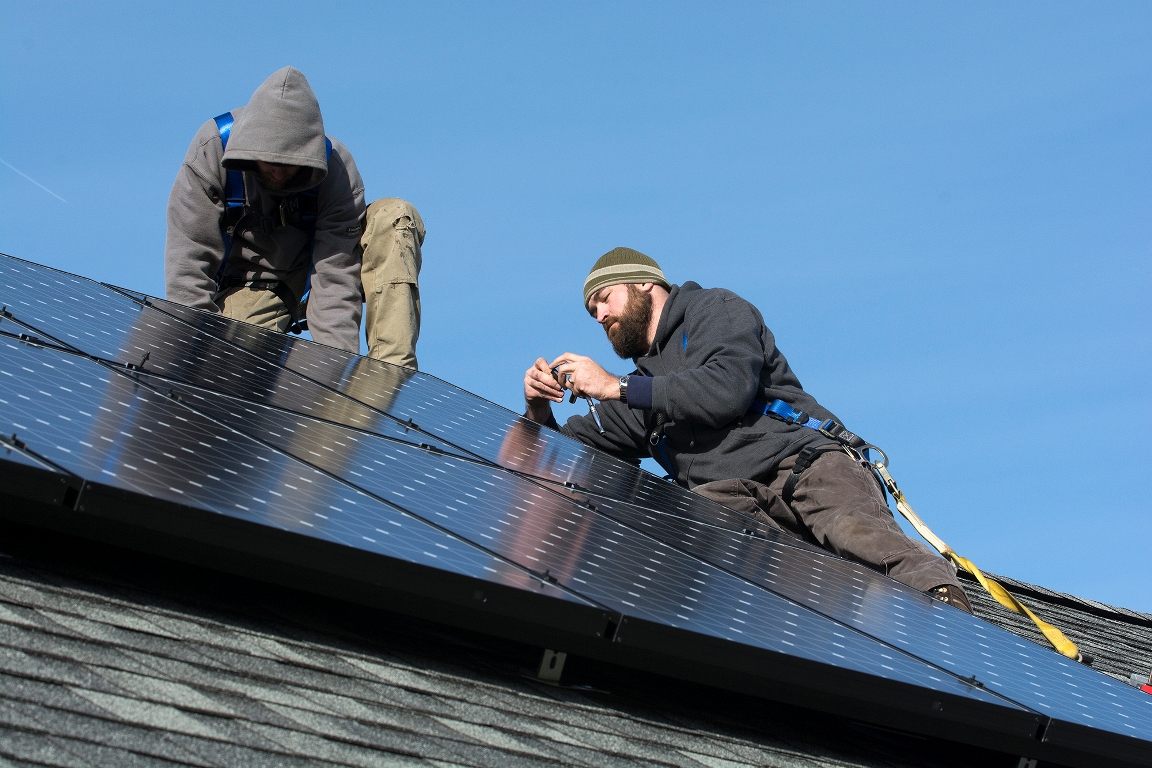
The Governor's Office released this video to highlight the Clean Energy Industry Report. Top: SunCommon file photo of a solar installation in 2014.
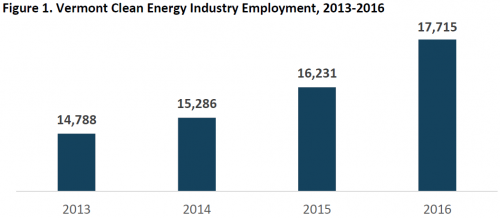
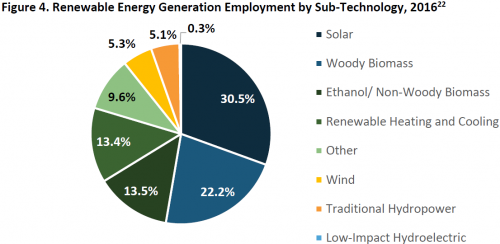
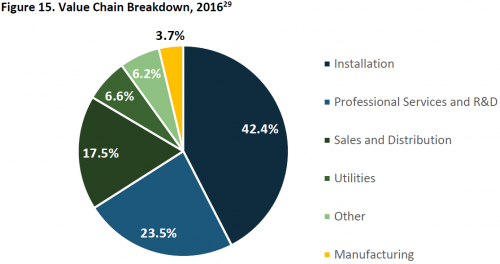
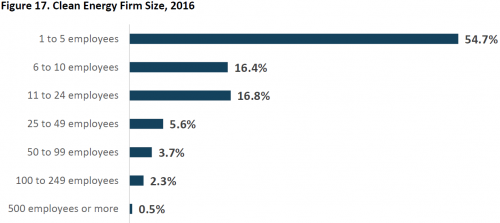
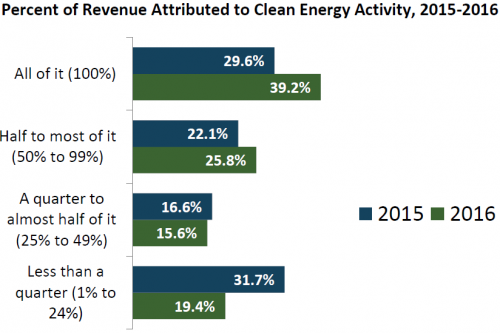
 This is the third year the Department of Public Service has conducted a study of Vermont's clean energy workforce, and the trend is clear: Clean energy jobs are a growing and significant part of Vermont's economy. At a time when employers are adding jobs at a fast pace - employers have added nearly 17,000 jobs since January 2011 - the clean energy economy is growing at an even faster pace. Since 2013, the clean energy industry in Vermont has grown by nearly 20 percent. In 2014, 4.3 percent of Vermonters were employed in the clean energy industry. That rose to 4.8 percent in 2015 and is now at six percent.
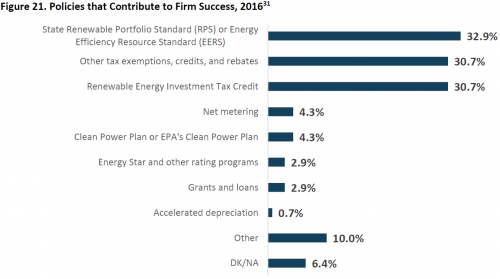
Since coming to office, Shumlin has made a priority of growing jobs and charting a cleaner energy future. Through investment in renewable energy, expansion of Vermont’s net metering program, setting a comprehensive renewable energy goal, and enacting a first-in-the-nation law that transforms Vermont utilities into energy efficiency companies that help Vermonters use less energy and save money, Vermont has been able to grow clean energy jobs and lower electric bills for Vermonters. For three of the last four years, Vermonters have seen electric bill decreases. Vermont now has the second lowest electric rates in the region.
"This report clearly shows that our clean energy jobs strategy is working," Shumlin said. "I am so proud of the many thousands of Vermonters working in these thriving industries, including a number of younger Vermonters who have returned home to work in this sector. From here forward it is also clear that no one can say with a straight face that they support growing jobs in Vermont while at the same time supporting moratoriums or bans on clean energy technologies."
Commenting on the report Public Service Department Commissioner Christopher Recchia said, “I’m pleased to see the clean energy industry is thriving with many businesses employing so many Vermonters.”
Other key findings of the 2016 Clean Energy Industry Report include:
The wood energy industry is a critical component of the state’s clean economy. Wood energy establishments include forestry and logging firms, processors and distributors of chips, pellets, and firewood, as well as manufacturers and installers of wood stoves, boilers, and furnaces. Together, these establishments employ 1,542 full-time-equivalent workers across Vermont.
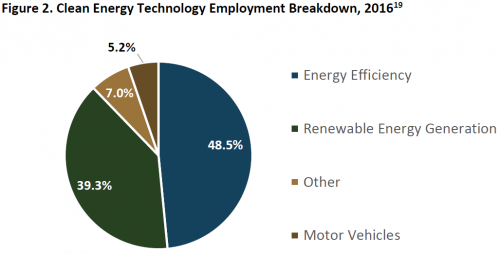
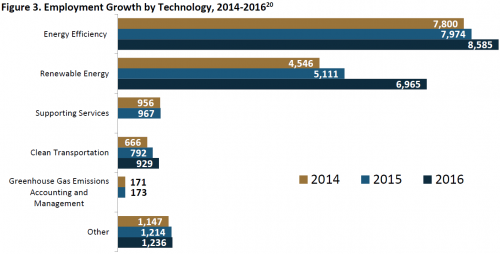
Energy efficiency is the largest segment; renewable energy has fastest growth. Energy efficiency is the largest segment of Vermont’s clean energy sector, employing nearly half of the sector’s workforce. The number of renewable energy workers expanded the most, growing by more than a third since the 2015 industry report (36%), with renewable energy firms adding another 1,800 new workers to their payrolls bringing the total for 2016 to 6,965.
The PSD’s Clean Energy Development Fund commissioned BW Research Partnership to conduct this third year study of the clean energy sector of the Vermont workforce.
The full report can be found on the PSD’s web site at: http://publicservice.vermont.gov/sites/dps/files/documents/Renewable_Energy/CEDF/Reports/VCEIR%202016%20Final.pdf
“VEIC has been working in Vermont for 30 years to imagine and implement ideas and services that reduce the environmental and economic cost of energy for everyone,” said Scott Johnstone, Executive Director of VEIC. “Vermont’s forward-looking policies and collaborative community have provided fertile ground for developing innovative clean energy approaches that we have been able export to other states and around the world. Vermont is a wonderful place to grow a business in, has a high quality workforce, a great quality of life, and as such we’re proud to call Vermont our home.”
The clean energy cluster was defined to include many different types of clean energy goods and services including energy efficiency, renewable energy, clean transportation, and support services.
Data for this year’s report is derived from the comprehensive BW Research Energy Employment Index (EEI). The Index is the result of a rigorous survey effort of traditional and clean energy establishments across all 50 states, based in part on the methodology refined for the 2014 and 2015 Vermont Clean Energy Industry Reports.
The survey was conducted with a stratified sampling plan represented by industry code (NAICS), establishment size, and geography; these variables are used to determine the proportion of establishments across energy-related technologies and value chain activities. The Castleton Polling Institute administered the telephone survey and BW Research Partners administered the web based portion of the survey.