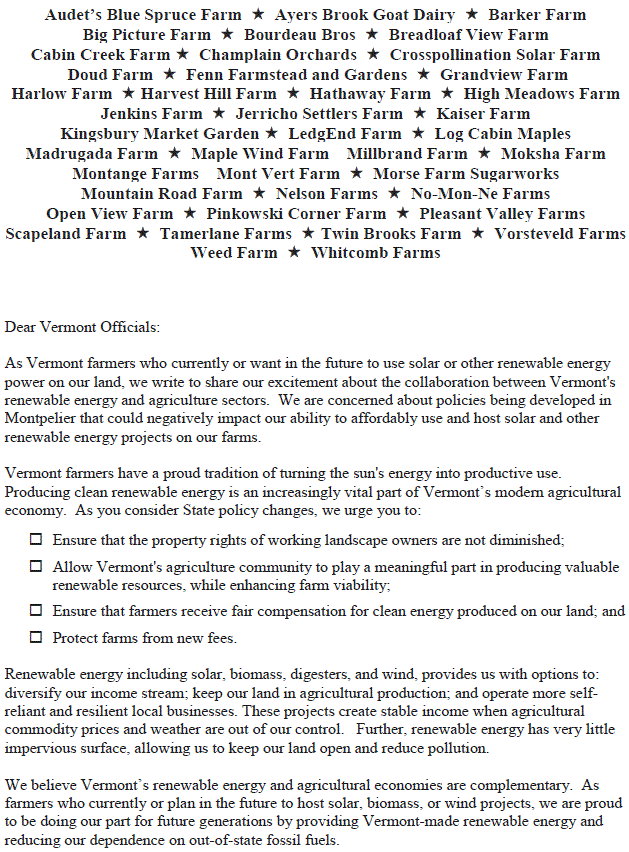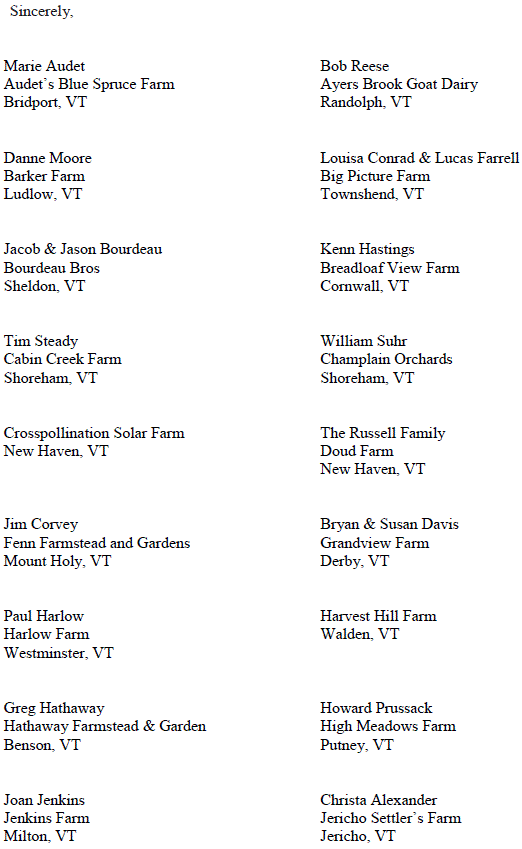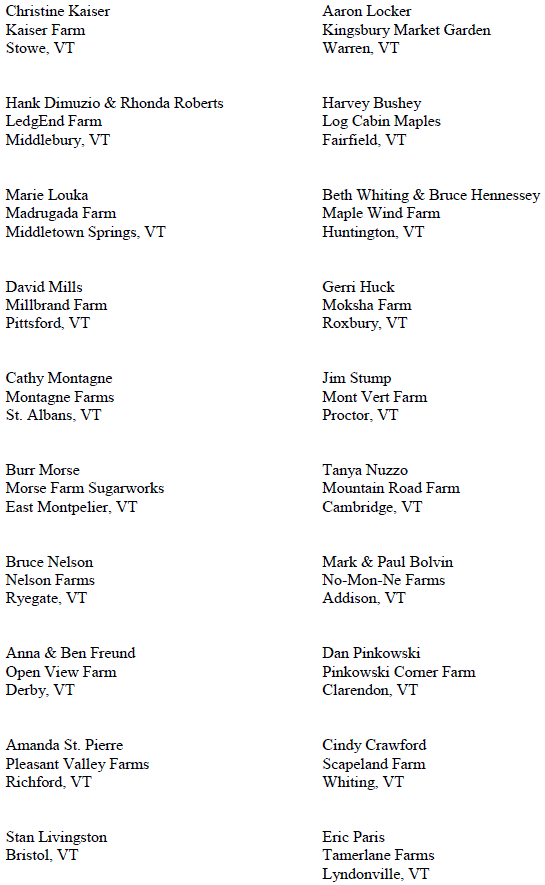
Vermont Business Magazine Farmers from across the state are voicing their concern about how new policies would impact solar and other renewable energy on Vermont farms. More than 40 farmers wrote to lawmakers and government officials today, stating, "We are concerned about policies being developed in Montpelier that could negatively impact our ability to affordably use, and host, solar and other renewable energy projects on our farms."
"Vermont farmers have a proud tradition of turning the sun's energy into productive use. Producing clean renewable energy is an increasingly vital part of Vermont's modern agricultural economy," the farmers said.
Bruce Nelson, a dairy farmer in Ryegate, explained, "Our family's business has been harvesting sunlight through our animals, through our dairy cows, for 200 years, We're turning sunlight into a product that people can use and enjoy. Solar generation is just harvesting sunlight, and I think that fits into our business model."
The letter (SEE BELOW) cites renewable energy production helping diversify and stabilize farm income and keep land in agricultural production.
The letter urges state officials -- lawmakers, Administration officials, and the Public Service Board -- to ensure that the property rights of working landscape owners are not diminished, allowing Vermont's agriculture community to play a meaningful part in producing valuable renewable resources, while enhancing farm viability. Further the letter cites ensuring that farmers receive fair compensation for clean energy produced on their land and to protect farms from new fees.
In an op-ed piece (Bray: Giving Vermonters greater voice in our energy future), state Senator Christopher Bray (D-Addison County), lead author of S230 said, "S230 offers Vermonters — through their towns and regional planning commissions—a much higher level of influence, “substantial deference,” provided that the town or region has worked with the state and been certified as a partner working to meet Vermont’s overall energy goals. A certified town plan, when being considered by the PSB, must be honored unless the board determines that there is clear evidence that the general good of the state outweighs the plan. This is a very high threshold for the board to surpass.
"And it’s a game changer for our state.
"Whereas now the burden is on a town to demonstrate that its plan should override the public good associated with a project, under S230, the burden of proof shifts to require that the board demonstrate why a town plan that has already been certified as helping Vermont meet our renewable energy goals should be overridden."
However, farmers who want to install a renewable energy facility, typically solar PV, could be left out by townspeople who don't want renewables or want them only in selected areas. The local utility, depending how the legislation proceeds, could put limits or fees on, or eliminate, net metering (the sale of excess generation).
"We believe Vermont's renewable energy and agricultural economies are complementary...we are proud to be doing our part for future generations by providing Vermont-made renewable energy and reducing our dependence on out-of-state fossil fuels," the farmers concluded.
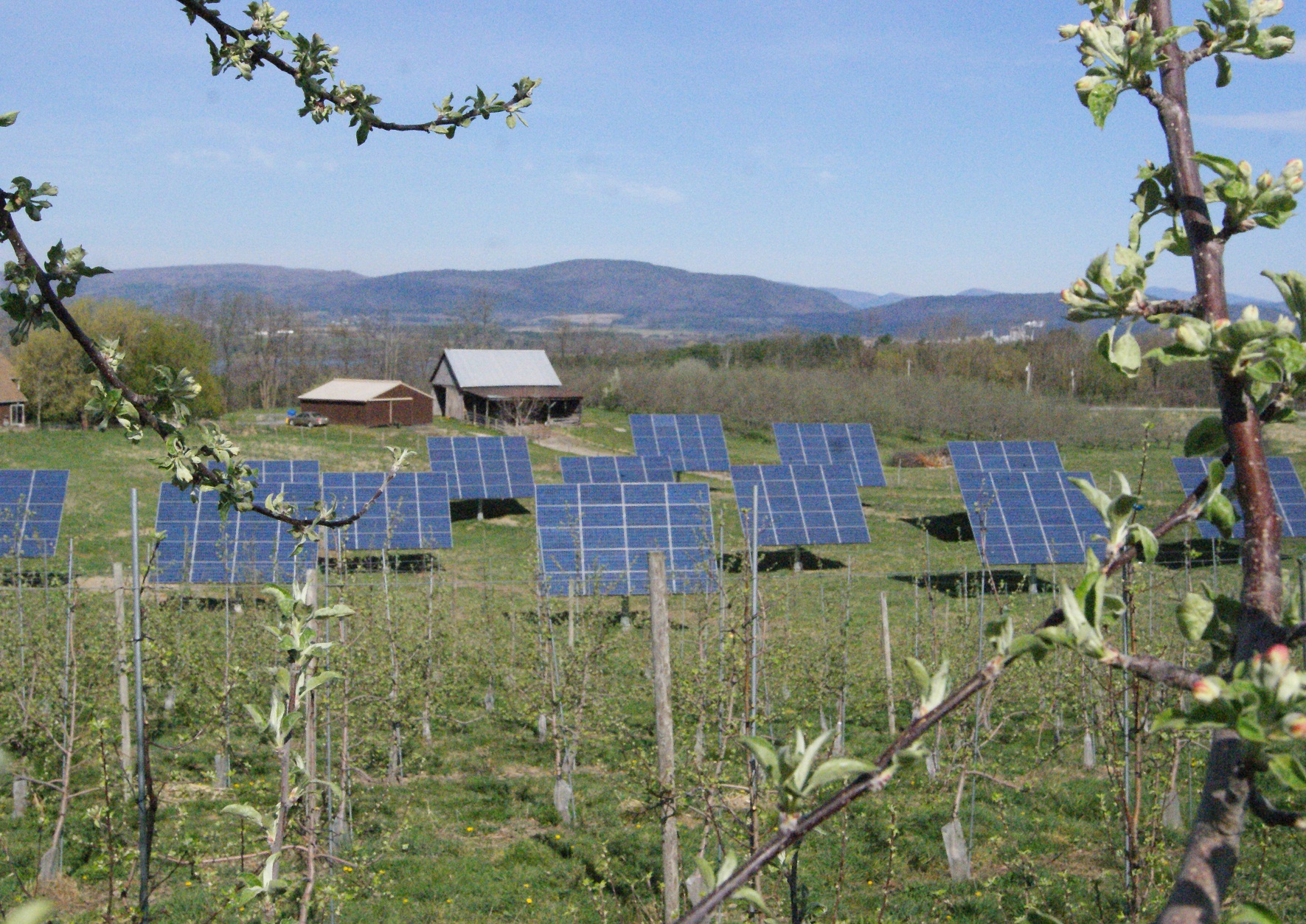
VERY TOP PHOTO of Champlain Orchards.