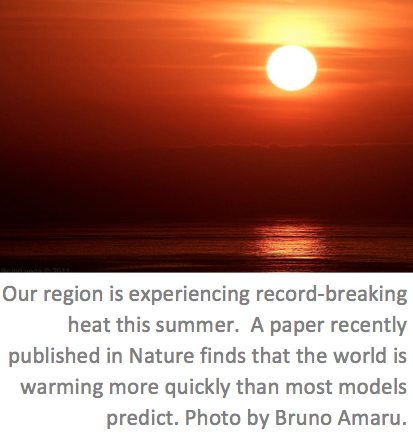
FromJuly 18toAugust 16, a stretch of 29 days, the daily high temperature in Burlington, Vermont never fell below 80 degrees F. The streak eclipsed the previous record for consecutive days over 80 by four days. Keep in mind, the streak of hot days began AFTER temperatures climbed into the 90s for six straight days earlier in July. During that heat streak the region set another record, the highest ever daily low temperature of 80 degrees.
Earlier this summer the Lake Champlain Basin Program released the2018 State of the Lake and Ecosystem Indicators Report. The report, produced every three years, is a health check on the lake. The 2018 document looks at water quality, ecosystem health, economic impacts and citizen engagement.
LCC Cyanobacteria Monitoring Program Well Underway
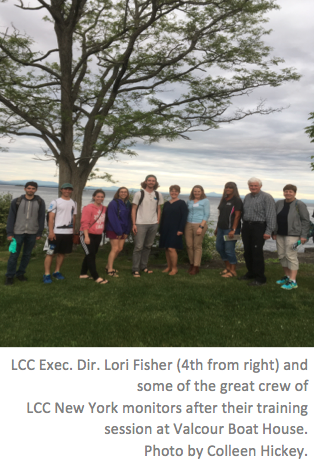
Hats off to the great group of dedicated cyanobacteria monitoring volunteers who are reporting on water quality from over 100 Lake Champlain shoreline locations and inland lakes. LCC has trained nearly 300 individuals this season to identify cyanobacteria, including state and municipal recreational staff and water treatment system operators.
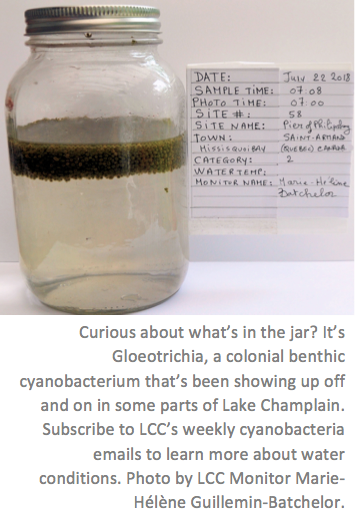
Stay up to date on water conditions on Lake Champlain and inland lakes with LCC’s weekly cyanobacteria reports. The report compiles and summarizes data collected from over 100 LCC monitoring sites in New York, Vermont and Quebec. It also includes helpful information on how to recognize and report cyanobacteria and actions to take to reduce bloom frequency. You’ll learn more about cyanobacteria like Gloeotrichia (shown in the photograph). For example, it’s not uncommon to find this species in the Inland Sea. This year it’s also been reported in St. Albans Bay and Missisquoi Bay. It forms spherical colonies that grow to roughly 1/16thof an inch and look like coriander seeds or tapioca on the water’s surface. A Gloeotrichia colony often has a yellowish-green center with hundres of filaments radiating from its core. Nutrients, light and warm temperatures all factor into its growth. Gloeotrichia has a unique ability to over-winter. Resting cells grow in the sediments in the spring, feeding off nutrients. The cells divide and grow into colonies. Gas bubbles within the colonies enable them to rise to the lake’s surface. The colonies are very buoyant and can move around a lot with wind and waves so they may appear and disappear and also be pushed onto the shoreland.
LCC’s Water Reports are emailed from mid-June through the early fall when cyanobacteria monitoring ends.Click here to sign up.
Recreate!
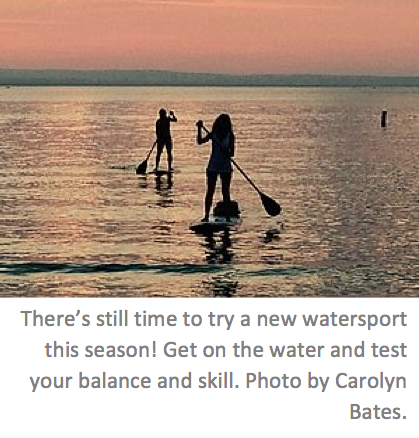
Stand Up Paddleboards
A2013 reportidentified stand-up paddling as the outdoor sport with the most first-time participants in the United States that year. Though variations of stand-up paddling have been around for centuries, the current craze began in the early 2000’s. At that time, Hawaiian surfers brought the sport to California. Stand-up paddling proved to be an easier entry point for novices to the surfing world and rapidly grew in popularity, spreading throughout the country and to inland waters like Lake Champlain.
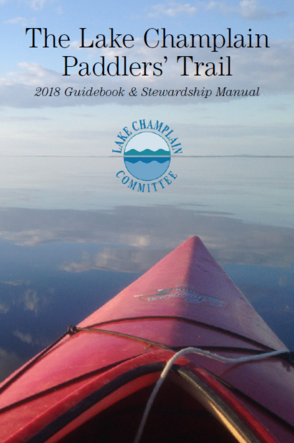
Late summer and early fall can be wonderful times on the water. Make the most out of them with the 2018 edition of the Lake Champlain Paddlers' Trail guidebook. It’s jam-packed with helpful information for great lake adventures including site descriptions and chartlets for more than 40 Trail locations (with access to over 600 campsites), launch site listings, natural history articles, safety and stewardship tips, equipment check lists and more! It's a useful resource for anyone boating on the lake -- whether you're a day-tripper, taking a multi-day excursion, or paddling the lake end to end. The publication isn't sold, it's only available through a yearly Lake Champlain Committee membership of $45 or more. Annual memberships support LCC's Trail development and the work for a healthy, accessible lake.Joinorrenewonline to receive the guidebook for your paddle trips this summer and fall. We love hearing about your water outings so please share memories and photos of your lake experiences with us at[email protected].
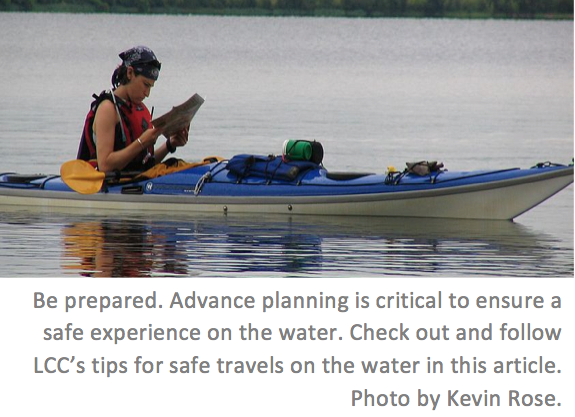
Planning a Safe Paddle
Boating on the lake can be a wonderful experience if you are well prepared and use common sense. Changing weather, variable water conditions, and other activity on the lake can affect your safety and enjoyment. Please follow these guidelines while traveling on the Trail.
Wetlands Canoe Tour of Missisquoi National Wildlife Refuge
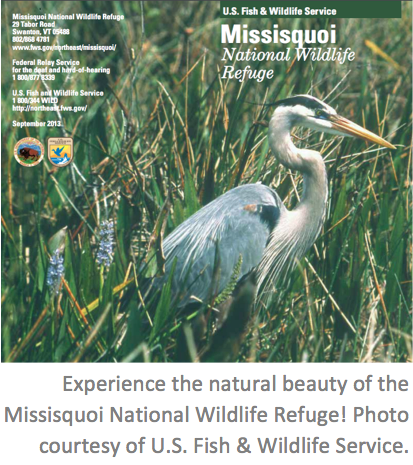
Situated on Lake Champlain, the Missisquoi National Wildlife Refuge is nationally recognized for its biological diversity and high quality wetlands. Established in 1943 to provide habitat for migratory birds, it consists of nearly 7,000 acres of refuge for avian creatures and other wildlife. In partnership with other publicly owned State of Vermont lands, the Refuge has been designated aWetland of International Importanceunder the Ramsar convention. A mosaic of wetland habitats provide opportunities to see more than 200 species of birds. Nesting bald eagles, osprey and a great blue heron colony with more than 300 nests are present on the Refuge. Note that public use is permitted only on designated trails or along the Missisquoi River. Please contact the Refugeoffice (802-868-4781 or[email protected]) forareas which are closed to the public in order to protect sensitive wildlife or habitat or a view a maphere. If you’re interested in taking a paddle in the area, check out the Missisquoi River Delta Loop Trip featured in our2018 Paddlers’ Trail Guidebook. If you’re not able to get to the Refuge this season, you cantake a virtual tour with Refuge Director Ken Sturm and Vermont Public Radio through this linkor downloadtheMissisquoi National Wildlife Refuge Brochureto entice you on a future outing.
Nature Note
Why Aren’t There More Beaches?
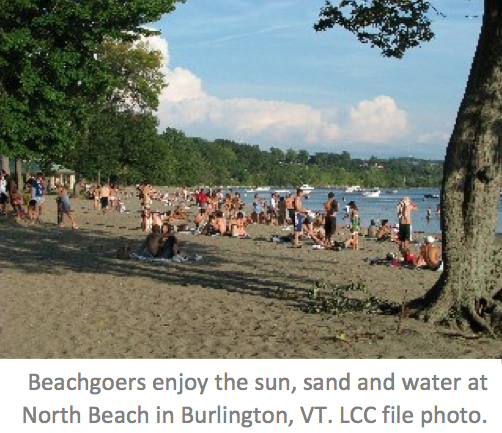
Sand and waves, suntan lotion, bathing suits, a child’s plastic pail and shovel for building castles. Spending a day at the beach is a long standing summer tradition, but did you ever wonder why there aren’t more beaches? Why do beaches form along some coves on Lake Champlain but not others?
The Legislative Commission on Act 250 is holding public forums across Vermont to discuss the evolution of the state’s landmark legislation. Since Act 250 became effective in June 1970, this law has regulated development to protect Vermont's environment and preserve its landscape. The Commission has held fourforums to date and has twomore underway to engage Vermonters on their priorities for the future of the landscape and how to maintain its environment and sense of place.
September 8, 2018- Celebrating the Lake and Sacred Waters
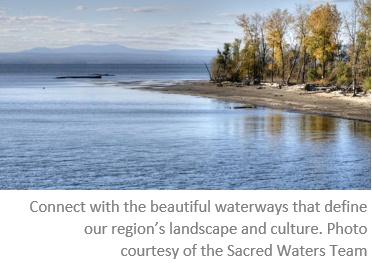
Join this fun day of community celebration and connection to our beloved Lake Champlain and the waters that feed her!Choose from morning and afternoon opportunities to try your hand at rowing a longboat, paddling a canoe up river, or exploring nature trails.
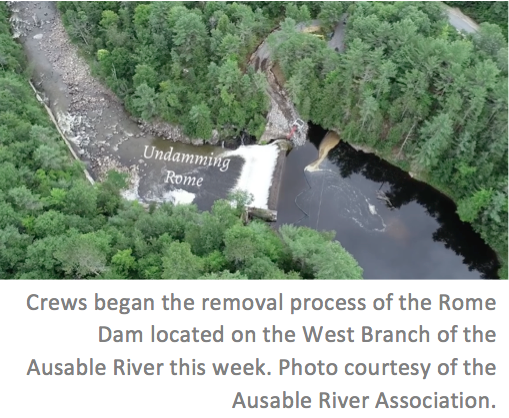
Adirondack Explorer- Located less than 2 miles upstream of Ausable Forks, the Jay Town Board voted in March of 2017 to remove the dam after an engineering study found that it posed a threat to residents downstream because of its potential to fail.
New technology to monitor combined sewage overflow in Burlington
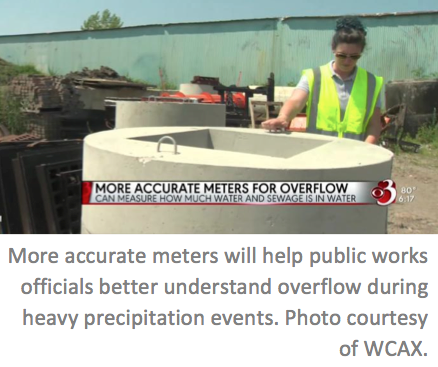
WCAX- The city recently installed new meters in the combined-sewage overflow pipes. The meters will show not only how much water overflows but what percentage is sewage versus stormwater.
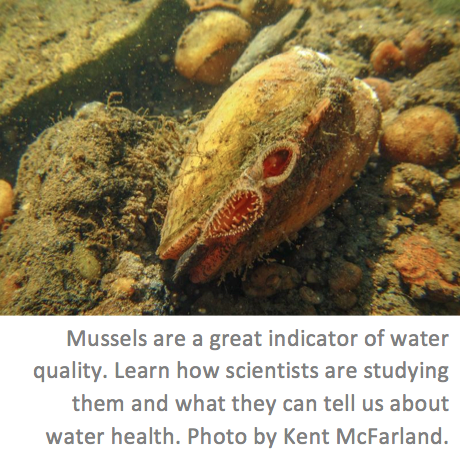
One Of The Most Endangered Animals In Vermont, Freshwater Mussels
VPR- Here in Vermont there are eighteen separate species of freshwater mussels and of those, ten are listed as threatened or endangered while several others are considered rare.
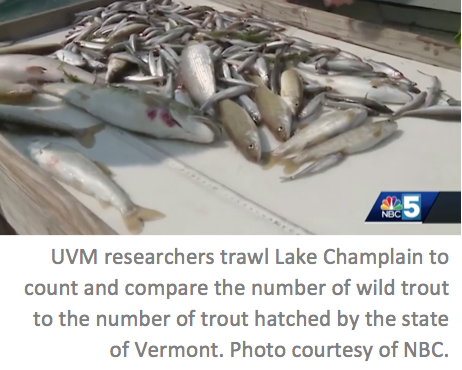
Researchers examine exploding Lake Champlain Trout Population
NBC- Onthewaters of Lake Champlain, researchers are searching for clues. The goal is to better understand a rapid increase of the Lake Troutpopulation after it inexplicably vanished in the early 1900's.
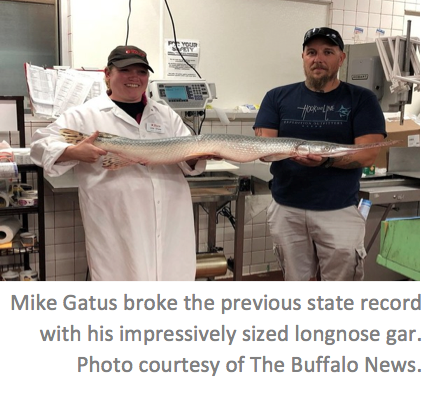
The Buffalo News- Another fish record has been broken. This time it’s an impressive longnose gar that weighed in at 14.85 pounds by Mike Gatus of Hoosick Falls.