

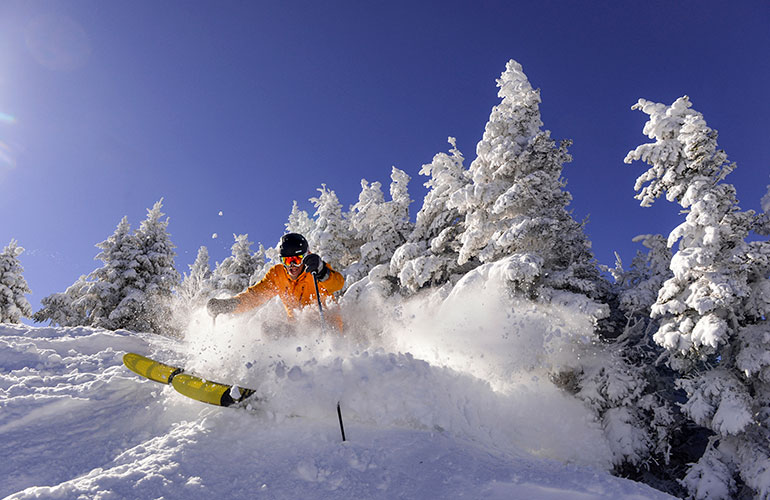
Photo: Skier at Smugglers' Notch Resort. Courtesy photo.
Early pass sales increase, Jay Peak has new owner, Canada fully opens border
VermontBiz Near the end of the 2019-20 ski season, Vermont was thisclose to having a banner year. As has become typical over the last decade or so, the snow season has trended later and even into spring. March has become vital to the business of skiing in Vermont. And then COVID hit. Governor Phil Scott closed most businesses by executive order on March 14, 2020.
But despite ongoing restrictions at the Canadian border, a tight workforce and sketchy weather early last season, the ski industry did pretty well.
Vermont ski areas reported an additional 230,000 skier visits, which was an increase of 6.5% over the pandemic-limiting 2020-21 season. While the total of 3.76 million skier visits is 6% below Vermont’s 10-year average, Vermont’s rebound outpaced the Northeast region’s 4% growth. See historical list of skier visits on page 20.
According to Ski Vermont, this suggests that Vermont was successful in recapturing many skiers and riders unable to visit during the 2020-21 season due to COVID-related travel requirements and the closure of the Canadian border.
While the Canadian border was open for most of this past season, COVID testing requirements continued to complicate travel to the US and Vermont for Canadian skiers, resulting in fewer visits from north of the border. Skier visits — defined as one person skiing or snowboarding for one day — are the standard measure of business in the ski industry.
Now that those border issues, which included quarantining and registration, have been eliminated by the Canadian government, Vermont now waits for the US government to lift vaccine requirements.
The Canadian requirements ended Sept 30. Scott said: “We hope the United States federal government will soon lift vaccine mandates on the US side of the border, removing the final hurdle to finally returning to pre-pandemic border-crossing levels. Our future is bright with our neighbor to the north, and we thank the Canadian government for making this change to their border-crossing policy.”
Jay Peak, whose business is reliant on Canadians, had a good year last season despite the restrictions; it now has a new owner.
The long nightmare of the EB-5 scandal appears over, or nearly so, as Pacific Resorts Group Inc from Utah acquired the state’s northern-most resort for $76 million in September. This is $35 million more than what Vail paid for Stowe Mountain Resort in June 2017. This is not a completely apples-to-apples comparison. Stowe traditionally sees more skiers, but the Jay Peak acquisition included nearly all the real estate, while the Vail deal included just the ski business.
The court-appointed receiver, Michael Goldberg, who oversaw Jay and its sister resort at Burke Mountain from the time the fraud was exposed in April 2016, told the federal court in Miami last month that he also had some possible buyers for the smaller resort as well.
Jay thus becomes the latest large resort to be acquired by an out-of-state corporation. That list includes Alterra/Aspen (Stratton, Sugarbush), POWDR (Killington and Pico) and Vail (Okemo, Mount Snow, Stowe).
The list of independent resorts in Vermont includes Bolton Valley, Bromley, Cochran’s, Mad River Glen, Magic Mountain, Saskadena Six and Smugglers’ Notch. There is also the Middlebury College Snow Bowl and the private Hermitage Club in Wilmington at Haystack.
And while most of us would have wanted the warm, dry summer to continue, the ski resorts were thrilled by the deluge of rain in September, as their snowmaking ponds have been replenished.
SEE Q&A with ski industry officials below.
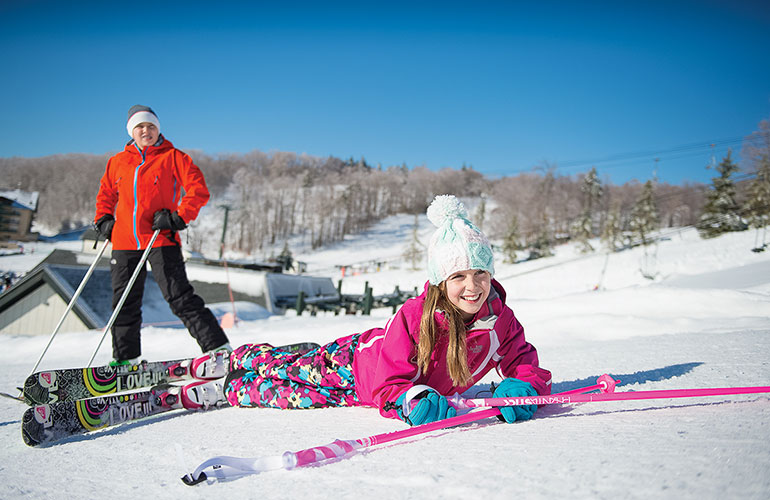 Photo: Taking a break from skiing at Bromley Mountain Ski Resort. Courtesy photo.
Saskadena Six chosen as the new name for historic resort
The Saskadena Six Ski Area introduced a new name in July, retiring the “Suicide Six” name from the historic ski resort in South Pomfret, VT, owned and operated by the Woodstock Inn & Resort. Honoring the ancestral land of the indigenous western Abenaki people, the word “saskadena” means “standing mountain,” symbolizing a deep connection to the original inhabitants, the land, and the nearly 90-year legacy of this community treasure.
“The time has come to change the name of our historic ski area to better reflect its rich tradition of family fun,” said Courtney Lowe, president of the Woodstock Inn & Resort. “We embrace the need for the increasing awareness of mental health and share the growing concern about the insensitivity of the word and the strong feelings it evokes on those in our community who have been touched by the tragedy of suicide.”
“Much time, care, and thought has been invested in the process to choose a name more representative of our values, one that celebrates its 86-year history, honors the Abenaki tradition, and will welcome future generations,” he continued. “While the name might be changing, the experiences offered on this beloved mountain are not.”
|
Ski Vermont Data |
|
|
2021-2022 |
3.8M |
|
2020-2021 |
3.5M |
|
2019-2020 |
3.7M (season ended in mid-March due to COVID-19) |
|
2018-2019 |
4.2M |
|
2017-2018 |
4.0M |
|
2016-2017 |
3.9M |
|
2015-2016 |
3.2M |
|
2014-2015 |
4.7M |
|
2013-2014 |
4.5M |
|
2012-2013 |
4.5M |
|
2011-2012 |
3.9M |
|
2010-2011 |
4.4M |
|
VermontBiz HISTORICAL Data |
|
|
2009-2010 |
4,125,082 |
|
2008-2009 |
4,068,696 |
|
2007-2008 |
4,354,621 |
|
2006-2007 |
3,820,431 |
|
2005-2006 |
4,147,467 |
|
2004-2005 |
4,399,273 |
|
2003-2004 |
4,214,068 |
|
2002-2003 |
4,470,677 |
|
2001-2002 |
4,148,438 |
|
2000-2001 |
4,579,719 |
|
1999-2000 |
3,957,457 |
|
1998-1999 |
4,042,461 |
|
1997-1998 |
4,250,569 |
|
1996-1997 |
3,971,920 |
|
1995-1996 |
4,109,109 |
|
1994-1995 |
3,652,751 |
|
1993-1994 |
4,308,633 |
|
1992-1993 |
4,258,191 |
|
1991-1992 |
3,871,299 |
|
1990-1991 |
4,100,000 |
|
1989-1990 |
4,600,000 |
|
1988-1989 |
4,500,000 |
|
1987-1988 |
4,850,000 |
|
1986-1987 |
5,200,000 |
|
1985-1986 |
4,460,000 |
|
1984-1985 |
3,850,000 |
|
1983-1984 |
4,150,000 |
|
1982-1983 |
3,000,000 |
|
1981-1982 |
4,000,000 |
|
1980-1981 |
3,100,000 |
|
1979-1980 |
2,100,000 |
|
1978-1979 |
3,200,000 |
|
1977-1978 |
3,600,000 |
|
1976-1977 |
3,000,000 |
|
1975-1976 |
2,600,000 |
|
1974-1975 |
2,800,000 |
|
1973-1974 |
1,650,000 |
|
1972-1973 |
2,300,000 |
|
1971-1972 |
2,650,000 |
|
1970-1971 |
2,650,000 |
|
1969-1970 |
2,400,000 |
|
1968-1969 |
2,250,000 |
|
1967-1968 |
1,800,000 |
|
1966-1967 |
1,650,000 |
|
1965-1966 |
1,650,000 |
|
1964-1965 |
1,150,000 |
|
1963-1964 |
1,175,000 |
|
1962-1963 |
1,020,000 |
|
Source: Ski Vermont. VermontBiz |
Following are Q&As with several ski resort representatives from around the state as they preview the coming season.
Bryan Rivard, Director of Communications, Ski Vermont (Vermont Ski Areas Association)
1) How is the upcoming season looking so far? What are the resorts telling you about bookings?
We’re seeing strong demand for Vermont skiing both inside and outside of the state, and now that fall is here, people begin to turn their attention to winter planning. I’m hearing that resorts are generally booking at or above where they’d normally be in the early season — plenty of skiers and riders are already waiting for those first flakes. We are also hearing that season-pass sales are strong and there are still some opportunities to take advantage of preseason pricing.
2) What new can skiers and riders look forward to this season?
Ski areas across the state have spent the warmer months using feedback from last season to improve the experience for their guests. Areas like Killington and Burke have streamlined mobile ticket purchases and reloads for those who like to go car-to-lift; after continued positive feedback, mobile ordering and grab-and-go food options have expanded at many areas, including QR code ordering at Killington and Apple Pay at Mad River Glen. To aid quick warm-ups between runs areas are also focusing on firepits and warming stations. And skiers in Woodstock will be welcoming the coming season with a new name, Saskadena Six (formerly Suicide Six).
3) What are the new construction developments around the state?
One of the largest unveilings this season will be Killington’s K-1 Base Lodge, after construction was delayed due to the pandemic. The new building has three stories, more than 900 seats, food courts, lockers, restrooms for 45, and an amazing view of the slopes though floor to ceiling windows. Skiers and riders can also look forward to a number of major lift upgrades; Mount Snow’s new six-passenger high-speed lift will replace two fixed-grip triples, Tumbleweed and Sundance, while Stowe is set to improve visitor experience and uphill access by upgrading the old Mountain triple to the high-speed six-person Sunrise lift. Many areas continue to make investments in improving the efficiency and effectiveness of their snowmaking systems when Mother Nature needs a hand.
4) What impact do you see from the return of Canadians?
We just heard more good news this week about the Canadian government dropping the last of the pandemic travel requirements; this will have a positive impact on the industry and state’s economy. A few industry surveys indicate that after two (potential) seasons of delayed trips, Canadian travelers are focused on having a meaningful travel experience, which is something Vermont is known for providing. International trips also tend to be longer, include weekdays, or center around Canadian, rather than American, school breaks, which fit well with the additional capacity a lot of ski areas have at those times.
5) Can we expect a return to pre-pandemic skier days, or do you think it will still take time for people to fully return?
We are optimistic that we will see skier visits return closer to our 10-year average of 4.1 million. Vermont regained share in the Northeast last season, but last season’s weather and lower snowfall had a lot to do with visit numbers coming in lower than we had hoped.
6) How is promotion going?
Vermont is the premier ski destination in the East, and Ski Vermont is committed to helping our members get the word out about what our state has to offer. We’re continuing our ongoing work with media relations and outreach, as well as continuing to expand into the influencer space. We’re excited to be able to host in-person media receptions in our major markets again for the first time in several years; this helps us strengthen existing relationships and make new ones. It’s really about sharing our love of the sport and the state when we’re talking to would-be skiers and riders about the lifelong enjoyment these activities can provide. Starting out can be overwhelming, so we’re making an effort to promote opportunities and stories of Vermont skiing to those interested, but who haven’t had the chance to dip a toe in yet.
7) What is your reaction to the Jay Peak ownership situation being finally settled?
It’s encouraging to see a company recognize the value of Jay Peak the way Pacific Group Resorts has. Even with the period of uncertainty they’ve been in these past years, the staff and management have really shown their commitment to their community and the visitors that ski there. They’ve continued to thrive during a period of uncertainty, and it’ll be exciting to see what they’re able to do with the stability the new ownership provides.
8) The pandemic made real estate at the resorts even more valuable. Is that still the case, and what is the overall impact of that on the resorts' business?
We’ve seen more people using their homes to a greater degree, either full-time living or spending extended periods there. Having more people around outside the weekend and/or taking advantage of flexible work schedules has increased midweek traffic at the ski areas; it will be interesting to see if this trend continues. Outdoor recreation and skiing play a big role in attracting more people to Vermont, which is a positive driver for the economy, particularly in rural parts of the state where many ski areas are located.
Mike Chait, Communications Manager, Jay Peak Resort
1) What is your reaction to the ownership situation being finally settled? When will it close?
After nearly seven years in Receivership, Jay Peak staff and team members are relieved and excited to welcome the opportunities PGRI brings to the table. As of now, it appears that the deal will close officially sometime as we head deeper into the fall and prior to the upcoming winter season.
Seeing the final sale price and the aggressive bidding throughout the auction (there were three bidders and the court approved the sale on September 16) underscored the reality that it was driven by the hard work and the operational commitment by the Jay Peak team throughout the receivership.
To continue to be the Jay Peak our stakeholders have grown so loyal to, we need equal investments in people and products, infrastructure, and ideology, both present and future. PGRI’s operational ideology aligns with that sort of mission, and we look forward to the direction we will grow together.
2) What new things can skiers and riders look forward to this season?
Given where the sale is, we’re sort of caught in a capital cycle between both the receivership and our new ownership group. We will be integrating a host of behind-the-scenes maintenance capital and energy savings projects while we build out a longer-term capex plan with our new owners that will map out infrastructure and product-related operational improvements.
3) Do you anticipate Canadians returning as before the pandemic?
After seeing the enthusiasm displayed by our Canadian guests when travel restrictions changed toward the end of last season, along with early-season booking realities from that market segment, we are confident when we say this year will see quite the reunion. Enthusiasm from the Canadian market is high, and we will continue to offer “at par” rates on nonmargin products for Canadian guests.
4) How do bookings/ski passes look so far?
The recent news surrounding PGRI’s winning bid for the acquisition of Jay Peak seems to be instilling confidence in our various market segments, and we are seeing strong performance in vacation bookings and Pass sales.
Kristel Killary, Brand Marketing & Communications Manager, Killington
1) Do you anticipate skier days returning to pre-pandemic levels, or do you think it will take time for people to get back to traveling?
With the exception of the initial lockdown, we were able to stay open and provide guests with an outdoor escape throughout the pandemic. During 2020, when Vermont’s borders were closed, we noticed a definite impact in numbers. But last season, visitation was strong, especially as the season progressed. We are always beholden to Mother Nature, and if it snows, they will ski. So, the short answer is yes,, we are planning on a busy ski season this year.
2) What new things can skiers and riders look forward to this season? Any new capital improvements?
Our biggest improvement is the new state-of-the-art K-1 base lodge. Nearly three years in the making, this 58,000-square-foot structure features three floors, accessed by multiple elevators and one of the only escalators in the state of Vermont. Nearly 900 seats are available for guests between the food court, cafe and multiple bar areas. Also housed in the lodge are full-service retail and rental shops, bag check, ample restrooms and all the other amenities skiers and snowboarders have come to expect. This new facility will transform the way guests start their day at the resort, as well as offering a beautiful venue for weddings and conferences during the fall and summer months.
Outside, we continue to fine-tune our snowmaking equipment with an eye on efficiency, including a new electric air compressor and two new cooling fans. Though skiers may not notice an obvious difference, these changes continue to reduce our environmental impact and will enable us to Play Forever.
3) Killington is the largest ski resort in the state. What does that mean to visitors and the local economy?
We are one of the largest employers in the area, as well as a major economic draw for all the surrounding businesses. We take our role very seriously and strive to support the community through not just increased visitation to the region but also numerous donations to area causes. Through our Play Forever Fund, we’ve been able to donate thousands of dollars to a number of local groups, and we are very proud to be able to do so.
4) How are plans for the World Cup coming? Is Mikaela planning to return?
We are well underway with preparations for the big race this Thanksgiving Weekend, November 25-27. We are excited to be able to be back at full capacity, including the Friday night festivities of the athlete bib presentation and a free fireworks display. Yes, Mikaela Shiffrin will be back to defend her title, and she will face some local competition from the likes of former University of Vermont skier Paula Moltzan and Burke Mountain graduate and Dartmouth student Nina O’Brien.
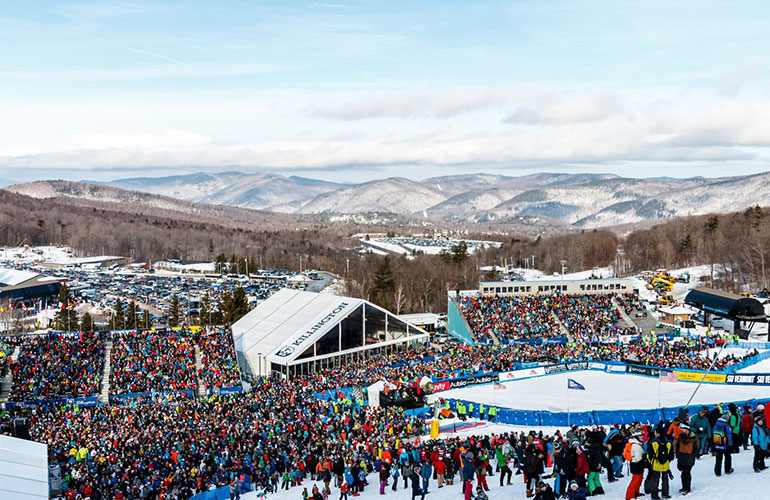 Photo: Spectators at last year's World Cup at Killington Resort — a Thanksgiving Weekend Vermont tradition. Courtesy photo.
4) Do you anticipate Canadians returning as before the pandemic?
We have already seen Canadian traffic increase in our summer operations and look forward to welcoming back visitors from across North America. This winter, we have already seen reservations coming in from Canadian guests and groups.
5) How do bookings/passes look so far?
Across the board, preseason sales are looking strong heading into the winter season. Season passes, lodging reservations and our advance-purchase discounted ticket offer, K-Tickets, are all pacing ahead of las year.
6) Do you have an opening date yet? You folks are always first, but it's been a long summer. Does that push it back?
We don’t have an official opening date yet. Mother Nature will have the ultimate say, but our snowmaking team is anxious for the temperatures to drop so we can spin North Ridge for the early season. It was a strong summer here at Killington, packed with events, golf and mountain biking, but we are always ready for winter to begin. Our Mountain Operations are able to wear many hats and prepare for the ski and snowboard season while also delivering a premium summer product.
Kelly Mohr, Communications Director, Smugglers' Notch Resort
1) Do you anticipate skier days returning to pre-pandemic levels, or do you think it will take time for people to get back to traveling?
We are optimistically hoping that the Old Farmer’s Almanac holds some truth that this winter is going to be above average snowfall with colder temperatures that allow us to make plenty of snow. The key to seeing some of the pre-pandemic numbers will come to us as it relates to snow surfaces and the quality of the experience. Current indications are that we should have a strong season based on pass sales and early bookings for winter destinations.
2) What new things can skiers and riders look forward to this season? Any new capital improvements?
Smugglers’ Notch has invested in two new snowcats for use this winter to keep up the quality of the snowpack under foot. Last winter we experimented with GPS technology that measures the depth of snow on the trails for snowcat operators to build a consistent surface while they groom. This technology was very helpful during the testing period to identify thin patches and to allow for deeper snow levels to be moved around and build up layers like an insulation blanket. Smuggs is excited to bring back a popular “Night School for Boarding” and add in skiers for the “Night School of Skiing and Riding” for this winter. The Winter Daycation tickets will be back online offering access to the FunZone 2.0 Ozone, Nordic Trail access for snowshoe or cross-country skiing; indoor pool and hot tubs; ice skating; and Village entertainment and activities.
3) Smuggs is one of the few independent resorts left in the state and one of the (largest). What does that mean to visitors and the local economy?
For the guests coming to Smugglers’ Notch this winter, we are thankful to their participation and to the staff we have hired to make their dreams come true. The focus of our staff to keep the resort an award-winning organization transcends into the quality of the “experiences” people receive coming here for the day or spending a week or longer on a destination vacation. Our community also benefits from the vacation market who travel up to eight to 10 hours to share in the Vermont landscape with interests in shopping, dining, events, or entertainment. Sharing their positive experiences on social media or with friends and family creates the referrals coming in for more influx of guests into the future.
4) Do you anticipate Canadians returning as before the pandemic?
The Canadian market started coming in much better for this summer/fall. We expect that the pre-pandemic levels should return as the easing of the border crossing will help to allow this clientele to return without the restrictions.
5) How do bookings/passes look so far?
The start of the season seems to be on track. Typically, some early November snowstorms with good cold temps for snowmaking could help trigger a helping hand in bookings. Let’s get our snow dance started now!
Oliver Mauk, Marketing Director, Bromley
1) Do you anticipate skier days returning to pre-pandemic levels, or do you think it will take time for people to get back to traveling?
We actually had our best season ever last year, so strangely we are hoping that we do not return to “pre-pandemic” levels and that our growth continues. I think it has a lot to do with Vail and Alterra as well, with many skiers disappointed in the end product they are receiving from those resorts and opting for an independent, uncrowded resort experience. Our affordable ticket price (was $89 for a weekend or holiday ticket last year compared to $179+ at Stratton, our nearest competitor) has brought us lots of day skier traffic as well. They get many guests from the Connecticut, New York, Pennsylvania, New Jersey corridor.
2) What new things can skiers and riders look forward to this season? Any new capital improvements?
Nothing of note is new this year. Our Capex budget was mostly spent on maintenance, snowmaking upgrades, and fixing a drainage issue.
3) What is the customer experience like?
We provide a different experience from the larger, corporate resorts. Fewer crowds, free parking, easy access, affordable tickets, a hands-on staff and the support of a great local community give us a very different feel and vibe compared to most nearby mountains.
4) Do you anticipate Canadians returning as before the pandemic?
Since we are in southern Vermont (Peru), we do not get a large number of Canadians anyway, so this does not matter too much for our business.
5) How do bookings/passes look so far?
Season pass sales are very solid again this year. We have another pass deadline for early pricing on Oct 15, so we expect to see a large number of passes sold between now and then.
6) Do you have an opening date yet?
Opening date is scheduled for Friday, Nov 25 (weather permitting).
John Bleh, Sugarbush, Public Relations and Communications Manager
1) Do you anticipate skier days to return to pre-pandemic levels, or do think it will take time for people to get back to traveling?
We definitely anticipate skier days returning to pre-pandemic levels. In fact, our guests were basically back as normal last season, with the only real visitation variable being a poor snow year.
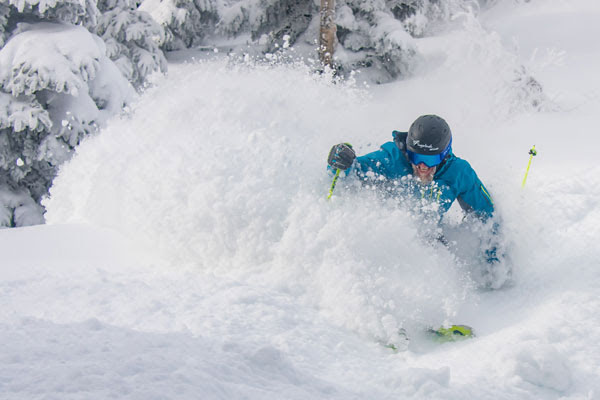 Photo: Skier at Sugarbush. Courtesy photo.
2) What new things can skiers and riders look forward to this season? Any new capital improvements? You were doing a lot at Mt Ellen last year. How is that progressing?
Sugarbush has seen the largest capital dollars influx in years this summer, the majority of which has been dedicated to a multimillion dollar snowmaking expansion. These snowmaking projects include pipe and snowgun replacement on Easy Rider/Pushover to improve the beginner experience, the upper half of Mt Ellen to provide more snowmaking reliability, and on a trail replacement for Reverse Traverse, which will see an improved pitch and could change the way Lincoln Peak’s terrain opens up early winter. Other improvements include new groomers and a new cabin cat, which will help create an enhanced experience for cabin cat adventures. The Vermont Adaptive Ski & Sports/Mt Ellen Base Lodge project is all wrapped up and operated quite well last winter! We’ve received great feedback about it.
3) Do you anticipate Canadians returning as before the pandemic?
Just like other skier visits, we anticipate Canadians returning to those levels as well. Obviously, they had some complicated travel restrictions and changes for part of last winter, but given the Ikon Pass presence in our Canadian drive regions thanks to Mont Tremblant and Blue Mountain, we are expecting a large influx of Canadian skiers to Sugarbush this season.
4) How do bookings/Ikon passes look so far?
Everything is looking strong so far.