

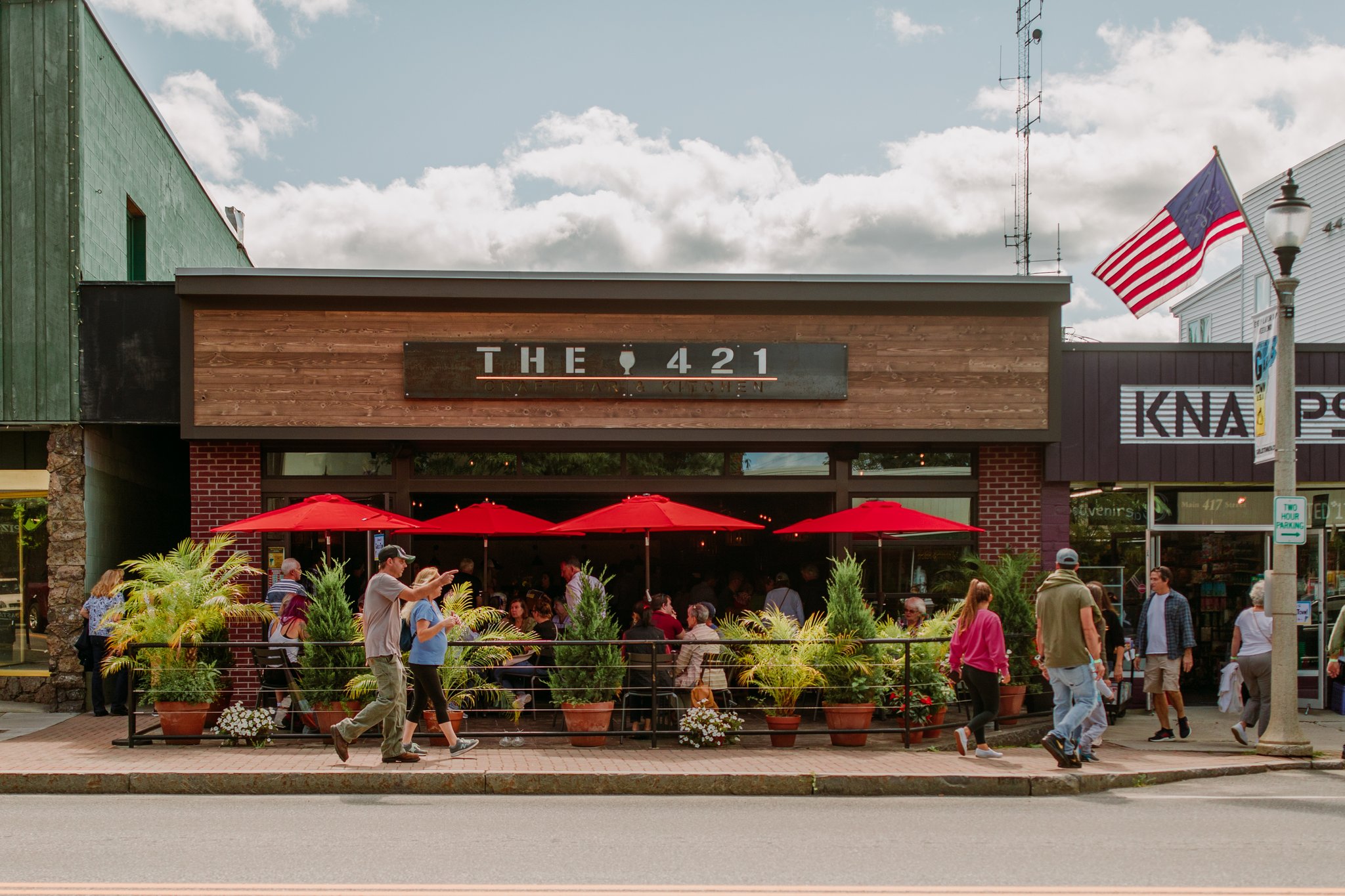
Photo: Summer in downtown Bennington: Photos courtesy of Southwestern Vermont Chamber and Lorianna Weathers Photography.
Vermont Business Magazine The Southwestern Vermont Chamber of Commerce distributed its annual State of the Commerce survey to its business and nonprofit members recently. The purpose of the State of the Commerce Survey was to hear from regional businesses and nonprofits about how they were doing in the current economy, what their current attitudes were in relation to economic vitality, and what new small business trends they saw emerging.
The survey was distributed to 320 representatives in the regional chamber of commerce and 84 participants completed it or 26%.
Industries represented in the responses to the survey included retail and shopping, real estate, lodging, nonprofits, dining, entertainment, marketing, health care, manufacturing, financial, agriculture, education, construction, automotive, energy, law, faith-based and government.
Thirty six percent of respondents identified as a woman-owned business, while 8% of respondents indicated they identified as LGBTQI+ owned. Disable-person owned and veteran owned was also represented. None of the respondents indicated that they identify as a BIPOC or Immigrant-owned business.
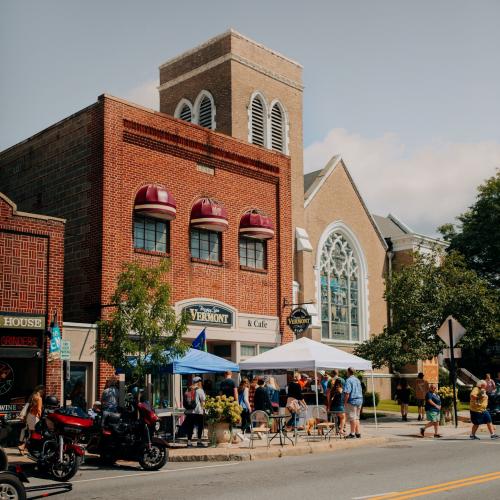 Photo: Summer in downtown Bennington: Photos courtesy of Southwestern Vermont Chamber and Lorianna Weathers Photography.
“All in all, the numbers look good when we ask members about their business and nonprofit health,” reports Matt Harrington, executive director of the Chamber. “More respondents showed positive growth and sustainability than any other time we’ve done this survey. However, challenges still loom including concern around inflation, workforce, recovery, supply chain issues and more. Perhaps more acute to our region, I was interested in how many businesses plan to retire in the next five years. I think that is a silent challenge that hasn’t received enough attention.”
When asked if they plan to retire in the next 5 years, 18% of business owner respondents indicated that they were planning to retire.
Inflation, qualified workforce, pandemic recovery, supply chain issues, housing represented the top five things that were negatively impacting businesses and nonprofits. Fifty percent indicated their number one impact was inflation, while 37% indicated qualified workforce. Other areas of impact included thin margins, demographic challenges of the region, healthcare costs, financial limitations, looming recession and locating customers.
When asked what would be the greatest negative impact in the next 12-18 months to their organization, respondents again chose inflation as their number one concern at 68%, qualified workforce at 24%, a looming recession at 23%, supply chain issues at 17%, childcare support at 13% and housing for staff at 9%.
Sixty percent of respondents indicated that they were still feeling the impact of the Covid Pandemic “somewhat,” while 26% indicated “not at all,” and 14% indicated “significantly.”
It was a tale of three economies when participants responded to the question of employee count since 2019. A third of respondents indicated growth in their employee count, a third indicated no change, and nearly a third indicated a loss in employees.
Using a letter grade scale from A (good financial health) to F (poor financial health), participants were asked how they felt about their current financial health: In 2022, 77% of respondents indicated As and Bs, 22% indicated Cs, and 1% indicated Ds and Fs.
In 2020, during the COVID pandemic, survey respondents indicated 43% in the As and Bs, 35% indicated Cs, and 22% indicated Ds and Fs for their current financial health.
In 2019, 70% of respondents were in the A and B category, 27% in the C category, and 3% in the D and F category.
“These numbers have drastically changed in the last 4 years. What is promising is that even from our 2019 numbers, more businesses in 2022 indicated they felt healthier in the B and A categories, less were in the C and D categories, and only one respondent indicated fear of closure or closure imminent (D- and F),” remarks Harrington.
When asked if they felt that their business or organization was doing financially better or worse than it was 3 years ago in 2019, 45% indicated it was doing better, 21% indicated that it was doing worse, 26% indicated it was doing the same and 9% indicated they weren’t around three years ago.
Ninety three percent of participants responded “yes” when asked if they felt that Southwestern Vermont was a good place to do business. This was up again from previous State of the Commerce surveys which showed 87% indicating “yes” in 2020, 84% indicating “yes” in 2019 and 81% indicating “yes” in 2018.
“To me this question is one we should stop and celebrate,” Harrington adds. ““Over the past 4 years business and nonprofit optimism about where they choose to have their business or organization and provide services and products has shot up by over 10%. That’s incredible! And, it doesn’t happen by accident. I do believe organizations like the Chamber, downtown programs, RDCs, town government, educational institutions and other leaders around the table have worked very hard throughout the region to change the perception of this region. You cannot drive through The Shires in Pownal, Arlington, Dorset, Rupert, Bennington, and Manchester and not see growth, new businesses, new people and optimism. We still have work to do, but this was a nice number to see in comparison to when we started this survey.”
When asked if in the next three years would Southwestern Vermont be better or worse to have a business or organization in, 87% indicated it would be better. This is compared to 74% indicating it would be better in 2020 and 80% in 2019.
Improved internet took top spot for what additional services would help respondents grow their business or organization with 41% indicating it was their number one need. Improved cell service took second with 37% of respondents indicating it was their number one need, better destination marketing was third at 31%, improved transportation and improved connections with other business owners were both at 29%.
Seventy four percent of respondents indicated social media as their number one means of marketing, 63% of respondents said they do some form of online business, and 24% of respondents indicated that the number one customer their business is targeted to is online shoppers. This has been a shift since the beginning of the Chamber’s surveying.
“I think the Covid Pandemic, as hard as it was, made a lot of our businesses and organizations deal with some brutal facts whether that was around finances, having a presence online, embracing technology or adjusting to a hybrid work model. As these organizations shift to more of an online presence, it's no surprise their number one request for growth is high speed internet,” says Harrington.
“What is encouraging is that with the relief funding available to Vermont, we know we are moving in the right direction to handle the challenges of housing, high speed internet, childcare and workforce. It may not happen tomorrow, but there is awareness and funding for it.”
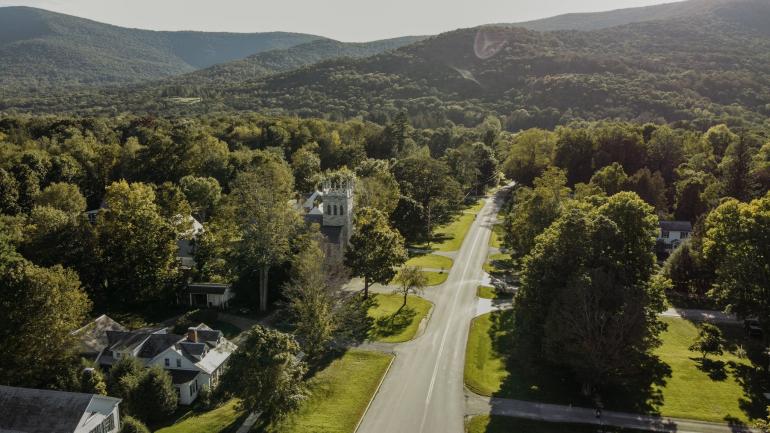
Photo: Summer in Dorset. Photos courtesy of Southwestern Vermont Chamber and Lorianna Weathers Photography.
The Southwestern Vermont Chamber of Commerce promotes, leads and advocates a unified effort, on behalf of its members, to maintain and improve a healthy business climate and rewarding quality of life for the entire Shires of Southwestern Vermont region.
The vision for the Southwestern Vermont Chamber of Commerce is to grow businesses and enhance the Southwestern Vermont economy, influence and foster stable growth to this region's creative ecosystem, assist in building safe and healthy communities, and market Southwestern Vermont to people from all walks of life through the efforts of the regional Shires of Southwestern Vermont brand.