

Vermont Business Magazine May is Mental Health Awareness Month, and right now more people are struggling with mental health than ever before. QuoteWizard analysts evaluated access to care, illness prevalence, coverage rates, and more to find the best states for mental health care. Data provided by QuoteWizard found that Vermont has the 13th-best overall mental health care in the nation.
- 22% of people have a diagnosed mental illness
- 13% with a mental illness were not able to receive care
- 5% of people with a mental illness who do not have insurance
Nationwide, more people are taking prescription mental health medication, anxiety and depression levels are rising, suicidal ideation is increasing and 11% of people with a mental illness don’t have insurance.
There are, however, some states that are at the forefront of mental health care. The QuoteWizard team of analysts found that these states have both high access to mental health care and low numbers of people without health insurance.
Key findings:
- Connecticut, Maryland and Massachusetts have the best mental health care
- 21% of Americans have a mental health issue
- 11% of people received mental health care this year
- 11% of people with a mental health illness didn’t receive care this year
To determine the best states for mental health care, their analysts looked at five key factors:
- Prevalence of mental illness in each state
- Access to mental health care
- The number of people who have received care
- The number of people who needed care but didn’t get it
- Mental illness and health insurance
They found that Connecticut has the best mental health care in the nation. The state has a high degree of access to care, a low number of uninsured residents with mental health issues and a low number of people who weren't able to utilize mental health services.
| Rank | State |
|---|---|
| 1 | Connecticut |
| 2 | Maryland |
| 3 | Massachusetts |
| 4 | New York |
| 5 | Rhode Island |
| 6 | Wisconsin |
| 7 | Hawaii |
| 8 | New Jersey |
| 9 | Illinois |
| 10 | Delaware |
| 11 | Montana |
| 12 | Pennsylvania |
| 13 | Vermont |
| 14 | Minnesota |
| 15 | Maine |
| 16 | Michigan |
| 17 | Iowa |
| 18 | California |
| 19 | New Hampshire |
| 20 | North Carolina |
| 21 | South Carolina |
| 22 | Virginia |
| 23 | Oklahoma |
| 24 | New Mexico |
| 25 | Kentucky |
| 26 | Nebraska |
| 27 | Colorado |
| 28 | South Dakota |
| 29 | Ohio |
| 30 | West Virginia |
| 31 | Tennessee |
| 32 | Arizona |
| 33 | Washington |
| 34 | Utah |
| 35 | North Dakota |
| 36 | Louisiana |
| 37 | Texas |
| 38 | Kansas |
| 39 | Indiana |
| 40 | Idaho |
| 41 | Florida |
| 42 | Nevada |
| 43 | Oregon |
| 44 | Arkansas |
| 45 | Alaska |
| 46 | Alabama |
| 47 | Georgia |
| 48 | Mississippi |
| 49 | Missouri |
| 50 | Wyoming |
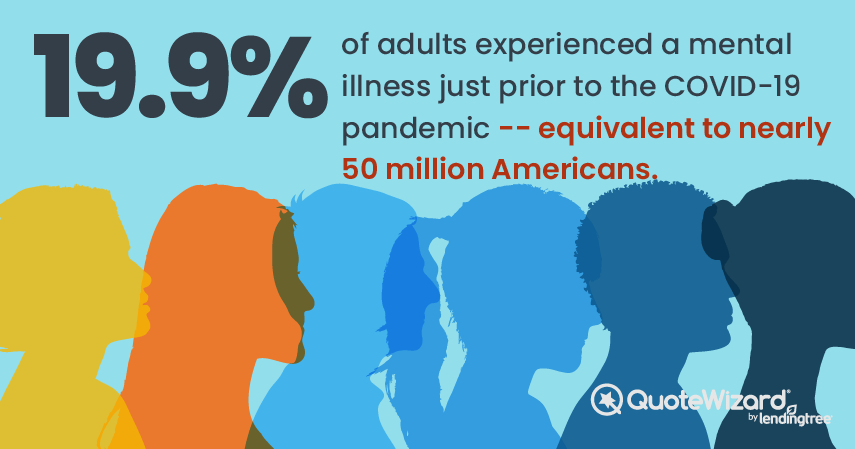
Mental illness is incredibly common in the United States. One in 5 adults experienced a mental illness prior to the beginning of the COVID-19 pandemic.
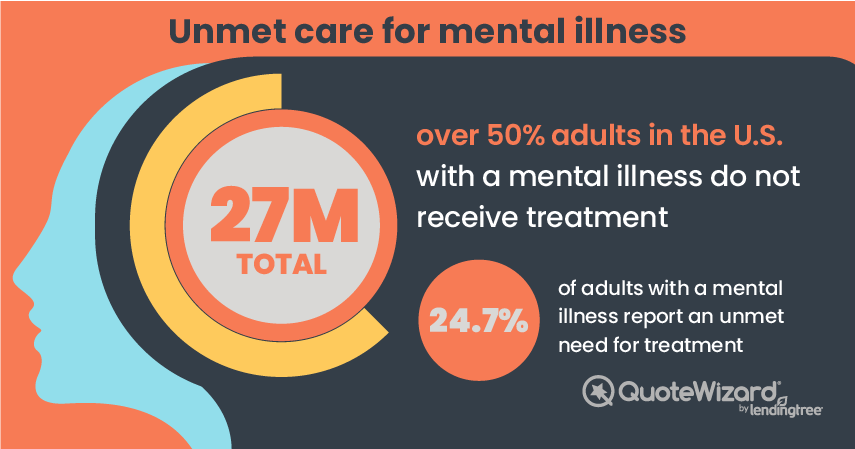
Many of these illnesses are left untreated. Half of the people with a mental health illness do not receive treatment, and nearly 25% say they have not been able to get the care they need.
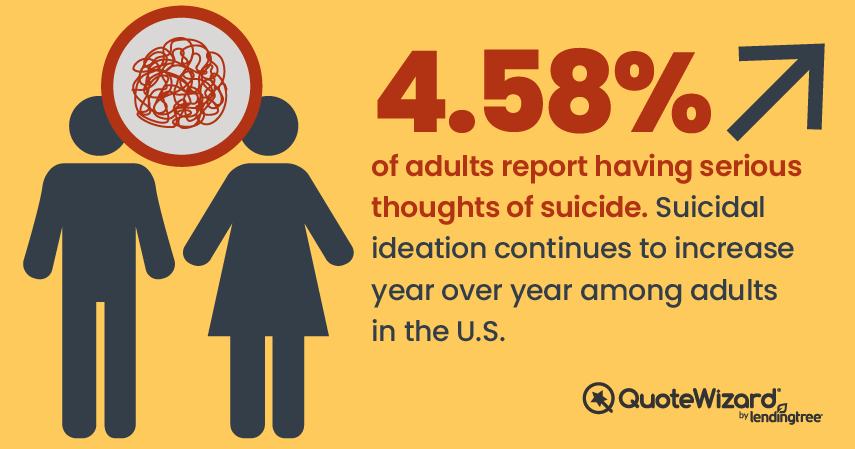
The consequences for this lack of treatment cannot be overstated. Suicide rates are up 30% since 1999, and more than 90% of people who committed suicide showed symptoms of mental health issues.
Insurance is a major factor when it comes to receiving mental health care. We found a direct correlation between the number of people who didn’t receive mental health care and the number of people who had a mental illness but did not have insurance. Oregon, for example, had the second-highest percentage of people who did not receive care and the second-highest percentage of people without insurance.
Having insurance is key because under the Affordable Care Act, most health insurance plans must also include coverage for mental health services and substance abuse.
| State | % with a mental illness | % of people who received care | % of people who didn’t receive care | % of people without insurance* |
|---|---|---|---|---|
| Alabama | 21% | 12% | 11% | 19% |
| Alaska | 21% | 9% | 14% | 10% |
| Arizona | 20% | 11% | 12% | 12% |
| Arkansas | 20% | 9% | 13% | 11% |
| California | 19% | 12% | 12% | 7% |
| Colorado | 23% | 13% | 12% | 11% |
| Connecticut | 19% | 13% | 9% | 5% |
| Delaware | 21% | 12% | 6% | 7% |
| Florida | 17% | 8% | 12% | 18% |
| Georgia | 18% | 9% | 13% | 15% |
| Hawaii | 17% | 10% | 6% | 5% |
| Idaho | 22% | 12% | 12% | 14% |
| Illinois | 19% | 12% | 11% | 7% |
| Indiana | 22% | 11% | 12% | 13% |
| Iowa | 19% | 9% | 9% | 11% |
| Kansas | 21% | 10% | 12% | 14% |
| Kentucky | 23% | 8% | 12% | 4% |
| Louisiana | 21% | 8% | 11% | 12% |
| Maine | 22% | 13% | 9% | 13% |
| Maryland | 18% | 12% | 9% | 6% |
| Massachusetts | 21% | 18% | 10% | 4% |
| Michigan | 20% | 11% | 10% | 7% |
| Minnesota | 21% | 13% | 13% | 8% |
| Mississippi | 20% | 8% | 13% | 18% |
| Missouri | 23% | 11% | 13% | 19% |
| Montana | 21% | 15% | 10% | 10% |
| Nebraska | 20% | 14% | 14% | 12% |
| Nevada | 22% | 8% | 11% | 12% |
| New Hampshire | 22% | 10% | 8% | 12% |
| New Jersey | 16% | 10% | 7% | 9% |
| New Mexico | 21% | 12% | 13% | 11% |
| New York | 20% | 16% | 10% | 8% |
| North Carolina | 19% | 10% | 12% | 5% |
| North Dakota | 21% | 8% | 10% | 15% |
| Ohio | 24% | 10% | 11% | 10% |
| Oklahoma | 23% | 15% | 16% | 7% |
| Oregon | 24% | 13% | 15% | 18% |
| Pennsylvania | 20% | 13% | 10% | 12% |
| Rhode Island | 22% | 13% | 8% | 6% |
| South Carolina | 19% | 10% | 11% | 4% |
| South Dakota | 18% | 7% | 11% | 16% |
| Tennessee | 19% | 9% | 12% | 10% |
| Texas | 17% | 11% | 14% | 15% |
| Utah | 27% | 13% | 13% | 11% |
| Vermont | 22% | 15% | 13% | 5% |
| Virginia | 19% | 10% | 9% | 12% |
| Washington | 23% | 12% | 14% | 12% |
| West Virginia | 25% | 11% | 11% | 10% |
| Wisconsin | 20% | 11% | 10% | 6% |
| Wyoming | 23% | 6% | 12% | 18% |
| * This represents the percentage of people with a mental health illness who also do not have insurance | ||||
Hide rows
Mental Health Resources
National Institute of Mental Health (NIMH)
- 1 (866) 615-6464
- NIMH website
Substance Abuse and Mental Health Services Administration (SAMHSA)
- 1 (800) 662 - 4357 (24hrs)
- SAMHSA website
National Alliance on Mental Illness
- 1 (800) 950 - 6264
- [email protected]
Methodology
States were evaluated based on data from Mental Health America and the United States Census Bureau Household Pulse Survey. Overall rankings were determined by a composite score based upon access to care, insurance rates and the prevalence of mental illness within each state.
Source: QuoteWizard by LendingTree, LLC 4.26.2022