

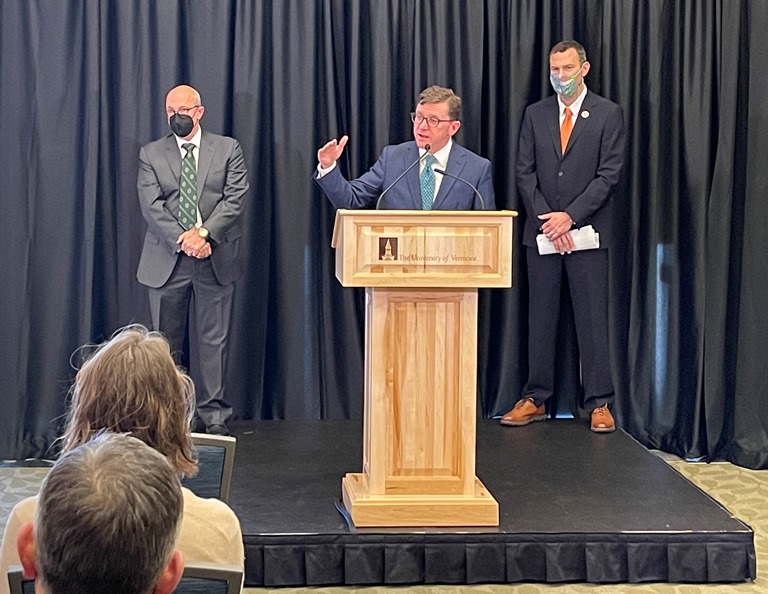
UVM Vice President for Research Kirk Dombrowski (left), and Kenneth McAvey, Vice President and General Manager at GF (right), listen as VGS President and CEO Neale Lunderville explains how they are lowering carbon emissions by employing renewable energy sources. VBM photos
Vermont Business Magazine The promise of a hydrogen economy and a clean energy future is taking a step forward with an innovative project that will take shape at GlobalFoundries (GF), thanks to a partnership with Vermont Gas Systems, Inc. (VGS) and the University of Vermont. The initiative was announced today by the partnership members at UVM's Davis Center.
The pilot project will allow GF to reduce its carbon emissions even further by introducing the use of green hydrogen, which will be produced on-site at its Fab 9 campus in Essex Junction, Vermont. Devices known as electrolyzers, powered with electricity from renewable sources like wind and solar, will extract hydrogen from water without producing new carbon emissions. The company will blend the extracted hydrogen into Fab 9’s gas lines and thereby reduce carbon emissions through reduced consumption of natural gas.
While still in the planning phase, the partners are expecting to move on to the research and approval phases this spring. Plans call for construction to commence in 2023.
GF will introduce green hydrogen into the natural gas lines used for heating Fab 9. If the pilot is successful, the hydrogen produced on-site could be used to support the chip manufacturing process.
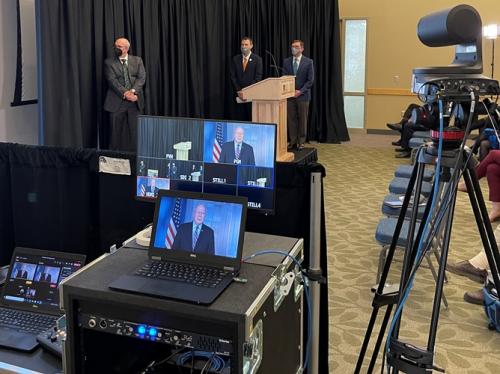 Senator Patrick Leahy (D-VT) joined the press conference via video.
The plant currently uses a type of hydrogen that is known as “gray” because it is extracted from fossil fuels instead of water and additional greenhouse gas emissions are generated during its production process.
For VGS, green hydrogen is an important strategic innovation to displace fossil gas and reduce greenhouse gas emissions in support of Vermont’s Global Warming Solutions Act (GWSA). Green hydrogen can be blended with natural gas and used directly in boilers, furnaces, and other appliances. For the pilot project, green hydrogen will be blended only into GF’s on-site systems in Essex Junction.
“This project is just one of several that GF is initiating in order to lead the way in environmental stewardship at our manufacturing facility in Vermont,” says Kenneth McAvey, Vice President and General Manager at GF Fab 9. “We currently have active projects relative to process abatement, battery storage and solar under consideration. As a responsible corporate citizen, GF plans on providing strong support of the GWSA in Vermont.”
“We are thrilled to work with Vermont’s largest private employer and the team at UVM to pilot green hydrogen in the Green Mountains,” said VGS President and CEO Neale Lunderville. “This project will demonstrate the value of renewable fuel in high-tech manufacturing, which is critical to fighting climate change. At VGS, we’re focused on growing the supply of renewable energy available to Vermonters as they heat their homes and businesses. Green hydrogen is an exciting, zero-carbon fuel that holds promise to displace even more fossil fuels, contributing to our state’s climate goals and benefiting our customers.”
Senator Patrick Leahy (D-VT) remarked on the partnership via video message, which can be viewed HERE.
The project, known as the Vermont Green Hydrogen Partnership, is the first initiative from the Vermont Clean and Resilient Energy Consortium (VCREC)—a statewide group of Vermont utilities and related industries that have partnered with UVM to advance the state’s clean energy goals through use-inspired research.
The group combines the research expertise of UVM faculty with the on-the-ground perspective of Vermont stakeholders to tackle real-world problems facing Vermont now and in the future.
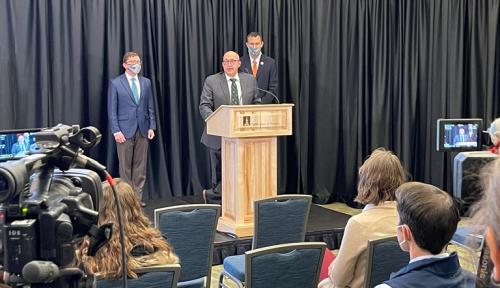 UVM Vice President for Research Kirk Dombrowski
“As the only statewide clean energy research consortium in the country, VCREC builds on Vermont’s culture of collaboration and community to build a unique ‘test bed’ for clean and equitable energy futures,” said UVM Vice President for Research Kirk Dombrowski. “VCREC builds on earlier ‘smart grid’ collaboration but aims to go beyond any single project with the goal of making Vermont a national leader in clean energy research and implementation. This project clearly moves us in that direction.”
With growing recognition that drastic reductions in carbon emissions will require the use of a clean fuel, interest in green hydrogen is accelerating nationwide for its potential to displace fossil fuels in the heating and transportation sectors, spurring visions of a clean energy future. GF and VGS also will be considering the use of green hydrogen in future stages of the project to power vehicles for which water is the only emission. In other parts of the world, energy companies are exploring ways to blend hydrogen and natural gas for home heating and cooking.
Lunderville said VGS is committed to funding the pilot project entirely, if necessary, but UVM’s VCREC will serve as a catalyst to pursue federal grants from the recently announced Hydrogen “Earthshot” (and other sources), as well as developing curriculum on the latest clean energy technologies.
“This collaboration between GF, VGS and UVM represents an important step forward as we work to reduce emissions, support our economy and support innovation,” said Governor Scott said in a statement. “I’m encouraged to see three Vermont institutions work together to make critical progress towards goals we all share.”
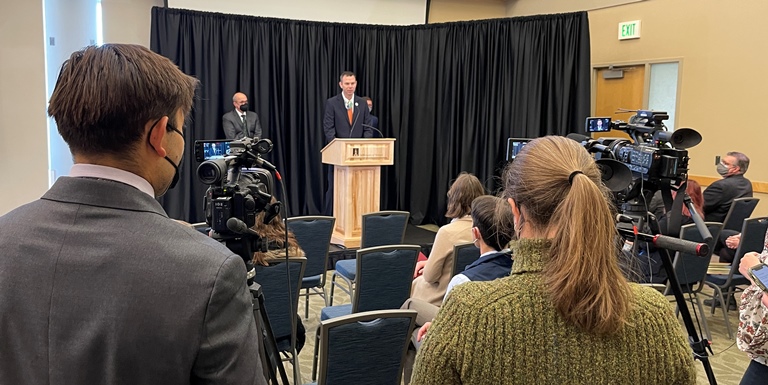
GF's Kenneth McAvey explains how the Essex Junction's plant will utilize the green hydrogen, which in this pilot project anyway, will not require any new infrastructure in order to add the hydrogen to the natural gas.
About the University of Vermont
Since 1791, the University of Vermont has worked to move humankind forward. UVM’s strengths align with the most pressing needs of our time: the health of our societies and the health of our environment. Our size—large enough to offer a breadth of ideas, resources, and opportunities, yet intimate enough to enable close faculty-student mentorship across all levels of study—allows us to pursue these interconnected issues through cross-disciplinary research and collaboration. Providing an unparalleled educational experience for our students, and ensuring their success, are at the core of what we do. As one of the nation’s first land grant universities, UVM advances Vermont and the broader society through the discovery and application of new knowledge.
UVM is derived from the Latin Universitas Viridis Montis (in English, University of the Green Mountains).
About VGS
VGS is northwest Vermont’s thermal energy provider, and a leader in energy efficiency and innovation. VGS offers a clean, safe, affordable choice for over 55,000 homes, businesses, and institutions in Addison, Chittenden, and Franklin counties. The company plays an important role in Vermont’s clean energy future by displacing higher-emitting fuels, offering renewable natural gas service, and delivering award-winning energy efficiency programs. VGS is leading the country in the development of local renewable energy generation and has targeted a 40 percent reduction in greenhouse gas emissions by 2030 in line with Vermont’s ambitious climate goals. For more information about VGS, visit www.vgsvt.com.
About GF
GlobalFoundries® (GF®) is one of the world’s leading semiconductor manufacturers. GF is redefining innovation and semiconductor manufacturing by developing and delivering feature-rich process technology solutions that provide leadership performance in pervasive high growth markets. GF offers a unique mix of design, development and fabrication services. With a talented and diverse workforce and an at-scale manufacturing footprint spanning the U.S., Europe and Asia, GF is a trusted technology source to its worldwide customers. For more information, visit www.gf.com.
BURLINGTON, Vt. — UVM 1.20.2022