

Vermont Business Magazine Starting today, Retreat Farm in Brattleboro is making an intentional choice to prioritize physical connection and authentic relationships by discontinuing their use of Facebook and Instagram. Serving as a free public resource and common, Retreat Farm’s visitorship is expected to exceed 80,000 this year — up 44% from last year. But the Farm isn’t letting its dependence on donations from tourists and the community drive its decision-making process.
“The strength of our Vermont community hinges on our relationships with one another and our ability to work together. Social media has fundamentally changed how we communicate with one another. But the destructive implications for people and communities greatly outweigh the benefits of Facebook and Instagram,” commented Lindsay Fahey, Managing Director of Community and Impact. “This choice was made based on our belief that the strength of our community hinges on our relationships with one another and our connection to land and place.”
Nonprofits and businesses, particularly Vermont’s tourism industry, rely heavily on platforms like Facebook because of their convenience, broad and instant reach, and low cost. But in doing so, they reinforce a system that increasingly erodes productive discourse and independent thought, increases personal isolation and loneliness, and destabilizes our faith in democracy.
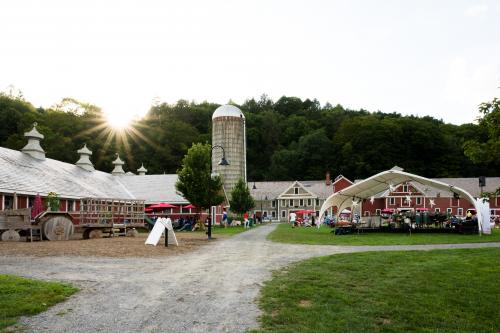 Photo: Retreat Farm, Brattleboro VT. Courtesy photo.
Thanks to the latest whistleblower testimony, we know that Facebook has intentionally and systematically amplified some of the worst content on its platform — facilitating hate speech, extreme rhetoric, and more, especially in vulnerable parts of the world. And worse, Facebook openly acknowledges that its current mitigation strategies against problematic actors are grossly deficient.
This summer, Facebook reached 2.9 billion monthly active users, more humans than live in the world’s two most populous nations —China and India— combined. When asked how Retreat Farm could remove itself from Facebook and Instagram when they have become the principal means of electronic communication for such a large portion of the population, Executive Director Buzz Schmidt answered:
“This has been a driving concern for me for years. Now that the repercussions of Facebook’s power have become clear, it’s imperative for Retreat Farm to lead by example and stop using these destructive communication mediums.
When one man and one company dominate the communications, discourse, and advertising seen by such a large percentage of the global population, our government has usually done its best to restore a competitive balance. Facebook’s abuse of power is so detrimental and erosive to people, communities, and our democracy that without government action, it is up to private institutions like Retreat Farm to seek new (and old) ways of communication that prioritize face-to-face connection and relationships.
We believe that by helping people connect with the land and by providing places and spaces for people to meet and engage with one another, Retreat Farm is providing an authentic social medium.”
Retreat Farm encourages the community to help reimagine communication strategies that center on human connection and authentic relationships to strengthen community ties, promote independent thought, and bring new vitality to Main Street businesses.
If you’d like to help reimagine how media outlets with broad socio-economic reach can be leveraged (or redeployed) to strengthen communities and support businesses of all sizes and budgets, please email Lindsay Fahey at [email protected].
In the meantime, Retreat Farm will rely on email, its website (www.retreatfarm.org), traditional media outlets, and community-building platforms like Front Porch Forum to communicate important news and events.