

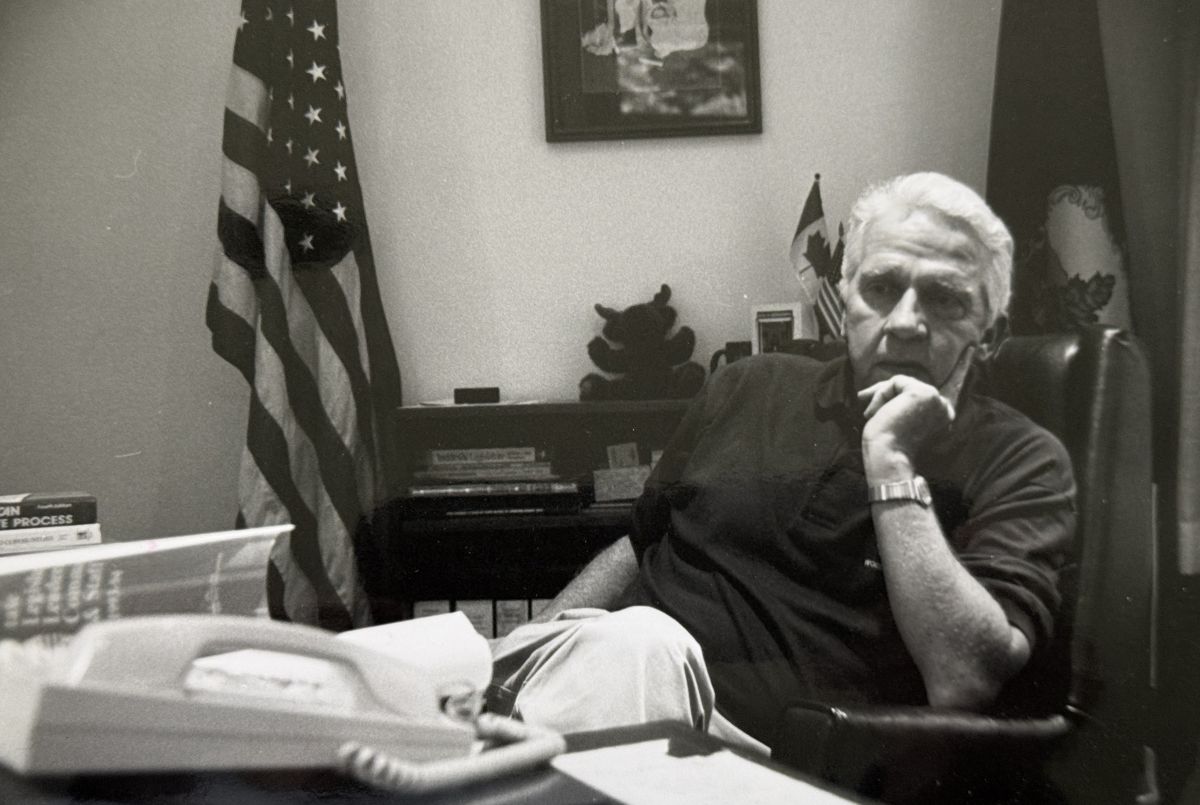
Speaker Ralph Wright in his office in 1993. Vermont Business Magazine photo.
by Chris Graff
As the 1985 General Assembly convened, Rep. Robert Kinsey, R-Craftsbury, was confident that he would be elected speaker of the House.
He needed 76 votes to win, the Republicans held a 78-72 majority, and his latest count of pledges gave him a nice cushion of 80 votes.
But Kinsey had underestimated the scrappy Democratic candidate, Ralph Wright of Bennington, who loved a good fight, played hardball and relished being the underdog.
Shock rippled through the House chamber as Secretary of State James Douglas announced the results: Wright had won by the narrowest of margins, 76-74, launching a 10-year speakership that would redefine the office and make him the most powerful speaker in the state’s history.
He won the office in 1985 by quietly courting and finally winning the votes of six Republicans who felt comfortable supporting Wright because the contest was by secret ballot.
“Friendship came before party and I worked hard to make friends across the aisle,” Wright recalled. “I took pride in getting to know my members, about their families, their likes and their dislikes.”
Most House speakers saw themselves as facilitators. Not Wright. He was a man on a mission who proudly trumpeted himself as a liberal.
Wright, who died Wednesday at the age of 91, looked and acted as if he had stepped out of central casting and was playing the part of the speaker of the Massachusetts House in the days brought to life in Edwin O’Connor’s "The Last Hurrah."
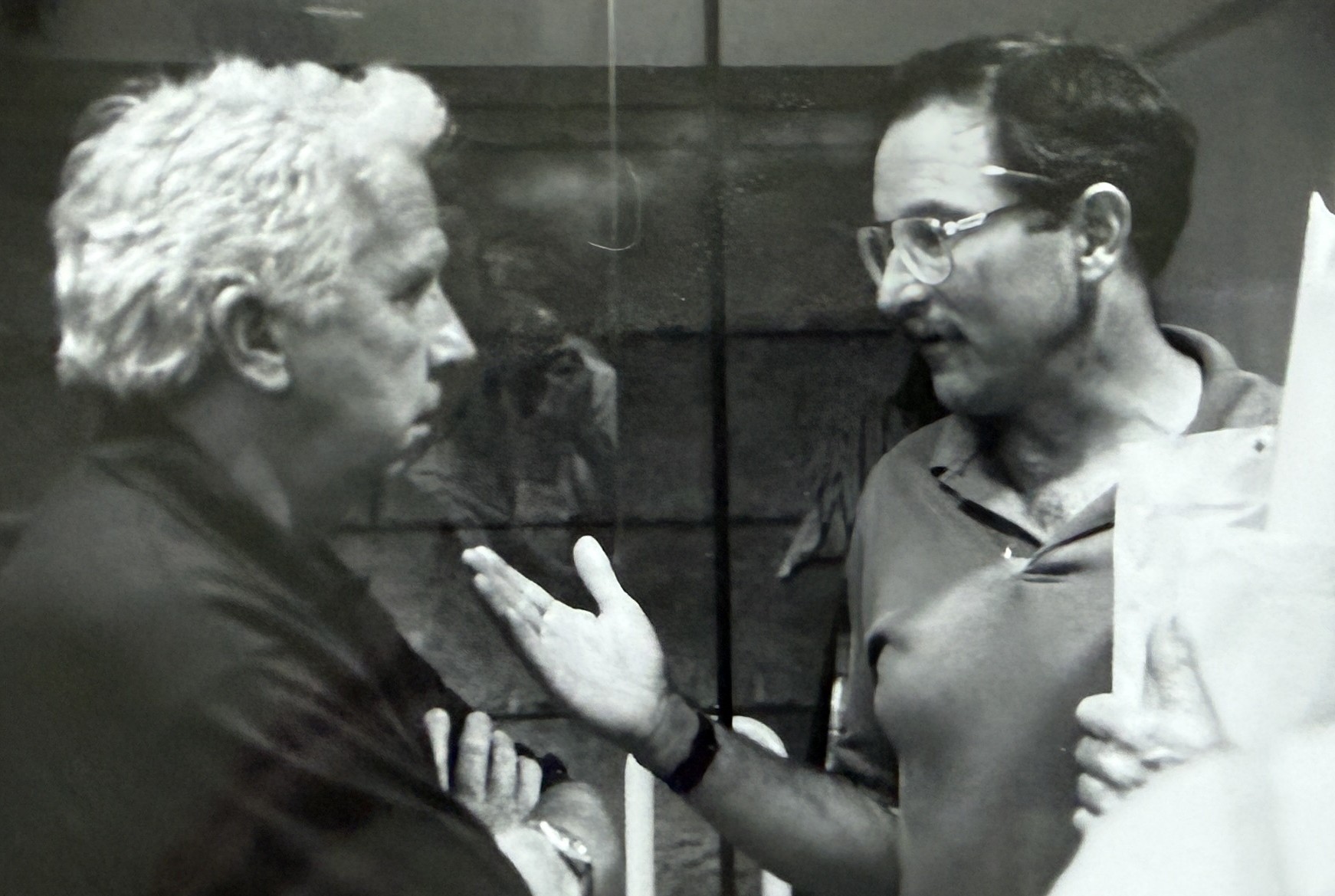
Wright with one of his lieutenants, Sean Campbell (D-Saxtons River). There is an image of a photographer in the reflection behind them. File photo.
The silver-haired Wright was originally from Massachusetts, an Irish-Catholic whose passion for the little guy was palpable, with an us-versus-them mentality that reflected the Marine he had been. He had a strong Boston accent and relished the legendary backroom politics of his native state.
Among his many talents, Wright had an uncanny ability to count to 76 – the number of votes needed to pass a bill.
“Any first grader can get to 76, but it takes a doctorate in politics to know where to go to get the 76,” Wright wrote in his autobiography. “I never, ever, literally twisted anyone’s arm. Did I ever do what amounts to the same? You bet your life I did. I used all the cunning and charm I possessed to win. Sometimes it wasn’t enough, but more often than not it did the job.”
Those were heady times for Democrats. In 1985, for the first time in the history of the state, the party controlled the governor’s office, the speakership and the position of Senate president pro tem, which is the leader of the Senate.
In 1985 there were new leaders in all three positions – Wright as speaker, Madeleine Kunin as governor and Peter Welch as president pro tem. The three worked together – most of the time – to enact an ambitious agenda.
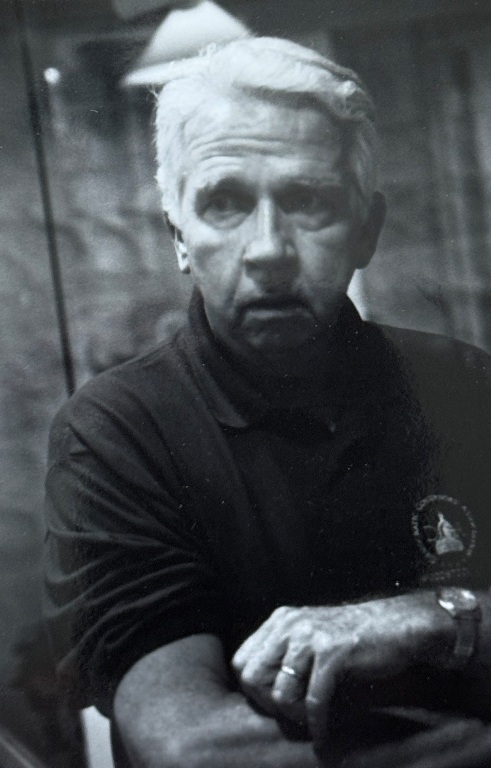
VBM photo of Wright in 1993.
Wright had a reputation as ruthless, tough and a dirty fighter, and many people, mostly Republicans, thought he rose every morning wondering who he would crush or punish or defeat that day. But his belief was simple: He would use the powers of his office to the fullest to enact his agenda.
A Democrat through and through but in 1991 he forged a bond with Republican Governor Richard Snelling that was the stuff of legends.
On the opening day of the 1991 legislative session Wright was in his office celebrating his re-election as speaker when he looked out his door and sitting in a tiny alcove reading a magazine sat the governor. The speaker, flustered by the rare unscheduled appearance of a governor, asked his secretary what was going on. The governor would like to see you but didn’t want to interrupt you, she said.
Snelling told Wright that while everyone expected the two colossal egos to come to blows during the session they must work together to solve the worst fiscal crisis in the state’s history.
And the governor detailed a plan to raise taxes to balance the budget, a plan that provided more in taxes than Snelling wished and put a heavier tax burden on the wealthy than Snelling wished, concessions that the governor was willing to make to build support with Wright and the Democrats.
And the two men, based on that meeting, worked together to enact a bipartisan package of cuts and tax increases, including $90 million in new revenue, the largest tax increase in the history of the state.
Ultimately that collaboration turned out to demand more of Wright than he could anticipate. When the bill came before the House, the vote on final passage ended up tied – 72 in favor and 72 against – forcing Wright to break the tie in favor of the bill.
In 1994 Wright’s run came to an abrupt and surprising end: Republicans were able to defeat him in his home district of Bennington.
Wright spent his normal $250 while his opponent spent $13,000 hammering home a theme that Ralph Wright had lost touch with his constituents. The man with the uncanny ability to count votes in the House misread his neighbors. He lost by 165 votes.
In a 2007 interview he made no apologies for his aggressive attitude and agenda.
“I’m a liberal. I was born one. I hope to die one.
“I am four things: a Wright, Irish, Catholic, and liberal. We’re all our brother’s keepers. That’s the only purpose of government.
“If you can’t take care of those who can’t take care of themselves, what the hell are we sitting here for?”
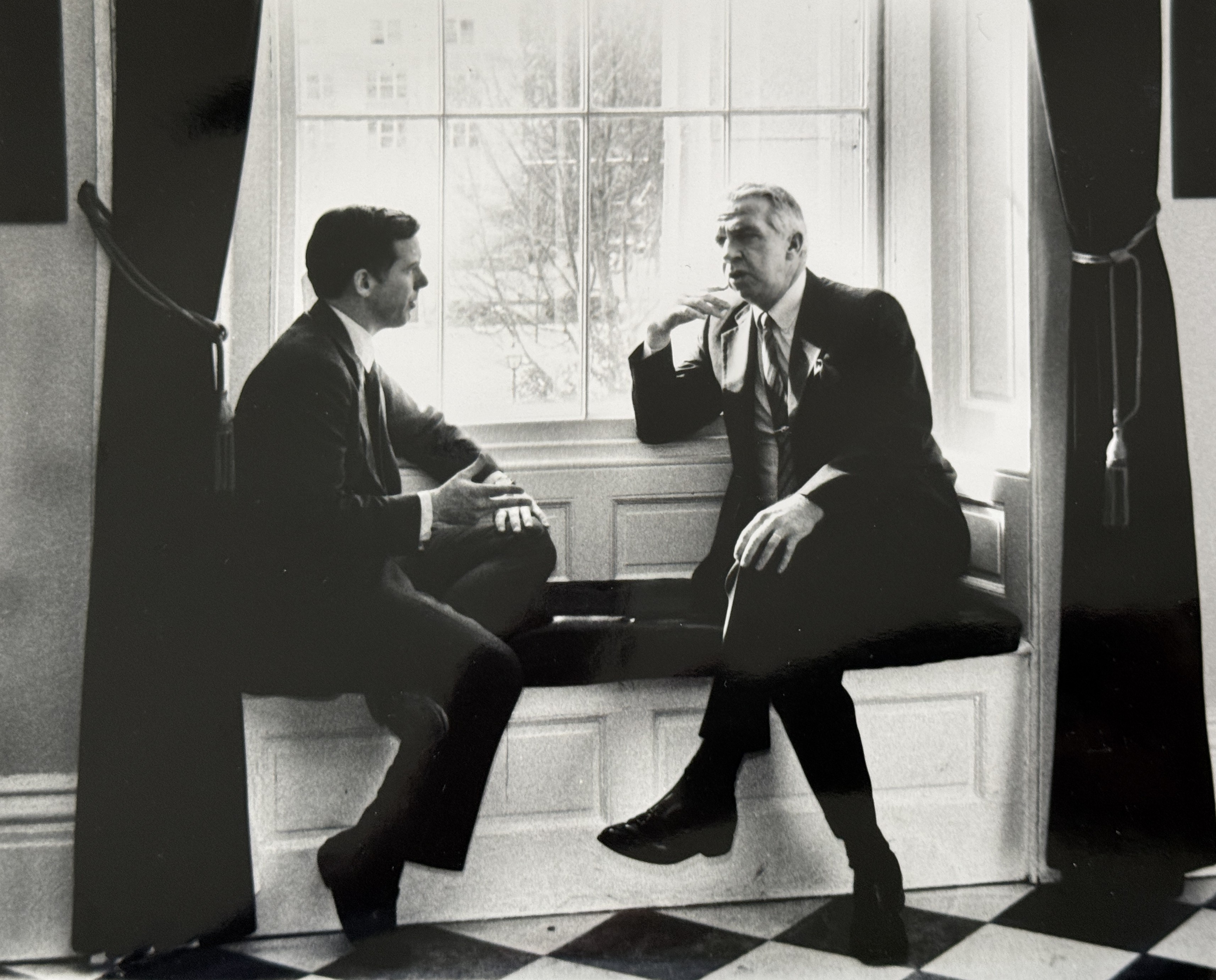
Howard and Ralph in 1988. Sandy Macys photo.
Chris Graff is the former Vermont AP bureau chief; former contributing editor to Vermont Business; author of Dateline Vermont; former host of Vermont This Week. He has covered Vermont politics for more than 50 years.
To support vital journalism, access our archives and get unique features like our award-winning profiles, Book of Lists & Business-to-Business Directory, subscribe HERE!
 Vermont Business Magazine